Skip to content

Posts from the ‘For Artists’ Category

Katherine May: How to Find More Joy in Your Day

It is almost spring, technically, even though it still really feels like winter here with cold temperatures. I hope these ideas, below, might help you in this season. I already ordered Enchantment, and I cannot wait to read it!

_____________________________________________________

It all started with a post-it note.

“Go for a walk,” it said, the matter-of-fact command enthroned prominently above Katherine May’s desk.

Ms. May, a British author who wrote the best-selling memoir Wintering about a fallow and difficult period in her life, had been going through tougher times during the height of the pandemic. She was bored, restless, burned out. Her usual ritual – walking – had been dropped, along with other activities that used to bring her pleasure: collecting pebbles, swimming in the sea, enjoying a book.

“There was nothing that made the world interesting to me,” Ms. May said in a recent interview with The New York Times. “I felt like my head was full and empty at the same time.”

In Ms. May’s latest book, Enchantment, she describes how a simple series of actions, like writing this note, helped her discover little things that filled her with wonder and awe – and in turn, made her feel alive again to be.

“You have to keep pursuing it until you feel that tingle that tells you you’ve found something that’s magical to you,” Ms. May said. “It’s trial and error, isn’t it?”

We asked Ms. May for tips on how you can do the same.

Commit to noticing the world around you

“We must find the humility to be open to experience each day and allow ourselves to learn,” Ms. May wrote in Enchantment.

It’s “easier said than done,” she admits.

“Don’t get distracted by thoughts that tell you it’s stupid or pointless or a waste of time or that you’re way too busy to possibly do it,” Ms. May said during the interview. “Instead, give yourself permission to even want that — to long for that contact with the sacred and that feeling of being able to commune with something bigger than you.”

Entering into a state of wonder is akin to flexing a muscle, Ms. May said. Put yourself in that mindset more often and it gradually becomes easier.

First of all, you need to “give in to the fascination” that you feel in everyday moments. Ms. May, for example, gets “really excited” when she sees light dancing across the surface of her coffee.

But don’t force it. The key, she said, is to keep looking for the things that amaze you — and trust that you will find them.

What you find pleasant may be quite simple: Ms. May has often felt awe when examining a small vermin in her garden.

“We told ourselves that everything has to be this big,” she said. “Actually, we can just breathe out and live a pretty small life.”

Ask yourself a simple question

Instead of thinking about what you find adorable that’s too difficult to answer, Ms. May suggests asking yourself a different question: what calms you down?

It could be a walk. Or visit an art museum. You might like watching the moving clouds.

Whatever it is, find a way to do it. Every morning Ms. May goes outside and smells the air “like a dog,” she said, laughing. She notices the color of the sky and how her skin feels in the cool air.

For some people, that calming moment could be found at a place of worship or gazing at the moon.

“The moon is so beautiful, and when you look at the moon you can’t help but notice the stars and planets in the night sky,” said Ms. May, who regularly observes the moon phase. “It’s just a beautiful, beautiful thing to do. Daily. And it’s that simple.”

Consider and reflect in your own way

If you want to spend more time in personal reflection but are concerned about doing it the “right” way, put those concerns aside.

For example, when Ms. May was learning to meditate, she wanted to do it twice a day for 20 minutes, but not before or after sleep and never after a meal. Then she became a mother and finding time to meditate became more difficult.

“You get to a point in your life where you’re like, ‘This is just impossible,’” she said. “For a long time I thought, ‘I failed. Obviously I should be able to do that.’”

Finally, she had a realization: the problem wasn’t that she hadn’t tried hard enough, but that these rules weren’t made for her. They had been created by someone who had never walked in their shoes.

Now she meditates in a different way. Sometimes she does this for five minutes in the middle of the night or while walking in the woods.

“For me, it’s never been about clearing my head,” Ms. May said. “It’s about taking on the slower-paced kind of work, processing all those things that are itching in the back of your mind.”

Do it because it feels good.

People tend to think that it’s kind of naïve to seek pleasure for pleasure’s sake, Ms. May said. In other words, we’re more likely to assign value to things that are considered practical and efficient.

But you don’t need dates or any other compelling reason to do something you enjoy.

For example, one of Ms. May’s hobbies is cold-water swimming. She doesn’t do it to burn calories. Rather, it’s “for the sheer joy of being in this incredible space,” she said, not to mention “how sensual it is and the amazing feel-good hormones it releases.”

And although Ms May initially took a beekeeping course to learn how to make honey at home, that goal became less urgent when she was awed as a student.

“Technically I could still do that, but I now realize I never really wanted to,” Ms. May wrote in Enchantment.

The joy of it all—the connection with her teachers and classmates, the sensual pleasures—surpassed any practical ambitions.

“I want to take it slow, absorb my lessons on the skin and the ears, get pricked sometimes,” she wrote of the experience. And she described the wonder she found in the class: “They’re so loud when they’re all singing together, and with the smell of honey and propolis, the smoke, the whole box vibrating under your hands, it’s quite absolute, the human-bee interaction”

_____________________________________________________

(Source for this above interview.)
The Paradoxes of Creating

I love this passage about creativity and paradoxes from Elizabeth Gilbert’s book entitled, Big Magic: Creative Living Beyond Fear. Hopefully, it will help you create!

“Creativity is sacred, and it is not sacred.

What we make matters enormously, and it doesn’t matter at all.

We toil alone, and we are accompanied by spirits.

We are terrified, and we are brave.

Art is a crushing chore and a wonderful privilege.

Only when we are at our most playful can divinity finally get serious with us.

Make space for all these paradoxes to be equally true inside your soul, and I promise—you can make anything.

So please calm down now and get back to work, okay?

The treasures that are hidden inside you are hoping you will say yes.”

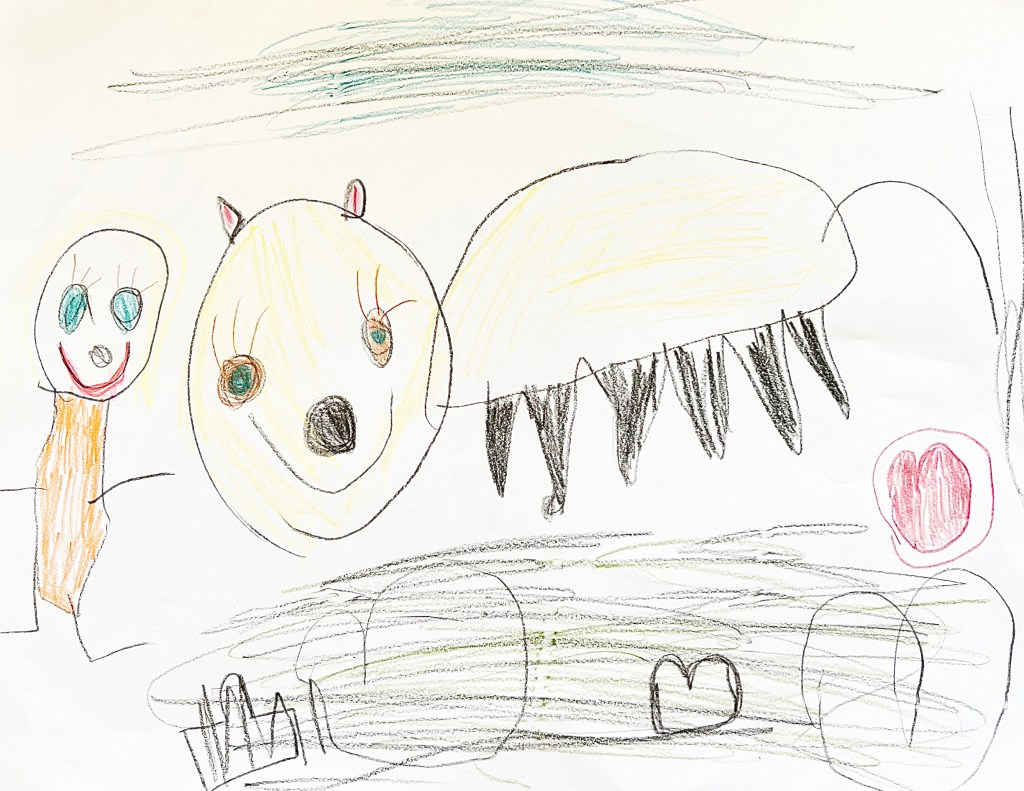
Here is Alex’s first portrait of her and Victory together, a real gem! We always encourage her to follow her creativity, where ever it may lead! She is so open and free while making her creations, and I wish we all could be more like this!

Elementals: Deborah Samuel

“There are no forms in nature. Nature is a vast, chaotic collection of shapes. You, as an artist, create configurations out of chaos. You make a formal statement where there was none, to begin with. All art is a combination of an external event and an internal event.” —Ansel Adams 

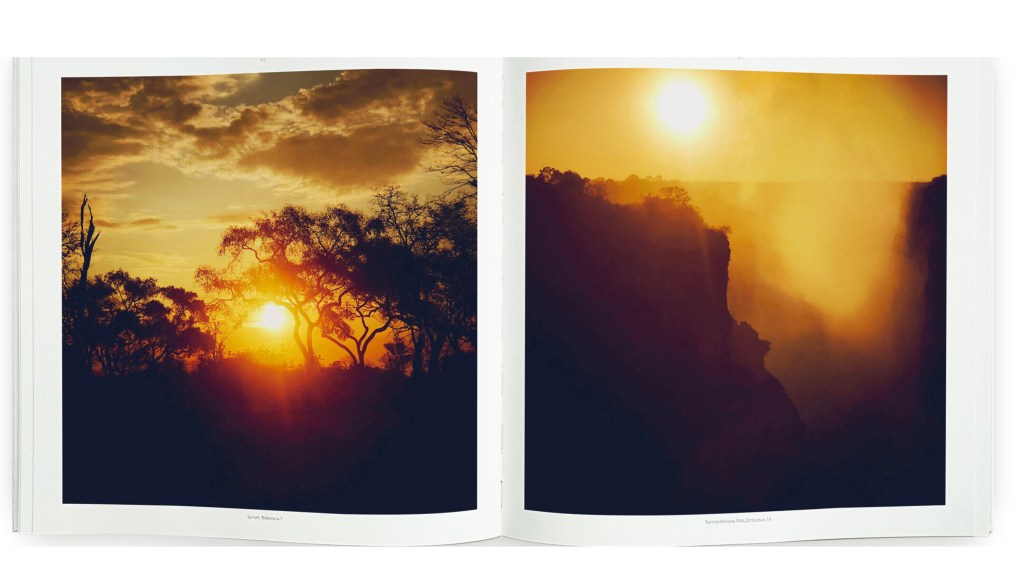
I am excited and pleased to share with you that my mentor and friend, Deborah Samuel, has a new book out this fall, her fourth book, entitled, Elementals, which encapsulates a ten year journey and exploration, using iPhone technology to capture her imagery, in an endeavor to find home.

A decade of travel from Africa to the United States and Canada to mysterious Ireland gave rise to Elementals, an intimate look at our world’s fundamental gravity. It is also a reflection on the wonders of life’s fragility, transience, and persistence of beauty.

“Over time, Elementals became a free-form poem to the enduring beauty of the elements everywhere – earth, air, fire, and water and the transforming power of light. It is an ode to the solitude of wide-open spaces, the fluidity of shifting winds, and the monsoons’ breathtaking phenomena — environmental, atmospheric, and climatic. These elements are not just material substances. They are fundamental spiritual essences, bringing meaning and illumination to life.” —Deborah Samuel 

After ten years, Samuel did indeed find home — everywhere. Elementals’ photographs are Samuel’s tangible memory of something too precious to ignore and too perfect to forget. 

“Only Nature can inspire this kind of awe and reverence when we allow our eyes to open. Samuel has a distinct sense of capturing this radical truth in all her evocative photographs. In every image, she presents a facet of the profound beauty that inspired our ancestors and reminded them of the great living divinity – the wonder of oneness in every aspect of life. She reminds us of the true power of what our hearts beat for – to discover purpose and meaning, witness spirit everywhere, and know the continuity of the cosmos. Through her lens, we’re invited to see that beauty is all around us, and in an increasingly uncertain world, to know hope is alive and calling us home.” —Colette Baron Reid

“The prints of the images in Elementals are magical. Viewing them is a visceral experience beyond an appreciation of a photographic image or its subject. Somewhere in the genes of these images is Ansel Adams. He lurks there as the classical and majestic now combined with colors so lush, a sensuality that verges on the extravagant but pulled just back, so one has the thrill of being on the edge of excess. However, there is something else, and its existence begins to explain why we’re staring at the image long after our own sunset snapshot has ceased to intrigue. Samuel’s photographs instruct — that we all share a mystical connection to nature, pantheistic perhaps, and this longing apparent because we’re always photographing, painting, or otherwise enthralled by it. Samuel’s photographs of nature are of us.” —Kelvin Brown

Shared below are a few of the beautiful images contained in Samuel’s new book, Elementals. I have my copy of this beautiful book, which I love. To order Elementals, visit here. To view more of Samuel’s work, visit her website here.

Isabel Reitemeyer

I came across Isabel Reitemeyer’s animal collages, and I love them! A few of her collages are displayed below. Isabel lives and works in Berlin as an artist and graphic designer. You can see more of her wonderful work on her website and Instagram, as well!

All of the above images are courtesy of Isabel Reitemeyer.

Fill Your Own Bucket

I loved this excerpt from Lisa Congdon, which you might find inspiring, too!

“Think of your daily life as a bucket that is your responsibility to fill. When your bucket is full, you have a lot of energy and you feel good. We can fill our own bucket by taking care of our body, eating healthy food, getting enough rest, honoring boundaries, learning new things, engaging in creativity, spending time with people we love, doing work that we love, and living in alliance with our values. Sometimes we make the mistake of either trying to fill other people’s buckets instead of our own or filling our buckets with unhealthy things, and our own bucket becomes depleted. When this happens, there is always a chance to go back to filling our own bucket instead. Paying attention to filling your own bucket is the first step.”

Allow Something Every Day

I loved this excerpt from Lisa Congdon, which you might find inspiring, too!

“As human beings, we like to control things. It’s in our nature. But having to control everything all the time ultimately zaps our energy and causes anxiety, because it is simply not possible all of the time. So much of our stress is caused by wanting everything to go a certain way. That can be exhausting! Since the opposite of control is allowing, it can be helpful to consciously allow at least one thing every day. For example, allowing your day to unfold in a way you did not expect (which might also mean not finishing everything on your to-do list). Or allowing someone to have feelings or reactions you wish they didn’t have without having to fix them. Or allowing yourself to have painful feelings without burying them. Allowing requires surrender and a certain trust that everything will work out, which is tough. But when we consciously allow in moments where we feel a tight hold, peace settles in.”

The Empty Bucket

I love this passage from Elizabeth Gilbert’s book entitled, Big Magic: Creative Living Beyond Fear. It really boils down to feeling your fear and anxiety, while creating your work, and moving forward, anyway. These words really resonated with me.

“Over the years of devotional work, though, I found that if I just stayed with the process and didn’t panic, I could pass safely through each stage of anxiety and on to the next level. I heartened myself with reminders that these fears were completely natural human reactions to interaction with the unknown. If I could convince myself that I was supposed to be there–that we are meant to engage with inspiration and that inspiration wants to work with us–then I could usually get through my emotional minefield without blowing myself up before the project was finished.

At such times, I could almost hear creativity talking to me while I spun off into fear and doubt.

Stay with me, it would say. Come back to me. Trust me.

I decided to trust it.

My single greatest expression of stubborn gladness has been the endurance of that trust.

A particularly elegant commentary on this instinct came from the Nobel laureate Seamus Heaney, who said that–when one is learning how to write poetry–one should not expect it to be immediately good. The aspiring poet is constantly lowering a bucket only halfway down a well, coming up time and again with nothing but empty air. The frustration is immense. But you must keep doing it, anyway.

After many years of practice, Heaney explained, ‘the chain draws unexpectedly tight and you have dipped into waters that will continue to entice you back. You’ll have broken the skin on the pool of yourself.'”

Taking Vows

I really love this passage from Elizabeth Gilbert’s book entitled, Big Magic: Creative Living Beyond Fear. The essence of her words encompass doing the work you love regardless of any outcome. Her words, shown below, really resonated with me, and perhaps her words will positively impact you, too.

“When I was about sixteen years old, I took vows to become a writer.

I mean, I literally took vows — the way a young woman of an entirely different nature might take vows to become a nun. Of course, I had to invent my own ceremony around these vows, because there is no official holy Sacrament for a teenager who longs to become a writer, but I used my imagination and my passion and I made it happen. I retreated to my bedroom one night and turned off all the lights. I lit a candle, got down on my honest-to-God knees, and swore my fidelity to writing for the rest of my natural life.

My vows were strangely specific and, I would still argue, pretty realistic. I didn’t make a promise that I would be a successful writer, because I sensed that success was not under my control. Nor did I promise that I would be a great writer, because I didn’t know if I could be great. Nor did I give myself any time limits for the work, like, ‘If I’m not published by the time I’m thirty, I’ll give upon this dream and go find another line of work.’ In fact, I didn’t put any conditions or restrictions on my path at all. My deadline was: never.

Instead, I simply vowed to the universe that I would write forever, regardless of the result. I promised that I would try to be brave about it, and grateful, and as uncomplaining as I could possibly be. I also promised that I would try to be brave about it, and grateful, and as uncomplaining as I could possibly be. I also promised that I would never ask writing to take care of me financially, but that I would always take care of it — meaning that I would always support us both, by any means necessary. I did not ask for any external rewards for devotion; I just wanted to spend my life as near to writing as possible — forever close to that source of all my curiosity and contentment — and so I was willing to make whatever arrangements needed to be made in order to get by.”

Persistence

I love this passage from Elizabeth Gilbert’s book entitled, Big Magic: Creative Living Beyond Fear. It really boils down to how one handles herself during a creative endeavor where there is always much uncertainty, while simultaneously there is great possibility. These words really resonated with me.

“Back in my early twenties, I had a good friend who was an aspiring writer, just like me. I remember how he used to descend into dark funks of depression about his lack of success, about his inability to get published. He would sulk and rage.

‘I don’t just want to be sitting around,’ he would moan. ‘I want this to all add up to something. I want this to become my job!’

Even back then, I thought there was something off about his attitude.

Mind you, I wasn’t being published, either, and I was hungry, too. I would’ve loved to have all the same stuff he wanted — success, reward, affirmation. I was no stranger to disappointment and frustration. But I remember thinking that learning how to endure your disappointment and frustration is part of the job of a creative person. If you want to be an artist of any sort, it seemed to me, then handling your frustration is a fundamental aspect of the work — perhaps the single most fundamental aspect of the work. Frustration is not an interruption of your process; frustration is the process. The fun part (the part where it doesn’t feel like work at all) is when you’re actually creating something wonderful, and everything’s going great, and everyone loves it, and you’re flying high. But such instances are rare. You don’t just get to leap from bright moment to bright moment. How you manage yourself between those bright moments, when things aren’t going so great, is a measure of how devoted you are to your vocation, and how equipped you are for the weird demands of creative living. Holding yourself together though all the phases of creation is where the real work lies.”

Find What Feeds You

I loved this excerpt from Lisa Congdon, which you might find inspiring, too!

“Staying motivated to keep your continued sense of happiness requires its own form of discipline. It requires staying open and curious. It requires searching for and diving deep into what feeds you — and allowing yourself to head down dark rabbit holes. Sometimes what feeds you isn’t cerebral at all, but is found in moving your body by walking, dancing, or athletics. What’s important is to make space for the searching, and then to use what you find — at least the parts that excite you most — as the inspiration and energy for living your life. Want to stay inspired and motivated? Make space for it. Get enough rest. Be curious. Read books. Watch films. Listen to podcasts. Go look at art. Get out into the world. Go to therapy. Participate in a revolution. Uncover your own story. Find what feeds you.”

Here is a recent video of our girls together.