Skip to content

Posts from the ‘For Artists’ Category

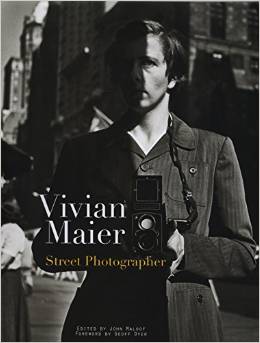
Documentary: Vivian Maier, Photographer

Recently, Doug and I watched a fascinating Showtime Oscar nominated documentary entitled, Finding Vivian Maier.  You can view the trailer below.  Maier’s story is fascinating and many details of her life remain unknown.  She was a prolific street photographer who worked as a nanny.  You can view Vivian Maier’s work here.  Per the documentary, working as a nanny gave Maier the freedom to explore and photograph.  She always carried a camera with her and she was acutely aware of the political times and current events as she collected many newspaper articles.  What makes this story so interesting is that nobody knew during her lifetime that she was a street photographer with a massive body of work, with many rolls of film that remain undeveloped.  She primarily photographed the people and architecture of New York City, Chicago, and Los Angeles, including foreign travels.  There are also many self-portraits in her body of work.

In 2007, two years after Maier’s death, John Maloof, an amateur historian, acquired some of Maier’s images along with Chicago-based collectors who found some of Maier’s prints and negatives in her boxes and suitcases around the same time in 2007.  In 2009, John Maloof posted Maier’s images, which went viral on Flickr, and many people expressed interest in Maier’s work.  Her work has gained international acclaim and Maier’s work has been exhibited in North America; Europe; and Asia.  There are also published books of her work.

However, there is a twist to this fascinating story.  There is now current ongoing litigation in Chicago that has questioned who owns the rights to Maier’s work.  You can read further background information here and here.  The right to create prints from the negatives remains with the photographer or the photographer’s heirs.  Maier died without a will, and currently it appears that there is not enough information available about her relatives to say who is the rightful heir.  So the questions remain: Who are Maier’s heirs?; and are the persons who discovered her work in 2007 illegally profiting since they do not own the rights to Maier’s work?  It will be very interesting to see the outcome of this case.

The main take away from this case for artists is to be certain to have a written will clearly naming heirs; and to you register your art works with the U.S. Copyright Office.  You can learn more about Vivian Maier by visiting this website.


vivian maier

‘The Middle’

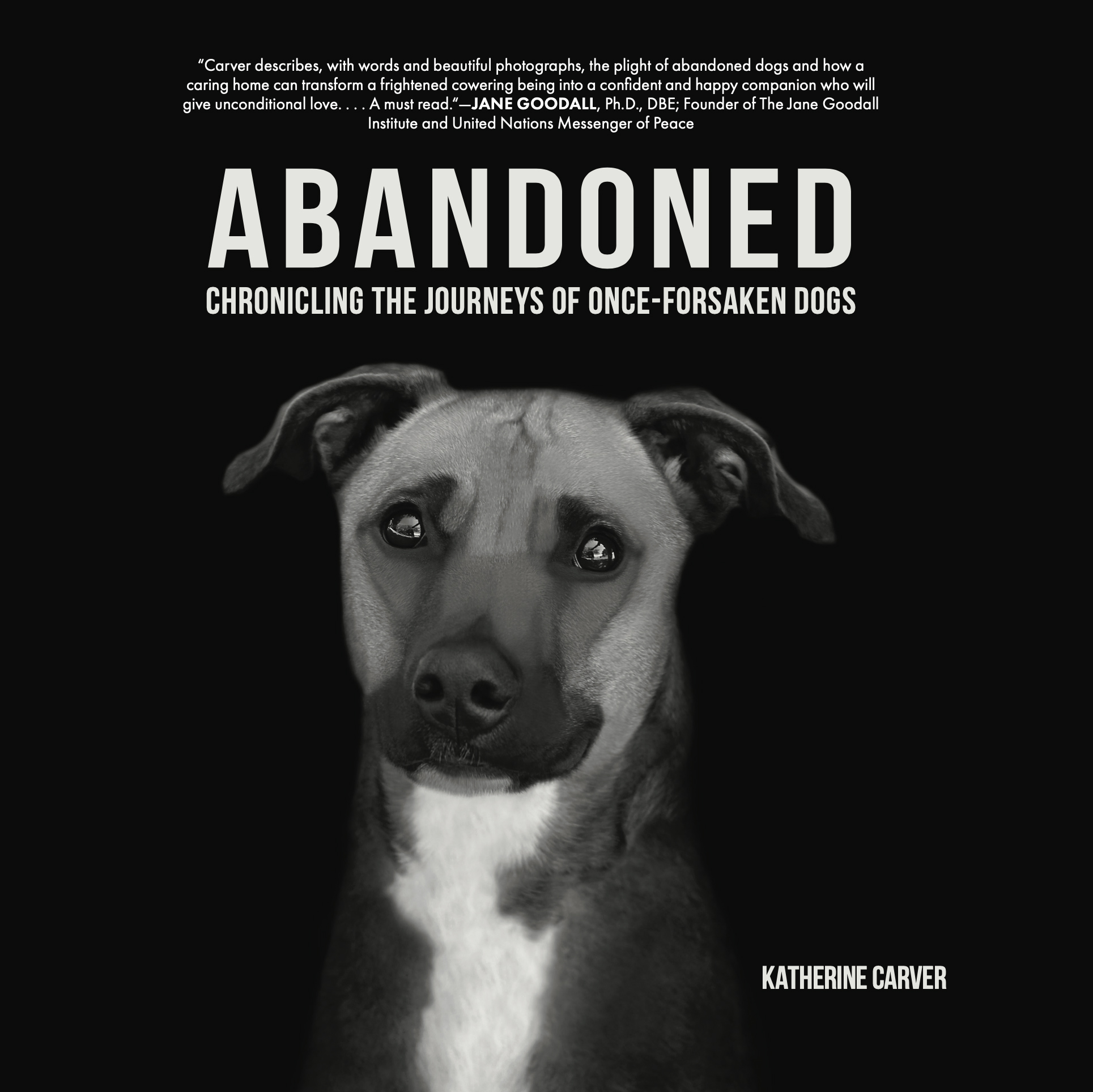
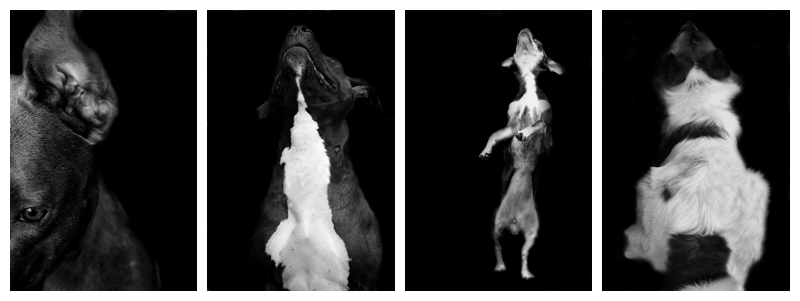
‘The middle’ is where I have been spending a lot of my time with my long-term dog photography project.  The “middle,” to me, are those long hours of creating that fall between the exciting beginning and the finale and the gratification of finishing.  I have been working on this project consistently for almost two years now as of this winter, with a bit more work to complete.  Biscuit was the inspiration for this project and this body of work will be dedicated to him in his great honor.   To be succinct, Biscuit positively changed our lives forever.

It is easy to find joy in the completion of the accomplishment.  However, at times, it is ‘the middle’ that I struggle with.  The doing; the process; the working through the issues that arise; the daily work; and so on.  There are days that things do not go as planned and unanticipated issues arise.  However, no matter what, the need and desire never leaves me to keep pressing on.  Some days showing up and working is easier than others.  There are days where I just need a break, which helps brings a fresh perspective and breath of fresh air to the work.  All the while, I am finding the joy in ‘the middle.’  I am focusing on how grateful I am to be able to work on this project, while meeting like-minded people.  It really is a wonderful honor.  So far, I have been so fortunate to have wonderful people helping me to bring this project to fruition, which will raise awareness and allows me to study the relationship between dog and human, a subject that I am very curious about.  (I cannot wait to share more information upon the project’s completion).  So, for all of you in ‘the middle,’ which is where we spend most of our lives, enjoy and savor ‘the middle.’


IMG_1364 3 copy

Viewing Art at a Slower Pace

Doug and I enjoy going to museums.  However, most of the time we are trying to pack as much in as possible to enable us to view as much art as possible.  However, a recent New York Times article, The Art of Slowing Down in a Museum, suggests slowing down while visiting a museum.

“When you go to the library,” said James O. Pawelski, the Director of Education for the Positive Psychology Center at the University of Pennsylvania, “you don’t walk along the shelves looking at the spines of the books and on your way out tweet to your friends, ‘I read 100 books today!’”

Professor Pawelski…asks [his students] to spend at least twenty minutes in front of a single painting that speaks to them in some way. Twenty minutes these days seems like a long duration for most people.  “But what happens, of course, is you actually begin to be able to see what you’re looking at,” he said.

So, the next time you step into a museum, allow yourself to be led by your intuition, and don’t be afraid to spend extra time on those pieces of art that interests you.  I plan to practice this sentiment the next time I view art!

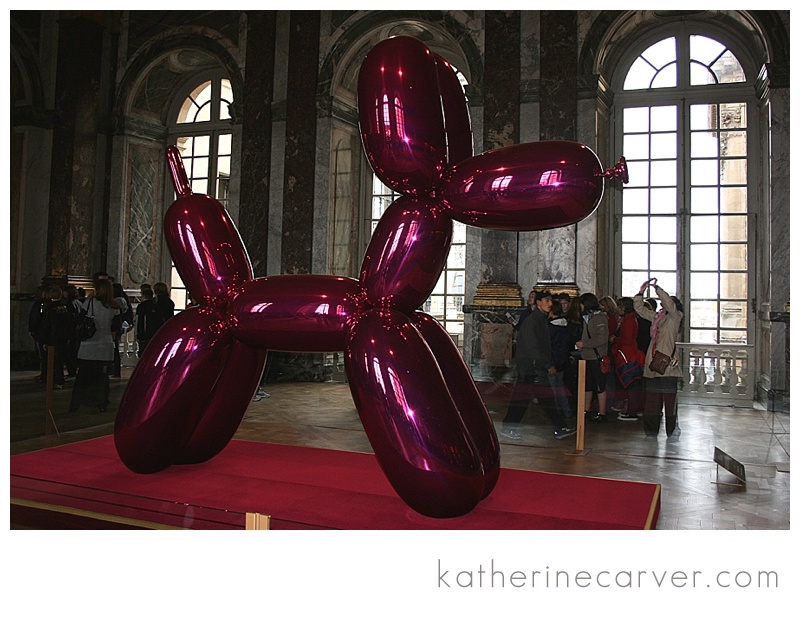
The image below is of the museum and gardens at Versailles in Paris, France.


IMG_3865 2


Good Read: Manage Your Day-to-Day: Build Your Routine, Find Your Focus & Sharpen Your Creative Mind

I recently finished reading the book entitled, Manage Your Day-to-Day: Build Your Routine, Find Your Focus & Sharpen Your Creative Mind by Jocelyn K. Glei and Scott Belsky.

This book explores a few facets of the creative life — increasing your idea generation; dealing with perfectionism; managing procrastination; and working through creative blocks, which are all common themes that artists face regularly.  Most of all, there are many insights from Seth Godin; Dan Ariely; Gretchen Rubin; and Steven Pressfield, among others who share their expertise.

Some of my favorite quotes from this book are shown below.

“It’s time to stop blaming our surroundings and start taking responsibility.  While no workplace is perfect, it turns out that our gravest challenges are a lot more primal and personal.  Our individual practices ultimately determine what we do and how well we do it. Specifically, it’s our routine (or lack thereof), our capacity to work proactively rather than reactively, and our ability to systematically optimize our work habits over time that determine our ability to make ideas happen….Only by taking charge of your day-to-day can you truly make an impact in what matters most to you.  I urge you to build a better routine by stepping outside of it, find your focus by rising above the constant cacophony, and sharpen your creative prowess by analyzing what really matters most when it comes to making your ideas happen.” -Scott Belsky


“Everybody who does creative work has figured out how to deal with their own demons to get their work done.  There is no evidence that setting up your easel like Van Gogh makes you paint better.  Tactics are idiosyncratic.  But strategies are universal, and there are a lot of talented folks who are not succeeding the way they want to because their strategies are broken.

The strategy is simple, I think.  The strategy is to have a practice, and what it means to have a practice is to regularly and reliably do the work in a habitual way.

There are many ways you can signify to yourself that you are doing your practice.  For example, some people wear a white lab coat or a particular pair of glasses, or always work in a specific place — in doing these things, they are professionalizing their art.”  -Seth Godin


“Step by step, you make your way forward.  That’s why practices such as daily writing exercises or keeping a daily blog can be so helpful.  You see yourself do the work, which shows you that you can do the work.  Progress is reassuring and inspiring; panic and then despair set in when you find yourself getting nothing done day after day.  One of the painful ironies of work life is that the anxiety of procrastination often makes people even less likely to buckle down in the future.” -Gretchen Rubin


“Creativity arises from a constant churn of ideas, and one of the easiest ways to encourage that fertile froth is to keep your mind engaged with your project.  When you work regularly, inspiration strikes regularly.” -Gretchen Rubin


If you are a creative, I highly recommend reading this book — there are many great insights and words of wisdom!  The biggest take away for me, from this book, is to maintain a regular daily art practice in order to keep moving forward and staying inspired.


IMG_0418 2


Perfection and Creativity

The word ‘perfection’ and the word ‘creativity’ seem like very disparate words.  However, perfectionistic tendencies can negatively impact creativity.  You always want to produce your best work; however if you are looking for ‘perfect,’ it can really hinder your creative process and work.

Do any of these sentiments ever go through your mind?

I can’t begin my new project until the ideal moment, i.e., having a large uninterrupted block of time, no other distractions with a lot of motivation.  There is never be an ‘ideal time’ to begin your project or artwork.  Life just seems to happen and things come up that are unexpected.  However, I find it is best to schedule set work times for your work and continue to stick to those set times even when you do not feel like working on your work.  This way, it becomes part of one’s schedule and routine.  With my current photography project, I set designated times for my work and I protect this time to ensure I am making progress each week.  Also, I try to take advantage of “stolen moments” to keep working and thinking.  After all, little actions taken regularly over time, often lead to a desired goal or result.

Spending too much time obsessing over every detail of the potential project, which leads to revising and editing at every step of the way versus giving yourself permission to create an imperfect draft, piece, etc.  I have found that it is better to be open while you are working instead of having an inflexible view on your final work product.  Sometimes, the most amazing ‘good surprises’ present themselves unexpectedly; and, if your are closed off, you might not see these gifts.

The best piece of advice I have ever received from my artist friend, Deborah Samuel, is to just show up each day and to push through and move further than you think that you can go with your work.  At times, this is terrifying, but I have learned to lean into it to get through it — even though there are some days that are so tedious or days that I am not sure how it will all work out in the end.  To work on something for an extended period of time takes faith and trust.  Otherwise, I am not sure how I would keep going.

I love this quote from Anne Lamott in her book, Bird by Bird, on the topic of perfectionism.  (Bird by Bird is a wonderful book if you have not yet read it).

“…Oh my God, what if you wake up some day, and you’re 65, or 75, and you never got your memoir or novel written; or you didn’t go swimming in warm pools and oceans all those years because your thighs were jiggly and you had a nice big comfortable tummy; or you were just so strung out on perfectionism and people-pleasing that you forgot to have a big juicy creative life, of imagination and radical silliness and staring off into space like when you were a kid?  It’s going to break your heart.  Don’t let this happen.  Repent just means to change direction—and NOT to be said by someone who is waggling their forefinger at you.  Repentance is a blessing.  Pick a new direction, one you wouldn’t mind ending up at, and aim for that.  Shoot for the moon.”


IMG_1538 3 copy

Good Read: Art Inc. by Lisa Congdon

I recently finished reading Art, Inc.: The Essential Guide for Building Your Career as an Artist by Lisa Congdon.  This was a good read!  This book offers a concise guide for anyone seeking to start or enhance their career in art, with actionable tasks and helpful tools.  Lisa Congdon’s writing is clear, easy to understand, and inspiring.  I especially enjoyed the interviews with other artists that appeared throughout the book.  I also enjoyed reading the information relating to exhibitions and gallery representation.  The information contained in this book was very helpful.

So, if you are a creative, I highly recommend reading this book!

“Imagination is more important than knowledge.  Knowledge is limited.  Imagination encircles the word.” ~Albert Einstein


IMG_4608

Taking a Break = Invigoration

During vacation for several weeks, I took a break, which I do not practice often enough.  What I noticed is that I really needed a break from my work and the usual routine — we were so ready for a long vacation.  I felt a bit drained and worn out, to be honest.  I also noticed that the intentional break gave me space to think about other things that had been pushed to the back burner as well as time to reflect on the projects that I am currently working on.  Most of all, I felt free.  After taking this long break during vacation, I felt more invigorated and, upon our return, I was ready to get back to work with a new perspective.  A change of scenery really does wonders — especially if you get to spend your days vacationing with your lovies (Doug and Victory)!  Therefore, I highly recommend taking intentional and frequent breaks  to enrich your work and the creative process.  (Breaks do not have to consist of vacations!)  Also, I often find that a problem that I am working on in my work becomes more clear after I have stepped away, even for a short period of time, and I am then able to come back with a fresh perspective.  Breaks = Invigoration.

Happy Tuesday!


IMG_1310 2 4

Good Read: Bird by Bird by Anne Lamott

During our vacation, I read a few books and I also reread Bird by Bird by Anne Lamott.  I always enjoy Anne Lamott’s books.  Although this is book is mainly for writers, I found that her words are transferable to any creative discipline.  Below are some of my favorite quotes from her book, and perhaps you will find her words inspiring, too.


IMG_2451 2


“E.L. Doctorow once said that ‘writing a novel is like driving a car at night.  You can see only as far as your headlights, but you can make the whole trip that way.’  You don’t have to see where you’re going, you don’t have to see your destination or everything you will pass along the way.  You just have to see two or three feet ahead of you.  This is right up there with the best advice about writing, or life, I have ever heard.”


“Almost all good writing begins with terrible first efforts.  You need to start somewhere.   Start by getting something — anything — down on paper.  A friend of mine says that the first draft is the down draft — you just get it down.  The second draft is the up draft — you fix it up.  You try to say what you have to say more accurately.  And the third draft is the dental draft, where you check every tooth, to see if it’s loose or cramped or decayed, or eve, God help us, healthy.”


“Writing a first draft is very much like watching a Polaroid develop.  You can’t — and, in fact, you’re not supposed to — know exactly what the picture is going to look like until it has finished developing.”


“You may need someone else to bounce your material off of, probably a friend or a mate, someone who can tell you if the seams show, or if you’ve lurched off track, or even that it is not as bad as you thought … But by all means let someone else take a look at your work.  It’s too hard always to have to be the executioner.”


“That’s how real life works, in our daily lives as well as in the convalescent home and even at the deathbed, and this is what good writing allows us to notice sometimes.  You can see the underlying essence only when you strip away the busyness, and then some surprising connections appear.”


“So we need to sit there, and breathe, calm ourselves down, push up our sleeves, and begin again.”


“Writers tend to be so paranoid about talking about their work because no one, including us, really understands how it works.  But it can help a great deal if you have someone you can call when you need a pep talk, someone you have learned to trust, someone who is honest and generous and who won’t jinx you.”


“And I don’t think you have that kind of time either.  I don’t think you have the time to waste not writing because you are afraid you won’t be good enough at it, and I don’t think you have time to waste on someone who does not respond to you with kindness and respect.”


“If you look around, I think you will find the person you need.  Almost every writer I’ve ever known has been able to find someone who could be both a friend and a critic.  You’ll know when the person is right for you and when you are right for that person.  It’s not unlike finding a mate, where little by little you begin to feel that you’ve stepped into a share that was waiting there all along.”


“Publication is not going to change your life or solve your problems.  Publication will not make you more confident or more beautiful, and it will probably not make you any richer.”


“Being enough was going to have to be an inside job.”


“You can make the work a chore, or you can have a good time.  You can do it the way you used to clear the dinner dishes when  you were thirteen, or you can do it as a Japanese person would perform a tea ceremony, with a level of concentration and care in which you can lose yourself, and so in which you can find yourself.”


“The best thing about being an artist, instead of a madam or someone who writes letters to the editor, is that you get to engage in satisfying work.”


Providence

This quote by Goethe, below, is keeping me moving forward with my photography project, and it coincidentally fits nicely with my word for the year —  trust (which I am always working on.)  So far, the Universe has been very supportive.  During the creative process, I think everyone struggles with moving through the work during certain periods along with confronting self-doubt.  I have experienced these feelings while working on this project.  However, I have found the best thing to do is just to keep going and pushing on and not letting obstacles or fear get in my way.  In fact, I have been leaping and the net has appeared in ways I could not have imagined, and I hope that the net will keep appearing for me while I continue to work on this project and bring this vision and body of work to fruition.  I find much truth in Goethe’s quote below — so if there is something you are dreaming, instead of waiting for the ‘right time’ or inspiration, begin it now!

Happy weekend!


IMG_1310 5

Creativity: Wise Words

Below are wise words from artists on creativity and making art.

“Inspiration is for amateurs — the rest of us just show up and get to work.” – Chuck Close

“Show up, show up, show up.”  –Isabelle Allende

“A self-respecting artist must not fold his hands on the pretext that he is not in the mood.”  – Pyotr Ilyich Tchaikovsky

“If you hear a voice within you say, ‘You cannot paint,’ then by all means paint, and that voice will be silenced.” – Vincent Van Gogh

“Have no fear of perfection, you’ll never reach it.” – Salvador Dali

“You can’t wait for inspiration, you have to go after it with a club.” – Jack London

“Imagination is the beginning of creation. You imagine what you desire, you will what you imagine, and at last, you create what you will.” – George Bernard Shaw

“Don’t think. Thinking is the enemy of creativity.  It’s self-conscious, and anything self-conscious is lousy. You can’t try to do things. You simply must do things.” – Ray Bradbury

“Creativity is just connecting things. When you ask creative people how they did something, they feel a little guilty because they didn’t really do it, the just saw something. It seemed obvious to them after a while.” – Steve Jobs

“Creativity is contagious, pass it on.” – Albert Einstein


an artist