Skip to content

Posts from the ‘Dog Related Information’ Category

Fan Mail!

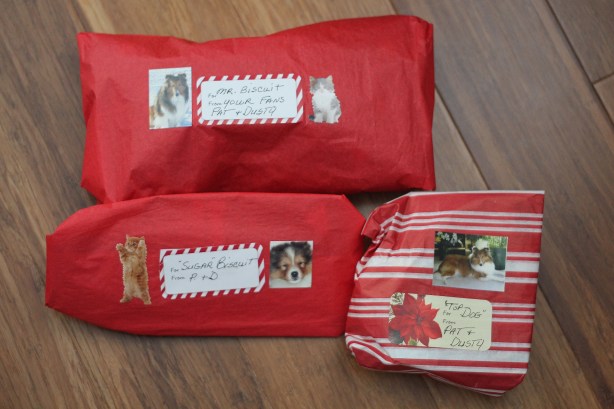
To our surprise last night, Biscuit received some Christmas gifts from a fan of his blog!  Pat Pope along with her sheltie, Dusty, was kind enough to think of Biscuit for the Holidays!  We are going to wait to open these beautifully wrapped gifts on Christmas.  Biscuit sniffed out his box last night when we opened the gift box from Pat.  We are very grateful for Pat’s generosity and thoughtfulness!

It is our hope that people will decide to rescue a dog after reading about Biscuit’s story and his adventures!  Biscuit has been such a wonderful part of our lives.

Below are the beautifully wrapped gifts from Pat and Dusty!

IMG_2837 2


IMG_2864 2

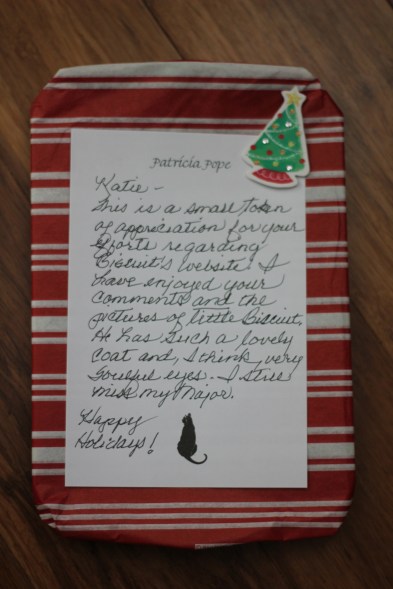
Below is a really nice note enclosed in the gift box from Pat.  I am so happy that she enjoys reading the blog and her note is very touching.

“Katie, This is a small token of appreciation for your efforts regarding Biscuit’s website!  I have enjoyed your comments and the pictures of little Biscuit, he has such a lovely coat and, I think very soulful eyes.  I still miss my Major.”  Happy Holidays!

IMG_2850 2

Thank you so very much, Pat and Dusty — Biscuit will love opening his gifts from you on Christmas!

Dogs Teach Meditation!

My friend, Kelsang Menla, wrote this very interesting guest blog post about dogs and meditation!  Based on Menla’s blog post, shown below, we have a lot to learn from our furry family members!

Menla is the Administrative Director at the Kadampa Meditation Center Maryland.  Menla has been practicing Kadampa Buddhism for 12 years and took ordination in 2001.  You can contact Menla at the following e-mail address, Director@meditationmd.org.

Dogs Teach Meditation!

Sometimes life is really stressful and there is so much to deal with.  In contending with all of the things we have to do our thoughts can get scattered and our mind can become tense.  To bring back a greater sense of well-being, a peaceful state of mind, and inner balance meditation is an excellent tool.  It’s so simple to learn to meditate that even dogs can do it (well sort of… more on this later!).  Just try sitting down in a quiet place, scanning through your body to relax your muscles and areas of tension, and then turn your mind to your breath.  Find the sensation of the breath at the opening of your nostrils, and lightly focus your attention there.  Experience the breath as you breath in and out, allowing mental and physical stress to gradually dissipate and melt away.  Thoughts may run through your mind, but simply choose to go back to your breath and leave behind whatever thoughts may be consuming you mind.  Try to remain with your breath allowing yourself to relax and gradually a refreshing feeling begins to fill your body and mind.

But you might say, “I can’t do that!  There is too much going on in my head!  I’ve got so much to do.  And anyway, I can’t stop my mind from thinking. It’s impossible.  I can’t meditate. I’ll have to try that when I have fewer things to deal with.”

Hold it right there.  It’s not impossible.  It isn’t too difficult, and if you wait until you have less to do…well let’s be honest, there’s never less to do for very long!   Your dog is teaching you to meditate all the time.  If you just watch your trusty friend in action, you’ll see how you can be an expert meditator before too long.

When you get home from work and it’s time to take doggers out for a walk, this is the perfect time to watch for his cues…

When you say, “It’s time for a WALK!” What happens???  Your little friend get’s all excited.  All he can think about is W-A-L-K.  You might be dilly-dallying, talking on the phone, looking for your phone, looking for your keys, getting distracted with opening the mail.  But, doggers won’t let you forget or get distracted for too long.  All he’s thinking about is W-A-L-Ks! He has single pointed focus on that and will remind you of it if you forget for too long.

So, you get out of the house and go down to the park.  You’ve brought his favorite ball and you start playing catch.  When you pick up that ball, his eyes are on it like a white on rice!  As you move your arm back to throw the ball, doggers is watching your hand and the motion of that ball without distraction.  With single-mindedness he chases after that ball and then brings it back to you and…repeat again, again, and again!  If you get distracted with a text message, he’s still watching that ball.  And when you stop texting the ritual of catch is restored.  It’s like meditation, you go back to your breath again, again, and again. Leaving distractions of the mind behind, you allow your mind to become absorbed into the experience of the breath.  When playing catch, you’ll probably get tired before your little friend does, which is a good lesson in itself — time flies when you’re having fun.  If you could get absorbed into meditation with the same joyful enthusiasm as doggers playing catch, you’d be able to meditate for a lot more than 10 or 15 minutes!

Then when you get home and it’s time for a little doggie treat, you decide to have a little fun.  You pull out a treat from the bag and holding it in you hand you wave it from left to right.  And doggers head goes from left to right at the same exact speed as your hand.  Then you toss it to him and yum yum it’s gone.  Then repeat!  Doggers wants that treat, he knows how yummy it is, and he’s patient enough to wait for it.  He doesn’t give up.  He’s showing us how to approach meditation.   The treat of meditation is feeling a purer form of happiness, a bliss and peace of the mind.  Having  a little bit of patience with ourselves and developing that single-minded focus we will enjoy our meditation time just as much as doggers enjoys his treat.  Then you both have your dinner and relax for the evening.

The thing our little friend is trying to show us is that we can become absorbed in any activity if we enjoy doing it.  And if we enjoy it, it becomes a habit.  For your pet it is walks, catch, bones, and treats.  He loves those things and can become absorbed into them.  For us it’s other things.  Maybe work, good books, favorite movies, a conversation, or a hobby.  We can enjoy and develop the positive habit of meditation too.  If we learn how to meditate properly and get the taste of peace that comes from meditation, then we’ll feel relaxed, calm, and uplifted!  We’ll learn how to become absorbed into a peaceful experience just like doggers gets absorbed into his game and before too long we’ll notice that we’re meditating.  So who says meditation is impossible or that you can’t do it?  If you ask your pet he’ll say, “Ruff Ruff?  It’s not ruff is easy!”

If you’d like to learn more about meditation and have a few tools to start, I recommend guided meditation CDs in the series Living Meditation.  You can download them as MP3 files or you can purchase theCDs here.

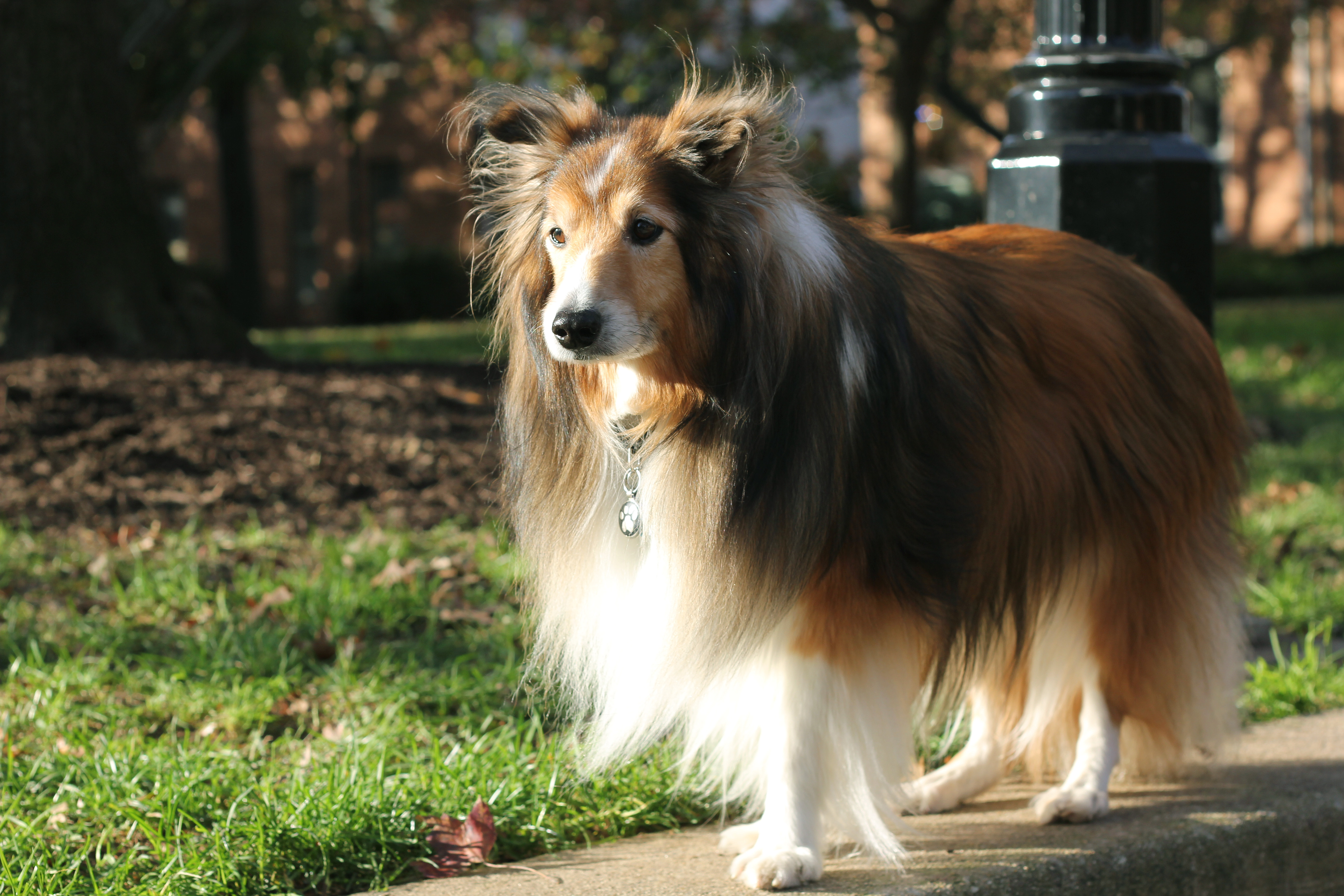
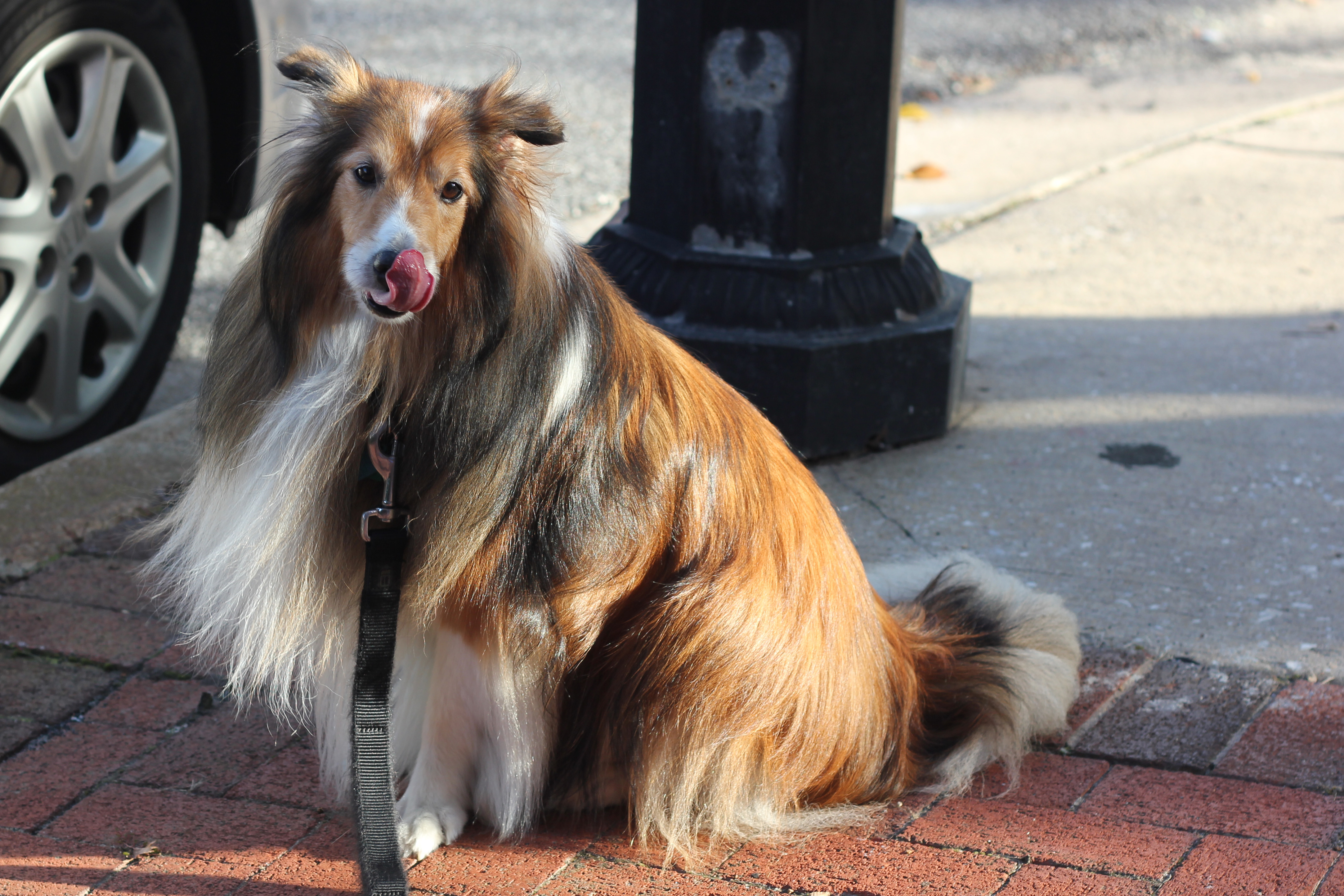
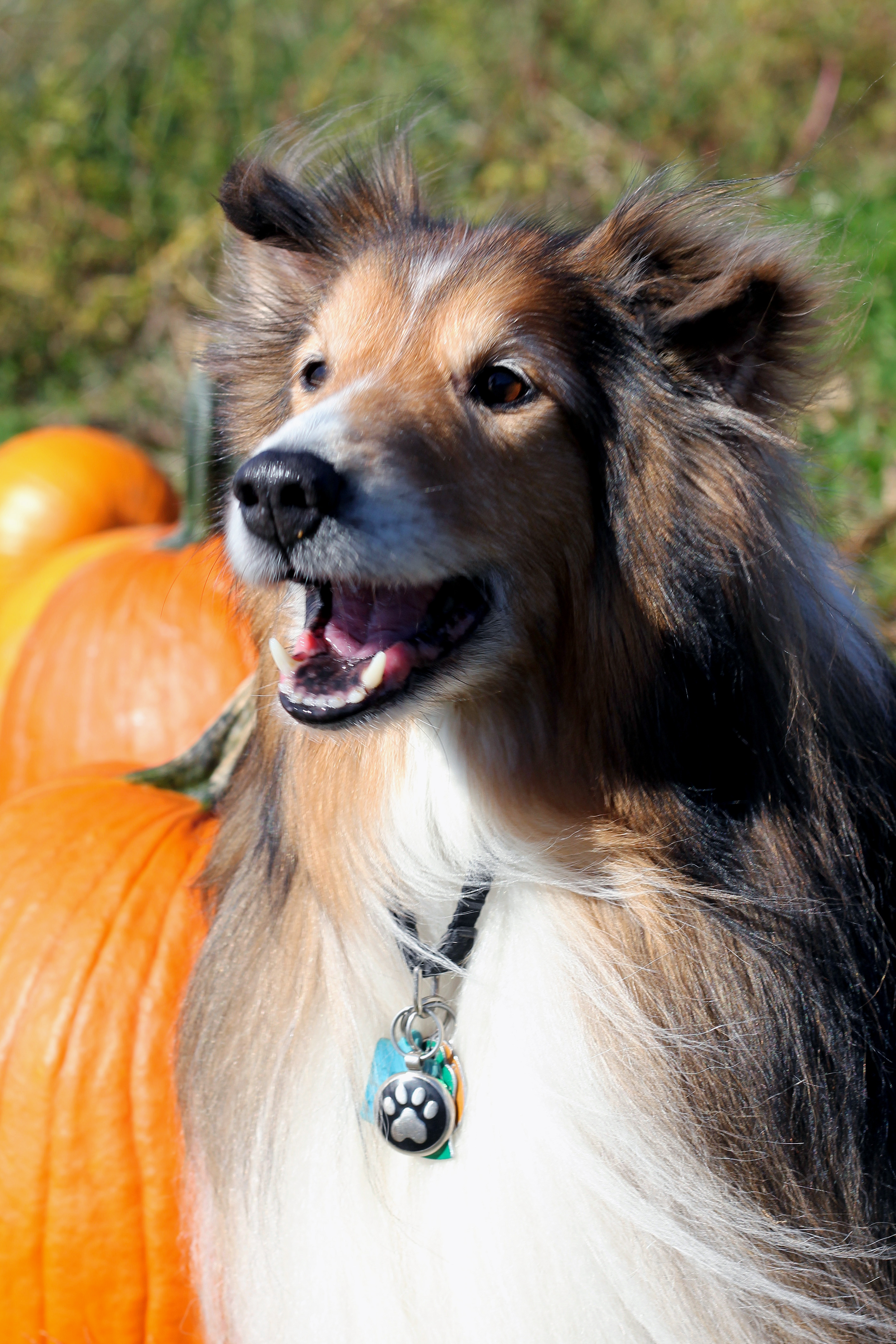
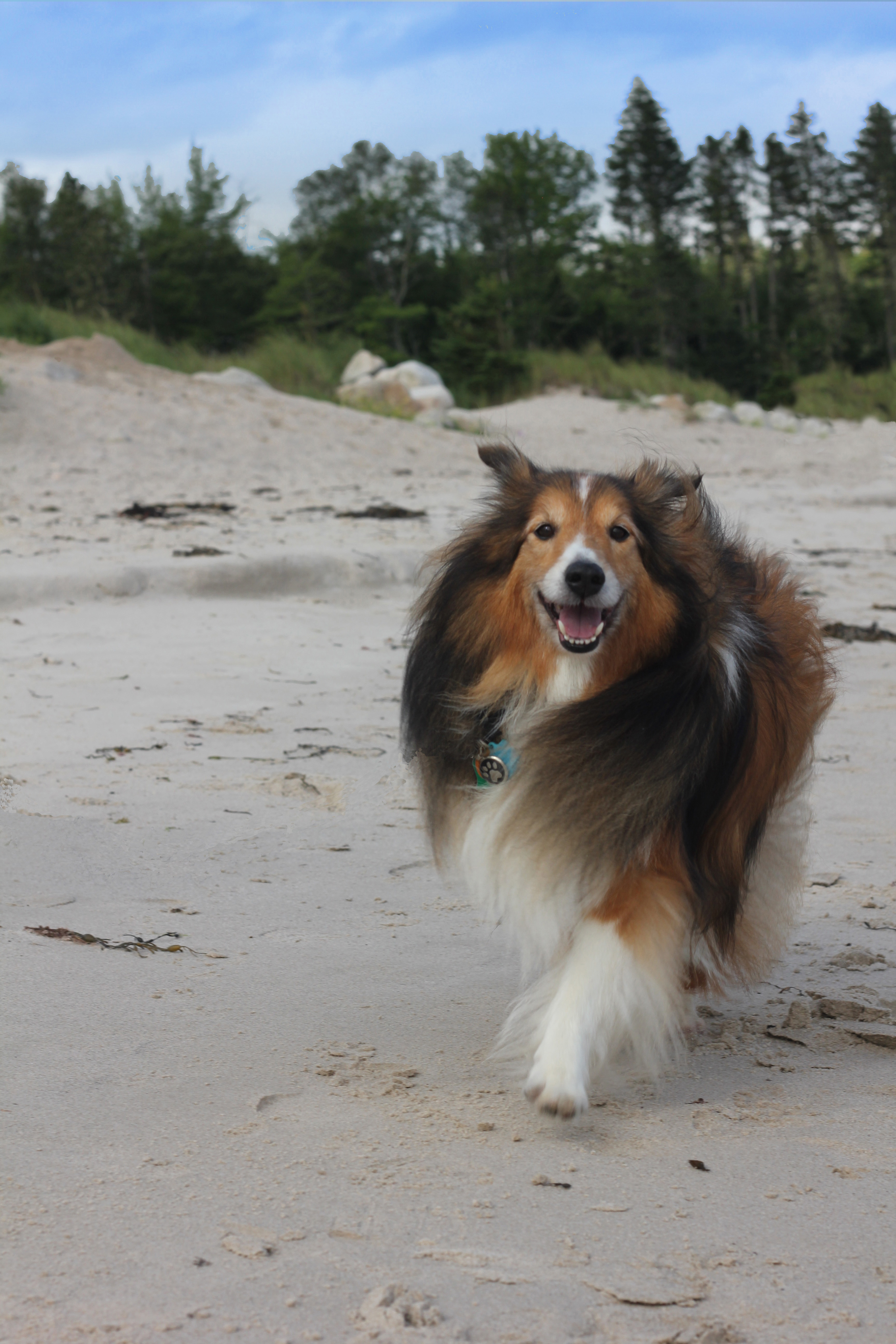
The dog photographs shown in this blog post are of little Biscuit!

Dog Rescue – Interview with Carol Guth, Sheltie Haven Sheltie Rescue, Inc.

Dog Rescue – Interview with Carol Guth, Sheltie Haven Sheltie Rescue, Inc.

Recently, I had the opportunity and pleasure of interviewing Carol Guth who heads and leads the Sheltie Haven Sheltie Rescue, Inc., a non-profit organization based in Frederick County, Maryland.  Carol does extremely important and wonderful work on behalf of many dogs who do not have any other options.  Carol has saved many sheltie dogs, including, Biscuit.  In January 2011, Doug and I adopted Biscuit from Carol through her dog rescue, the Sheltie Haven Sheltie Rescue, Inc.  I believe it is important to highlight this important work that Carol does in conjunction with her rescue, the Sheltie Haven Sheltie Rescue, Inc.  Please enjoy our interview outlined below!


KATHERINE CARVER: How did your adventure in dog rescue begin?

CAROL GUTH: I began rescuing shelties when I was a volunteer at our local shelter.  A skinny young male sheltie mix, Jake, came into the shelter and he had a rear leg swinging.  It was obviously broken.  Jake was a stray and the shelter would only keep him for the five (5) days and then put him to sleep since his injury was, in their mind, not ‘fixable.’  I put a hold on Jake.  At the end of his “stray days” (the law requires that all strays be kept for a minimum of five (5) full days), I took Jake home with me.  I called my friend and breeder and explained what I had done and I asked her if there were any people who rescued these dogs and helped them.  She gave me a woman’s name and after two conversations with her, Jake, the sheltie, was on his way to getting his leg repaired!  My vet was willing to put his leg back together for a reasonable fee and this rescue paid the vet bill.  I took care of Jake and helped him through his rehab.  Once his leg was fixed and healed, Jake had about 90% use of this leg; and a week after that, my contact had found a home for Jake.  Jake’s new owner kept in touch with me and even moved across the country with Jake.  Jake lived to be well into his 15th year and enjoyed life to the fullest.  As a result, I was hooked on rescuing dogs. 


KATHERINE CARVER: What does your rescue work entail?

CAROL GUTH: Dog rescue is a lot of work.  At first there were four (4) of us who shared the rescue work.  By incorporation with the State of Maryland, we legally formed our rescue, Sheltie Haven Sheltie Rescue, Inc.; we obtained the 501(c)3 not-for-profit classification; and we created a website all in about a years time.  I started taking in a dog or two from the shelter and informed other ‘sheltie people’ about these sheltie rescues.  Word of mouth helped with the first three (3) to four (4) shelties who came to our rescue.

Now, I get dogs into the rescue most often from the original owner.  These owners do not want to put their dog in the shelter and they are looking for an alternative.  Owners call me, we chat, and they bring me the dog with whatever paper work they may have.  Once the dog is in my care, I take the dog to the vet for an exam, shots, and spaying or neutering (if necessary).  If we find a problem, we take care of it.  Our biggest problem is always money.  Sheltie Haven Sheltie Rescue, Inc. is funded entirely through donations.  In the beginning we did a lot of fund-raising and went to pet stores to share our dogs and our vision.  The rescue built up its bank account and it continues to do the same now.  We have a couple of people who are monthly contributors and there are others who donate their time to the rescue.  There is of course, the daily handling of the dogs.  They all need to have exercise, food, love, attention and grooming!


KATHERINE CARVER: What rescue experience moved or inspired you the most?

CAROL GUTH: I think my most inspiring story was a young sheltie named Mitzie.  I received a call from an older woman explaining how there was this sheltie that showed up at her house on a regular basis and her favorite pastime was chasing the eighteen wheelers that passed her house regularly.  When this sheltie named Mitzie showed up at this woman’s house, she was not running well.  After catching Mitzie, this woman discovered a wound in the rear leg; however, she did not have the financial means to take Mitzie to a vet.  The woman contacted me, and I traveled and picked up Mitzie and took her to my house.  I arrived the following day, and brought Mitzie to the vet who examined Mitzie and discovered that Mitzie had a GUN  SHOT wound.  At the time, it was December 23, and I could not get an appointment with the orthopedic specialist until December 26.  As such, we bandaged Mitzie up and took her home for the holiday. 

On December 26, we went to the orthopedic specialist, and it was discovered via x-rays, that bee bees had shattered Mitzie’s knee and the bee bees had gone through a growth plate.  We decided to try reconstructive surgery.  The surgery went as planned; however, the bone failed to heal.  Two (2) months later, Mitzie’s leg was amputated.  We placed Mitzie’s photo on the Sheltie Haven Sheltie Rescue, Inc.’s website, and a family contacted me and decided they wanted to adopt Mitzie even though they had to wait for Mitzie to recover.  We initially thought they would have a change of heart after Mitzie’s leg was removed; however, this family still wanted to adopt Mitzie who now had only three (3) legs.  Mitzie was soon adopted after her rehab was completed following the amputation of her leg.  The family who adopted Mitzie came back to visit the rescue three (3) years later, and we watched Mitzie run in the yard, and you would never had known that she was running on only three (3) legs.  Mitzie was fast and furious!  Mitzie was still willing to chase anything that moved!


KATHERINE CARVER: Do you have any favorite rescue story?

CAROL GUTH: Sherman, a sheltie, had to have been the one of my favorite rescue stories.  Sherman came to me from a family with four (4) kids.  Sherman was adopted almost as soon as he came into the rescue.  I did not have much time to evaluate him in-depth, although Sherman seemed fine and a couple adopted him during the month of October.  The man who adopted Sherman called me in early November to tell me Sherman had bitten his wife.  After talking with him, I suggested he return Sherman to the rescue.  In response, the man said, “Oh, no.  I love the dog.”  The man stated to me that he would keep Sherman.  The man called me again in early December to tell me that Sherman was chasing shadows on the wall and asked if I knew what was wrong with him.  I suggested to the man that he have Sherman’s eye examined by the vet.  “Oh, and by the way,” he said, “The dog bit my wife again.”  We talked and I again suggested that he return Sherman to the rescue as the bite this time had broken skin.  The man was afraid I would put Sherman to sleep and, he said, “Oh, no.  I love the dog.  He is a beautiful dog.”  So, he kept Sherman.  The man called me again on December 26th and said he had taken Sherman to the vet and to an eye specialist and they both found nothing wrong with Sherman.  However, to my surprise, the man informed me that he was returning Sherman ASAP as the man told me that Sherman was a ‘vicious biting dog!’  I ask in response, “What happened to bring this on?” and he replied, “Sherman bit ME!”  I was so glad I was not his wife again!  Soon after, Sherman came to live with me.  We discovered that Sherman had hip dysplasia and that he was afraid of being trapped.  As time went on, Sherman learned to trust me, and I got to the point he would let me groom him without a muzzle.  He decided after he had lived with me for eighteen (18) months that I belonged to him and that he was responsible enough to be left out loose in the house with my other dogs.  He lived with me until bone cancer took him at age fourteen (14).  We as a great and beautiful dog!!

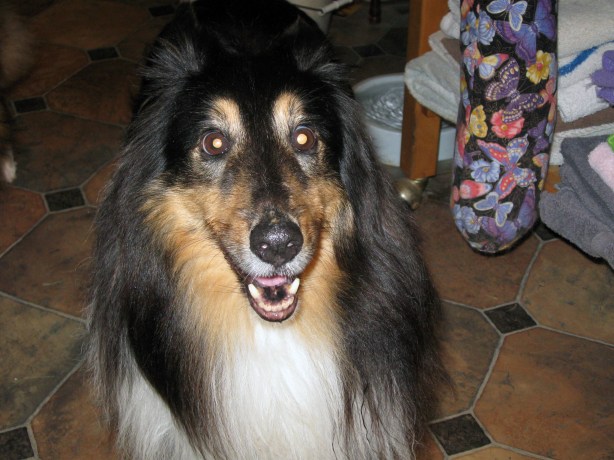
Below is a photograph of Sherman!
 

KATHERINE CARVER: What is the most challenging aspect about your dog rescue work?

CAROL GUTH: I think the most challenging aspect of dog rescue is having enough money to pay for vet bills.  Vets like everyone else, have expenses that increase each year.  I am able to perform the annual shots on the rescue dogs, but the rabies and snap test for heartworm have to be completed by the vet.  For each dog rescue, I have the rabies vaccine completed at the local clinics after the initial one is given by the vet.  However, some rescue dogs already have their rabies vaccine current by proof of vaccination.  However, blood work, surgeries, and other tests are expensive.  My vet and I have an arrangement for certain costs that have remained the same.  These costs include the snap test for heartworm, rabies, and neutering/spay fees.  My vet also has been very generous with our rescue over the last twenty (20) plus years I have been involved in dog rescue.


KATHERINE CARVER: What are the most satisfying and rewarding parts of your dog rescue work?

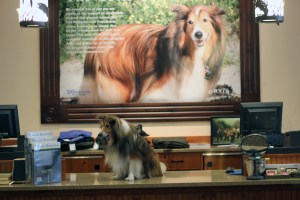
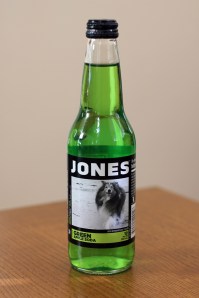
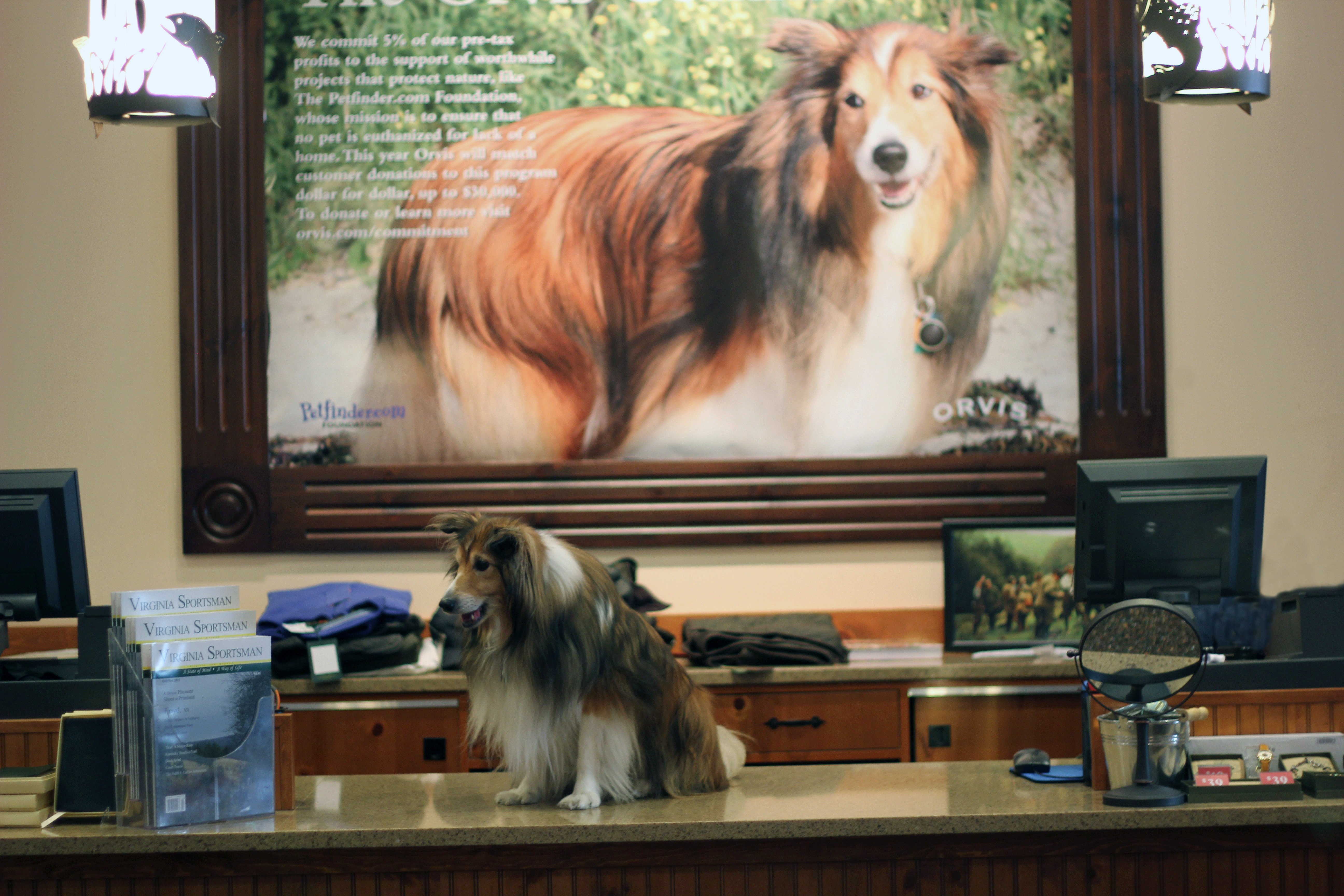
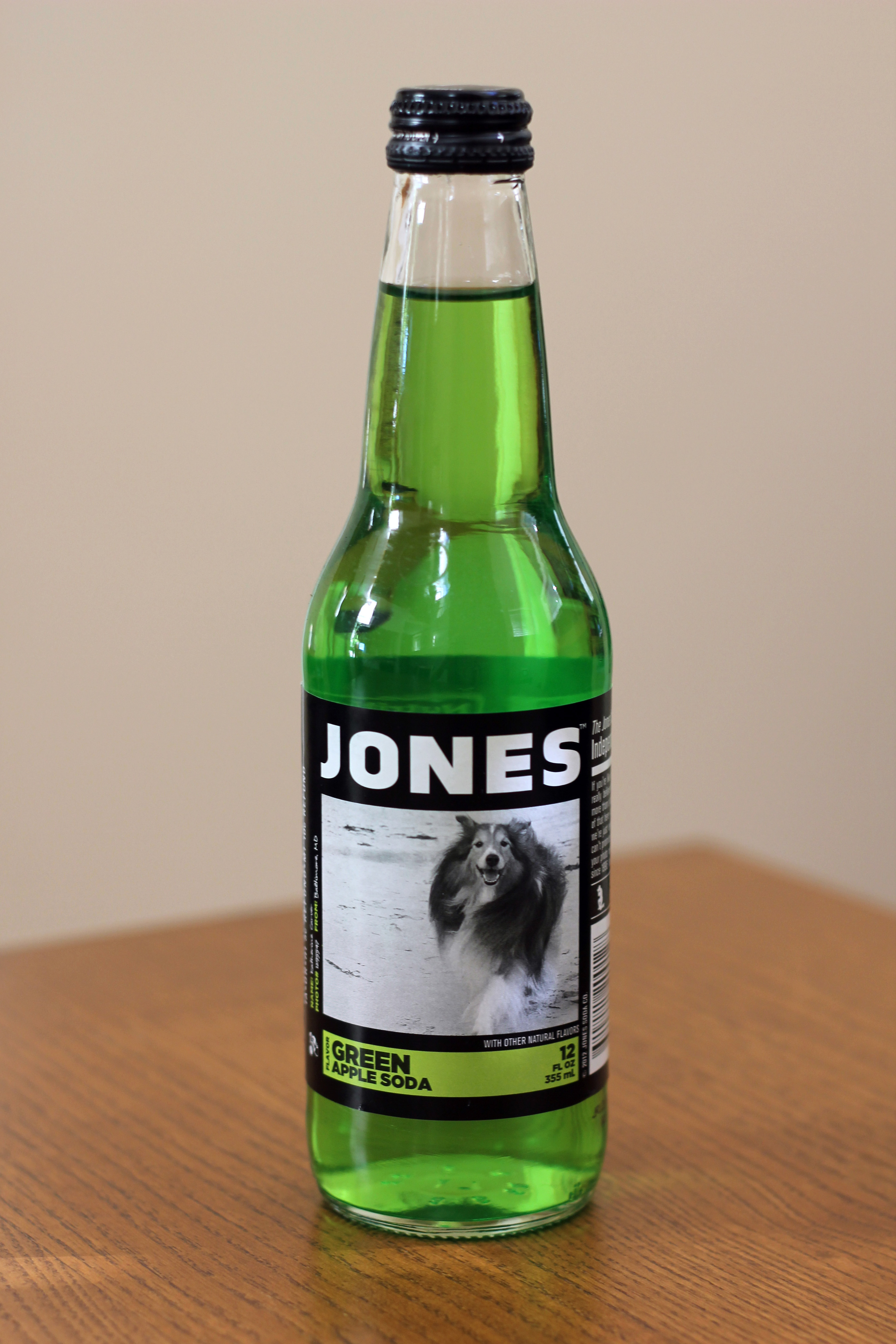
CAROL GUTH: I am always extremely gratified when a rescue dog gets a wonderful new home and they get a new lease on life.  I really love the fact that I have repeat customers for rescues and that people keep in touch to tell me how they are doing.  I also board back my rescues so that I can see for myself how they are doing if the family goes on vacation, for example.  Biscuit is my first rescue dog to gain public recognition – Biscuit recently was an Orvis Cover Dog Winner; Biscuit represents the Orvis’ Petfinder Commitment promoting dog rescue; and Biscuit is a Jones Soda Label Winner!  Please see the highlights of Biscuit below.


KATHERINE CARVER: If you could give pet owners one piece of advice, what would it be?

CAROL GUTH: The best thing anyone can do for their pet is to spend quality time with his/her pet – and for the young and energetic sheltie that means training and dog sports!  Get involved with your dog and do things that make you both happy and fit!  Agility, Rally, Obedience, Trick, Dancing with your dog (Canine musical Freestyle), Flyball, and Frisbee completions are just a few of the opportunities that are out there for you and your sheltie canine partner.


KATHERINE CARVER: What advice can you give to someone who might be considering getting involved with or starting an animal rescue group?

CAROL GUTH: If you are interested in dog rescue, volunteer first.  See what goes into a good working rescue.  Also, consider how much time you are willing to spend on paper work, caring for the animals, and fund-raising.  It is best to be a consistent volunteer so you see the whole picture, not just one day in the life…


KATHERINE CARVER: What are your goals and dreams for the future?

 CAROL GUTH: I hope to retire from my weekday job in another three (3) to four (4) years.  I am hoping and planning to spend more quality time with my own dogs and the rescue dogs in the hopes of getting more of them placed into furever homes sooner.   I would like my turn around time to place a new rescue dog to be no more than one (1) month.

Below are photographs of Lassie, a sheltie rescue dog who was at the Sheltie Haven Sheltie Rescue, Inc., who has since been adopted.  Most noticiable in the photogrphs below, you can see significant positive changes in Lassie’s fur coat and weight.  Lassie looks like a totally different sheltie dog in Lassie’s after photograph displayed below.

Lassie (Before)

Lassie (After)


KATHERINE CARVER: How can one donate to your dog rescue, Sheltie Haven Sheltie Rescue, Inc.?

CAROL GUTH: Sheltie Haven Sheltie Rescue, Inc. is a non-profit organization.  With our 501(c)3 non-profit status, all donations made are tax-deductible.  If you would like to send a donation, you can make a check payable to SHSR (Sheltie Haven Sheltie Rescue, Inc.) and mail it to me at 2707 Rosemary Court, Adamstown, MD 21710.  Thank you for any and all donations to the shelties in the rescue. 

Currently, there are seven (7) shelties in the rescue who are in need of furever homes.  These shelties range in age from fourteen (14) years to two (2) years of age.   If you want to adopt a rescue dog; donate money; and/or contribute your time to the Sheltie Haven Sheltie Rescue, Inc., please contact me via telephone at 301-663-0635; or via e-mail at sheltytaxi@aol.com.  You can also visit our website, which is currently in the process of being upgraded and redesigned at, http://www.sheltiehaveninc.org/.

Below are photographs of three (3) of the current sheltie rescues dogs in need of furever homes.  (Please note that I also have four (4) more shelties not pictured who are also in need of furever homes).  Please contact me if you are interested in adopting any of these shelties shown immediately below.

Charlie, male sheltie, age 22 months


Spirit, male sheltie, age 8 years


Angel, female sheltie, age 12 years


Photographs of the sheltie rescue dogs are courtesy of Carol Guth, Sheltie Haven Sheltie Rescue, Inc.

You can read additional interviews here.
When Dogs Come to Work Everyone Benefits

This post below is from Life With Dogs.  My husband, Doug, always says that he wishes the he could take our little Biscuit to work with him as it would be a huge “morale boost!”  Biscuit is usually always up for an adventure, except for adventures to the vet’s office!

Every day millions of lucky dogs and their humans get to go to work together, and many people support the idea that it makes the workplace feel less stressful and generally creates a happier atmosphere.  Erin McCormack, who works at Authentic Entertainment in Los Angeles agrees, saying ”They are a calming force.  When things get stressful, you can lean down and pet your dog or take a walk and pet a nearby dog.  You get a more efficient workplace, one that’s not consumed with stress.”

McCormack’s dog Molly, a Maltese mix, is one of the fortunate dogs who gets to spend every Friday at work with her mom.  In addition to making the workplace less frantic feeling, McCormack says ”It’s such a great way to create a productive atmosphere. It makes the environment more conducive to creativity.”  As well, it saves dog owners the cost of dog walkers or day care since they can walk them on lunch breaks.  There is also support for the argument that this contributes to the overall health and well being of staff since it gets them out of their chairs and out into the fresh air, also contributing to improved productivity.
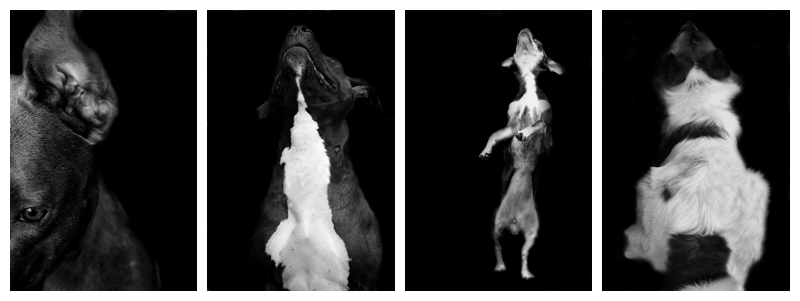
An American Pet Products Association survey indicates that one in five business in the United States is pet friendly, including Google Inc. and  Amazon Inc. who both say that it helps keep employees happy and therefore boosts retention.  ”Engineering and software companies are often the type of company that is pet-friendly,” says Len Kain, cofounder and editor of DogFriendly. com, which lists dog-friendly companies in every state.

Allowing dogs to come to work is also a way for companies to show that they are “different,” that they care about people and their quality of life.  And of course, dog owners want to give their dogs the best possible quality of life, so everyone benefits.

Do you live in a dog friendly city?

Below is some interesting information from a recent Men’s Health article concerning dog friendly cities in the United States.

No one wants to hear that his city has gone to the dogs.  But in this case, it means canines are king, and Portland leads the pack.  Men’s Health crunched the per capita numbers of dog parks (Trust for Public Land), dog-friendly apartments (Apartments.com), vets (MyVeterinarian.com), animal shelters (Petfinder.com), and pet stores and services, along with the percentage of dog owners (both SimplyMap).  Finally, Men’s Health factored in state laws against animal cruelty, dog fighting, and puppy mills (Humane Society).  The results are outlined below to see where you city ranks in terms of dog friendliness.  Hopefully, you live in a dog friendly city!

MOST DOG FRIENDLY

1.    Portland, OR  A+
2.    Colorado Springs, CO  A+
3.    Wilmington, DE  A+
4.    Seattle, WA  A
5.    Denver, CO  A
6.    Tampa, FL  A
7.    Manchester, NH  A-
8.    St. Louis, MO  A-
9.    Pittsburgh, PA  A-
10.  Las Vegas, NV  A-


11.    Madison, WI  A-
12.    Tucson, AZ  B+
13.    Omaha, NE  B+
14.    Cincinnati, OH  B+
15.    Minneapolis, MN  B+
16.    Aurora, CO  B+
17.    Austin, TX  B
18.    Norfolk, VA  B
19.    Burlington, VT  B
20.   Lincoln, NE  B-


21.    Baton Rouge, LA  B-
22.    Des Moines, IA  B-
23.    St. Petersburg, FL  B-
24.    Reno, NV  B-
25.    Chesapeake, VA  B-
26.    Portland, ME  B-
27.    Atlanta, GA  B-
28.    Plano, TX  C+
29.    Tulsa, OK  C+
30.    Virginia Beach, VA  C+


31.    Little Rock, AR  C+
32.    Raleigh, NC  C+
33.    Orlando, FL  C+
34.    Sacramento, CA  C+
35.    Albuquerque, NM  C+
36.    Salt Lake City, UT  C+
37.    Greensboro, NC  C+
38.    St. Paul, MN  C+
39.    Miami, FL  C
40.    Winston-Salem, NC  C


41.    Charlotte, NC  C
42.    Bakersfield, CA  C
43.    Columbia, SC  C
44.    Jersey City, NJ  C
45.    Cheyenne, WY  C
46.    Rochester, NY  C
47.    Nashville, TN  C
48.    Kansas City, MO  C-
49.    Charleston, WV  C-
50.    San Francisco, CA  C-


51.    Anchorage, AK  C-
52.    Boise City, ID   C-
53.    Durham, NC  C-
54.    Chicago, IL  C-
55.    Fort Wayne, IN  C-
56.    Phoenix, AZ  C-
57.    Oklahoma City, OK  C-
58.    Houston, TX  C-
59.    New Orleans, LA  C-
60.    Birmingham, AL  D+


61.    Lexington, KY  D+
62.    San Diego, CA  D+
63.    Providence, RI  D+
64.    Washington, DC  D+
65.    Indianapolis, IN   D+
66.    Milwaukee, WI  D+
67.    Sioux Falls, SD  D+
68.    Wichita, KS  D+
69.    Lubbock, TX  D+
70.    Riverside, CA  D+


71.    New York, NY  D+
72.    Jacksonville, FL  D+
73.    Fargo, ND  D+
74.    Dallas, TX  D
75.    Billings, MT  D
76.    Cleveland, OH  D
77.    Philadelphia, PA  D
78.    Fresno, CA  D
79.    Toledo, OH  D
80.    Stockton, CA  D-


81.    Baltimore, MD  D-
82.    Honolulu, HI  D-
83.    San Jose, CA  D-
84.    Fort Worth, TX  D-
85.    Memphis, TN  D-
86.    Oakland, CA  D-
87.    San Antonio, TX  D-
88.    Columbus, OH  D-
89.    Boston, MA  D-
90.    Laredo, TX  D-

LEAST DOG FRIENDLY

91.    Buffalo, NY  D-
92.    Louisville, KY  F
93.    Jackson, MS   F
94.    Corpus Christi, TX  F
95.    El Paso, TX  F
96.    Detroit, MI  F
97.    Bridgeport, CT  F
98.    Anaheim, CA  F
99.    Newark, NJ  F
100.  Los Angeles, CA

“I think dogs are the most amazing creatures; they give unconditional love.  For me they are the role model for being alive.”
Gilda Radner

Why Does My Dog Curl Up in A Ball When He Sleeps?

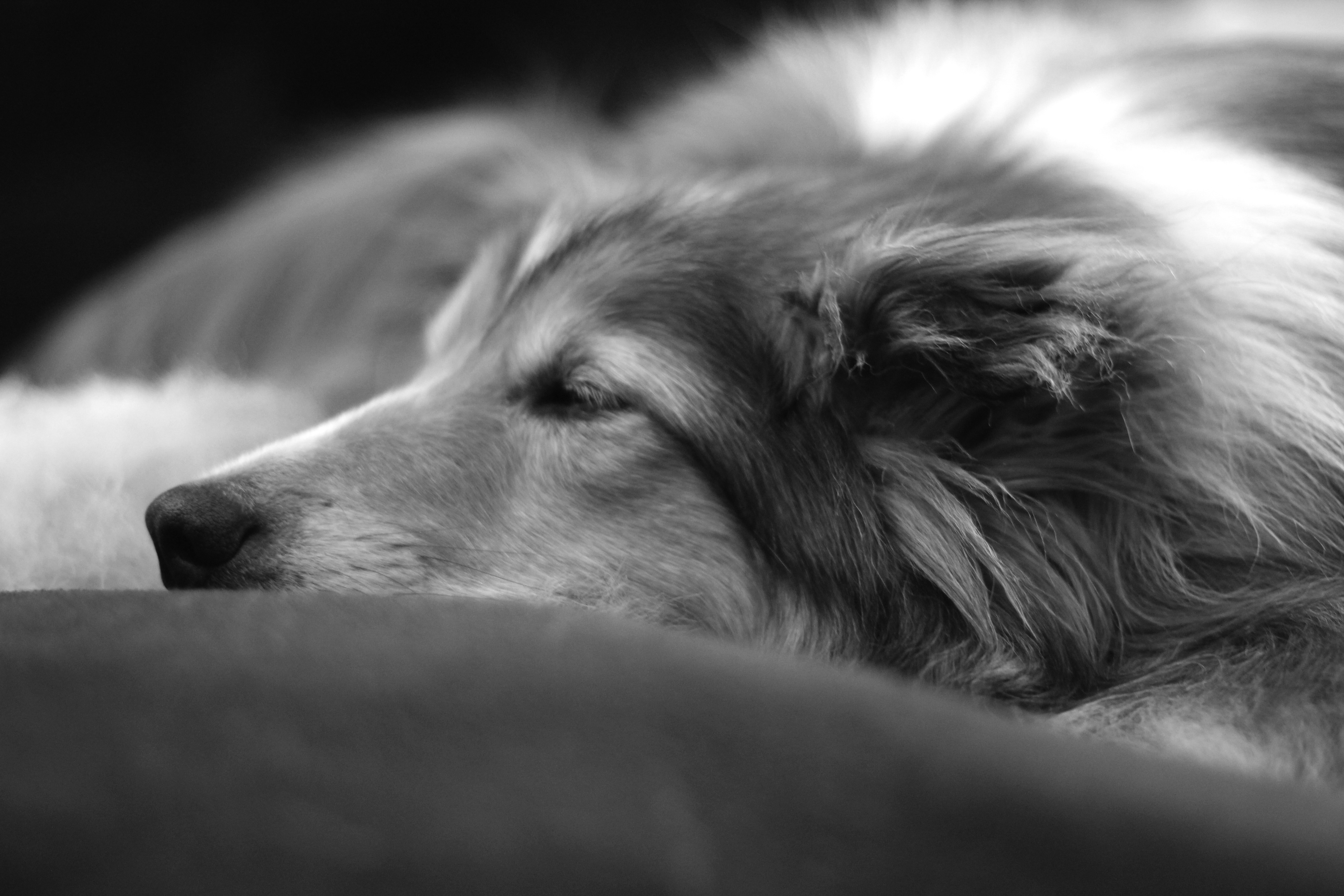
There are two reasons why your furry family member rolls up in a ball to snooze.  When dogs sleep in the wild, especially where it is cold, they will dig a nest and curl up into it.  This gives the dog warmth and tucking into a ball conserves body heat.  It also protects dogs’ most vulnerable organs in the abdomen area from predators.

Second, if a dog is in unfamiliar territory, he will revert back to the instinct-based, curled-up sleep position.  Thus, giving your dog a blanket can help him dig a nest with the bedding material before he lies down instead of digging a hole to China in your carpet!

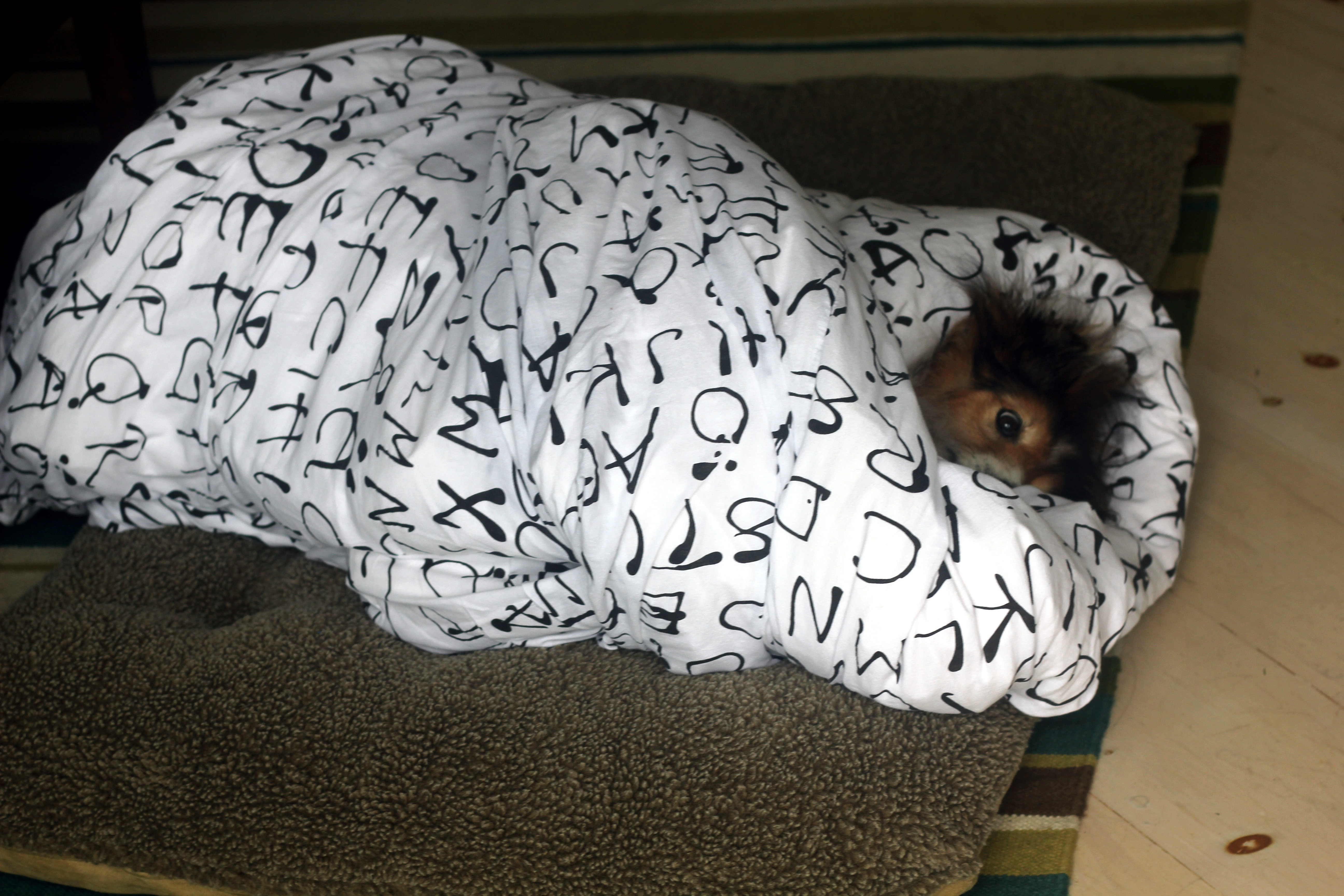
Biscuit enjoys his duvet, and often times he spends quite a bit of time getting his duvet in just the right position for him to sleep!  Biscuit can be quite particular!

Other times, Biscuit likes to be wrapped up like a little burrito!

If A Dog Were The Teacher

If A Dog Were The Teacher

“If a dog were the teacher you would learn stuff like:
When loved ones come home, always run to greet them.
Never pass up the opportunity to go for a joyride.
Allow the experience of fresh air and the wind in your face to be pure ecstasy.
When it’s in your best interest, practice obedience.
Let others know when they’ve invaded your territory.
Take naps.
Stretch before rising.
Run, romp, and play daily.
Thrive on attention and let people touch you.
Avoid biting when a simple growl will do.
On warm days, stop to lie on your back on the grass.
On hot days, drink lots of water and lie under a shady tree.
When you’re happy, dance around and wag your entire body.
No matter how often you’re scolded, don’t buy into the guilt thing and pout… run right back and make friends.
Delight in the simple joy of a long walk.
Eat with gusto and enthusiasm. Stop when you have had enough.
Be loyal. Never pretend to be something you’re not.
If what you want lies buried, dig until you find it.
When someone is having a bad day, be silent, sit close by and them gently.” ~Author Unknown

Little Biscuit is our little teacher, a Buddha, in many ways.  Biscuit has shown us how to live in the present moment.  Biscuit is always living in the present moment, as he does not know any different.  He is not concerned about the past or the future.  It takes very little to make Biscuit happy.  He is so thrilled when he gets a few treats (his kibble); and he wants and loves to be included in whatever we are doing — spanning from just sitting with us to going on vacation, which he loved.  Biscuit is very persistent and determined, and he never gives up.  Biscuit is very loyal.  In fact, he is the most loyal living being I have ever met.  Most of all, Biscuit makes each day special just by being him!  We feel very lucky to have met little Biscuit.
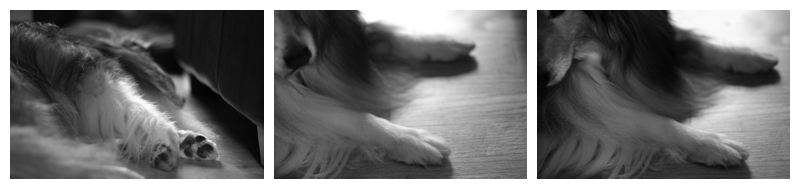
 

Pets May Make Children Healthier

I found this to be an interesting article.

Pets May Make Children Healthier

By Val Wadas-Willingham — CNN Medical Producer

Children who are born to a family with furry pets seem more able to ward off certain illnesses.

A recent study out ofFinlandfinds babies who have a cat or dog around during their first year have fewer health problems than little ones who don’t have pets.

The study, published in next month’s issue of Pediatrics, followed 397 children from before birth to age 1, and noted the number of times they had contact with either a dog or cat each week.

Although it’s a pretty common thing to see newborns with minor respiratory issues and ear infections, researchers found those babies who had more interaction with animals seemed to have fewer of these problems and needed less medication, even when they were sick.

Even though babies living with cats were still protected, their protection was not as strong as those babies who lived around dogs. And kids living in homes in which dogs went in and out of the house more often seemed to have the lowest risk of infections.

Although doctors acknowledge more research is needed, they say there’s something about animals that affect an infant’s immune system which can protect against certain childhood infections.

The people who had dogs that were mostly kept inside appeared to have less protection from the illnesses, said Dr. Eija Bergroth, a pediatrician at the Kuopio University Hospital in Kuopio, Finland and one of the study’s authors. “So, we speculated that the more the dog is outside, the more dirt (and microbes) it might bring inside.”

And what does dirt have to do with keeping an infant healthy?

“The microbes in the dirt might somehow stimulate the child’s immune system and the immunologic responses to respiratory viruses and bacteria later could then be more composed,” said Bergroth. “Or it might be something to do with the dog itself as an animal, like dander, but this also unsure.”

The researchers were not able to objectively analyze whether inner city children had different results than kids from rural and suburban areas. Since living environment can impact microbes in the dirt, children in different conditions might show different effects.

According to the authors, the children in the study are being followed as a part of a larger study mainly concentrating on allergies. So, there may be a possibility, they said to analyze the effect on respiratory infections later, as the children grow older.

One Nation Under Dog: Stories of Fear, Loss, and Betrayal

Last night, my husband and I began watching HBO’s documentary entitled, One Nation Under Dog: Stories of Fear, Loss, and BetrayalWe have not yet completed watching this documentary, but so far, it seems to be very well-done.  Below is a brief summary of this HBO documentary.

Americans have always had a love affair with canines, but lost amidst the pampering are unpleasant truths about dog ownership, care and commerce. ONE NATION UNDER DOG: STORIES OF FEAR, LOSS & BETRAYAL offers an eye-opening, three-part portrait ofAmerica’s complex relationship with dogs.

“Part One – Fear”: In the opening segment, Dr. Robert Taffet is taken to court by neighbors after several bite incidents involving his Rhodesian Ridgebacks in New Jersey.  Despite the severity of some of the attacks, he is deeply committed to his pets and wins his cases, including one in which a three-year-old girl’s ear was bitten off.  Eight months later, after the same dog bites a teenager, Dr. Taffet puts him down.

“Part Two – Loss”: The second section focuses on people coping with the loss of beloved pets.  This segment features a group of mourners sharing deep grief over recently deceased dogs in a pet-loss support group at the San Francisco SPCA; two women laying their dog to rest in the oldest pet cemetery in the U.S.; and a couple attempting to replace a beloved dog by cloning him. Also featured is Julie Adams, whose own love and loss of dogs has inspired her rescue work; with no shelters in her rural area, she’s taken it upon herself to care for and shelter more than 100 stray and abandoned dogs.

“Part Three – Betrayal”: The final section explores issues of overpopulation, shelters, rescuing, spaying and neutering. Approximately two million dogs are destroyed in animal shelters each year. This segment features three minutes of graphic footage shot by a film student showing dogs and puppies being euthanized.

Many people do not know that 25% of dogs in shelters are actually purebreds, and many pet store dogs come from mass breeding operations known as puppy mills.  For many dogs from mills and animal shelters, rescue is the only hope of survival.  This segment follows volunteers saving some 200 puppy mill dogs from these dire conditions, including rescuer-trainer John Gagnon, who rehabilitates aggressive, difficult-to-adopt dogs and works with an organization to find them good homes, and Shawn South-Aswad, who raises money to rescue dogs and place them with foster families.

ONE NATION UNDER DOG: STORIES OF FEAR, LOSS & BETRAYAL is produced by Ellen Goosenberg Kent; supervising editor, Geof Bartz, A.C.E.; co-producer, Larissa Bills; directed by Jenny Carchman, Ellen Goosenberg Kent, Amanda Micheli; editors, Geof Bartz, A.C.E., Joe Beshenkovsky, Seth Bomse, Traci Loth; producers, Larissa Bills, R.J. Cutler, Julie Goldman, Allyson Luchak, Amanda Micheli, Danielle Renfrew Behrens; inspired by the book “One Nation Under Dog,” by Michael Schaffer. For HBO: supervising producer, Lisa Heller; executive producer, Sheila Nevins.

For further reading, check out this article.


Dogs 101: Shetland Sheepdog

Click here to view an Animal Planet video on Shetland Sheepdogs – for all of you Shetland Sheepdog lovers or for those who are considering adopting/rescuing a Shetland Sheepdog!  Our little Biscuit is very loyal and loving any my husband and I highly recommend shelties to anyone!