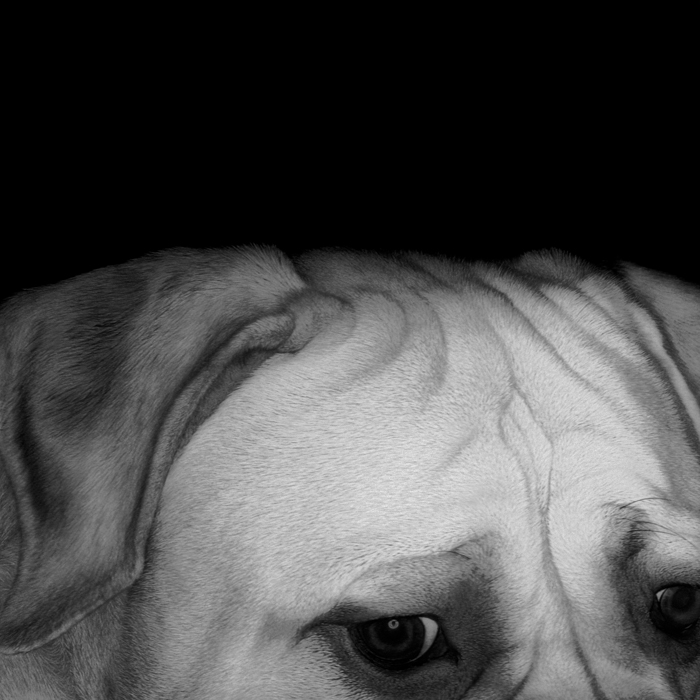
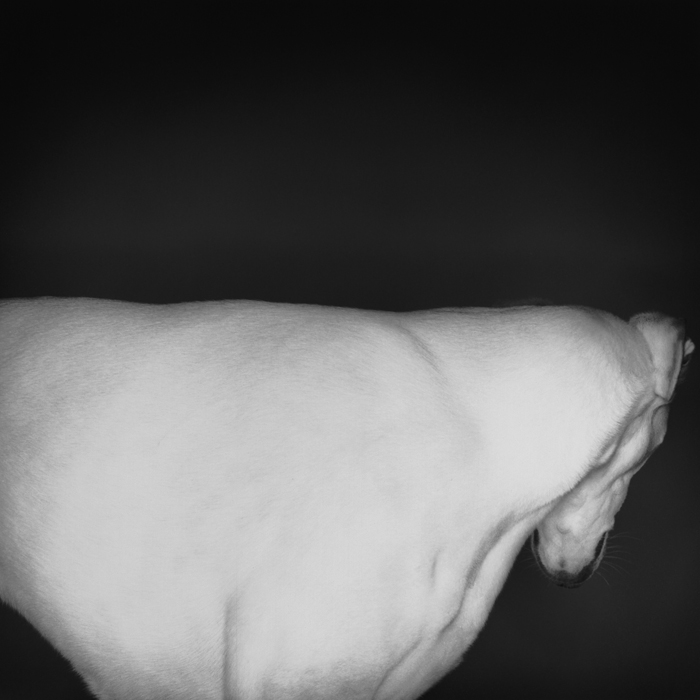
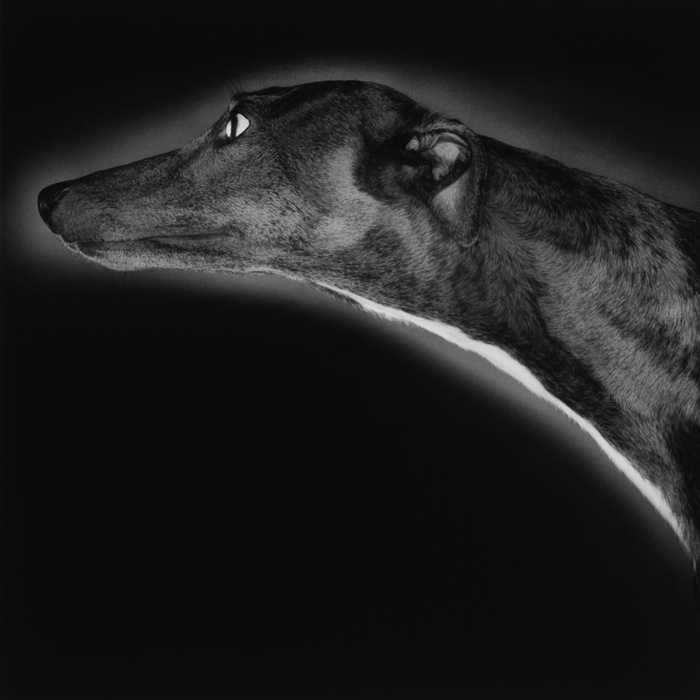
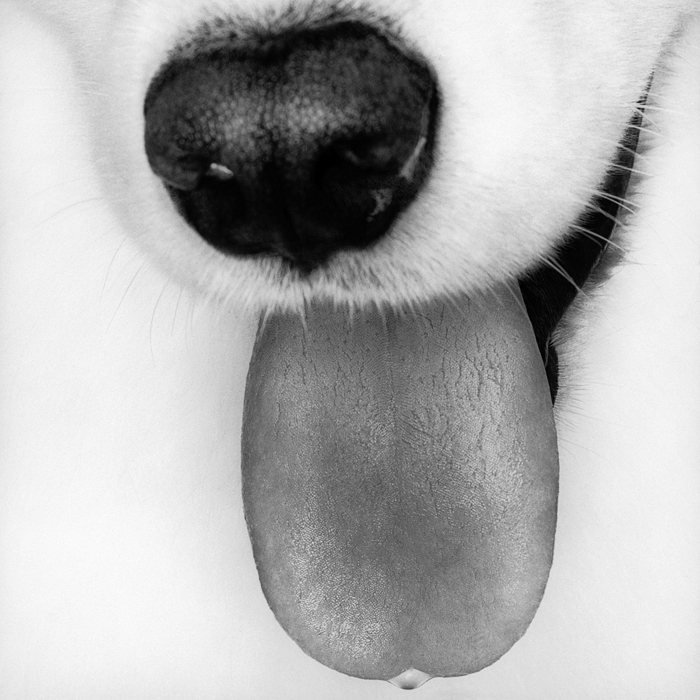
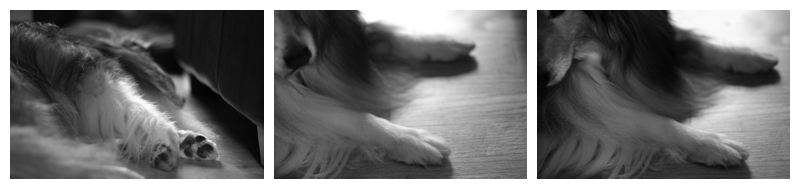
Happy Friday!
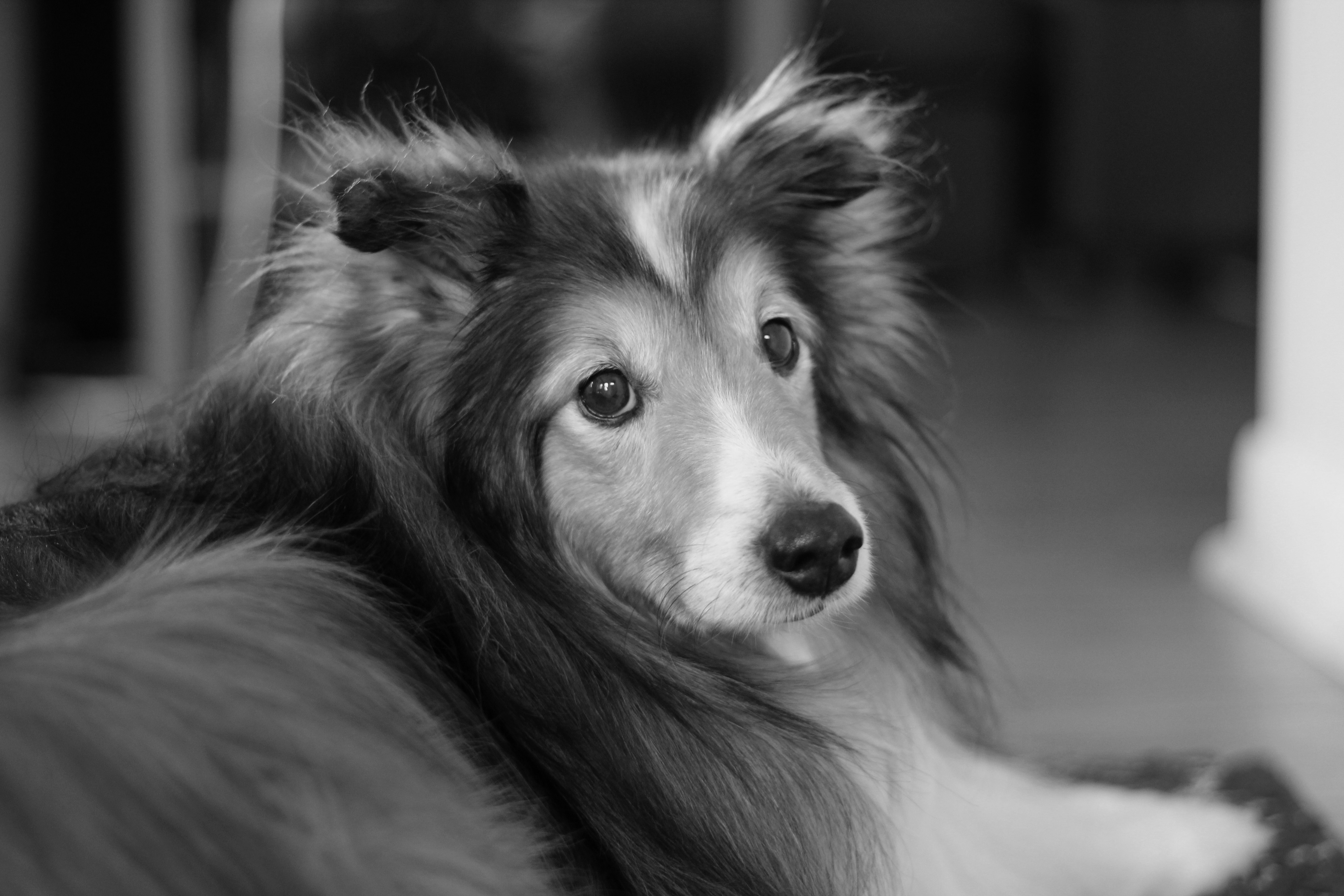
Happy Friday from Biscuit!
Jul 20
Jul 12
Interview with Traer Scott, Photographer
Below is an interview with Traer Scott. Traer Scott is a Rhode Island based photographer and author of Shelter Dogs; Street Dogs; and Wild Horses: Endangered Beauty.
KATHERINE CARVER: What were your beginnings as a photographer and when did you realize it would become your chosen form of expression?
TRAER SCOTT: I began working in a darkroom at school in fourth grade. We built pinhole cameras and then developed the prints ourselves. I obtained my first SLR camera for my thirteenth birthday and staged photo shoots at sleepovers, so I guess it all started there. It wasn’t until my junior year of college, after experimenting with a lot of different art forms, that I realized my greatest passion was for photography. I’m in love with the medium itself. It’s wildly unpredictable yet still skill driven.
KATHERINE CARVER: Did you formally study art/photography?
TRAER SCOTT: Yes, however, I did not attend art school. I earned a B.A. in Mass Communications with a minor in film. I took independently offered photography and advanced darkroom classes all through college; and after college graduation, for a six-month practical intensive course, I attended the New England School of Photography located in Boston, Massachusetts. I also studied every summer at the Maine Media Workshops.
KATHERINE CARVER: How do you balance your personal work and your commercial work? Does one feed the other? Or does the commercial work support your passion?
TRAER SCOTT: Although there will always be work that “just pays the bills,” there is very little distinction to me anymore between commercial and personal work. I am passionate about absolutely everything I shoot, and I rarely shoot anything that I don’t envision becoming a series or a book. Whether it actually takes root and works is another story, but the intent is always long term and series oriented. The book work is obviously more commercial but some of it, like Shelter Dogs, is intensely personal too. The “personal work” is usually a fine art series that is aimed at exhibition or publication, like Natural History.
True commercial work such as advertising campaigns and the like is not something I do much of, but am certainly not adverse to it. The way I see it, if someone is paying me to make pictures, no matter what they are of, it’s a good day.
KATHERINE CARVER: What was the impetus that inspired you to begin shooting dogs (and other animals)?
TRAER SCOTT: I have always loved to photograph animals simply because I find them beautiful and much more fascinating than people. It was, however, somewhat accidental that animal photography became a professional niche for me. I found out that I have a unique vision to offer when it comes to telling animals’ stories. I can’t necessarily say that about any other genre of photography. My images of animals are by far the most honest and sincere of all my work.
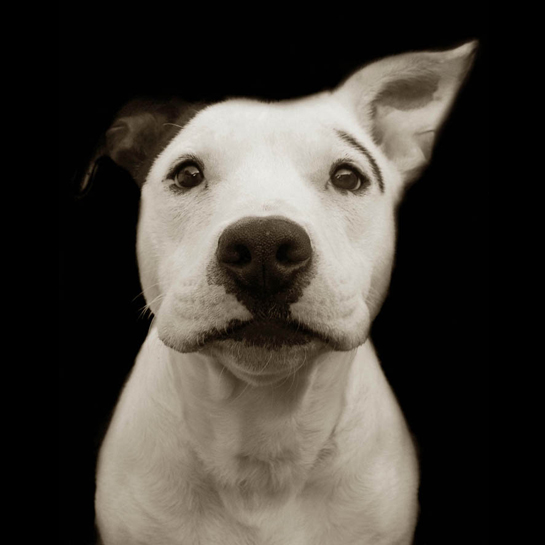
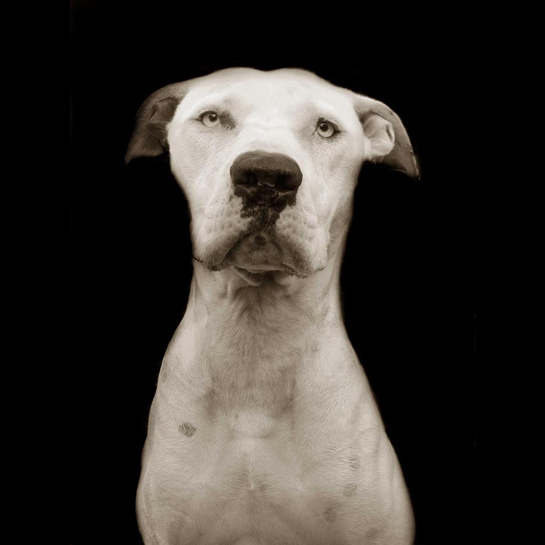
Many of the Shelter Dogs are Pit Bulls which I feel is an important and accurate representation. Shelters all over the country are flooded with this breed. Statistics suggest that in major cities, pit and pit mixes make up at least 20% of the overall shelter dog population. In the city shelter I worked at, 50-80% of our dogs were Pits.
What amazed me most when I began to look back at this series [Shelter Dogs], was the intense emotion, dignity and sometimes humor that I saw in each face despite the circumstances in which they were forced to live. Every photograph was taken while the dog was [impounded] in an animal shelter. Some found good homes, others were euthanized.
KATHERINE CARVER: Did you envision your work with dogs to become published books?
TRAER SCOTT: Once I saw a series begin to take shape, I hoped I could turn the Shelter Dogs’ images into a book, primarily as a means of education and to memorialize the dogs I had lost, but wasn’t expecting it to happen so quickly. When people view these images, they are often locking eyes with a captivating being which has been cast aside or abused, often left to die. I used only natural light and an Olympus digital camera with a superb macro lens. Beyond simple lightning, darkening and clean-up, there were no significant digital alterations to any of these images. I usually worked with a volunteer assistant and a large box of dog treats. It would take anywhere from five minutes to over an hour to get the “right” shot of each dog.
After the success of Shelter Dogs, I was given a lot of latitude and was able to take on the Street Dogs project as my second book. Wild Horses: Endangered Beauty followed the year after.
KATHERINE CARVER: Can you discuss your personal and ongoing involvement as an animal welfare activist?
TRAER SCOTT: I think at this point, animal welfare and advocacy are a way of life for me, not a cause or conscious effort. Compassionate living embodies what we eat, what we wear, where we travel and so many other choices found in daily life. Volunteering is an extension of that too. I strongly believe that each person should spend at least one hour a week connecting with something bigger than his or her own problems. For me it’s trying to help animals, but maybe for others it’s helping at the food bank or a hospital or just picking up trash at the park. Everyone thinks that the point is to help make a difference and it is – but it’s also about mindfulness and continuity. Stepping outside of your world, even just for a little while, often ushers in much needed perspective.
KATHERINE CARVER: Where do you teach photography?
TRAER SCOTT: I teach animal photography at Rhode Island School of Design (RISD).
KATHERINE CARVER: Where do you show/exhibit your work?
TRAER SCOTT: My work has been featured in Life, Vogue, O, People, Bark, the Boston Globe and many other national and international publications. Exhibitions include solo exhibits in New York, Providence, North Carolina, and Tokyo.
KATHERINE CARVER: What gear do you use? Are there any favorite lenses you keep on your camera most often?
TRAER SCOTT: I use Nikons, and for the most part, all I use is a mid-range zoom or macro lens. Anyone who thinks that mid-range zooms are worthless pro gear must have a lot more time to change lenses than I do.
KATHERINE CARVER: Looking back on your accomplishments, what are you the most proud of?
TRAER SCOTT: That I somehow managed to thrive in this brutal business! I am extremely fortunate in so many ways. I have an incredible husband whose unwavering faith and support truly made it possible for me to do what I love. I also have an agent who actually believes in me, and who gave me my first break. Life as an artist is incredibly unpredictable, but no matter what happens, I have three books that I can proudly show to my daughter one day as proof that you really can achieve your dreams.
KATHERINE CARVER: What are you working on now?
TRAER SCOTT: I am with Chronicle Books now, and I have a new book coming out in spring 2013. All I can say is that it involves puppies! I also have three other books in the works right now, all animal related in one way or another.
KATHERINE CARVER: What photographer(s) inspire your work?
TRAER SCOTT: Garry Winogrand and Matt Mahurin are two of my absolute favorites within the photography world but overall, I draw the most inspiration from other media, particularly film and painting.
For further reading, please visit Traer Scott’s website.
All photographs appearing in this blog post were used with the permission of Traer Scott.
You can read additional interviews here.
Jul 10
Interview with Deborah Samuel, Fine Art Photographer
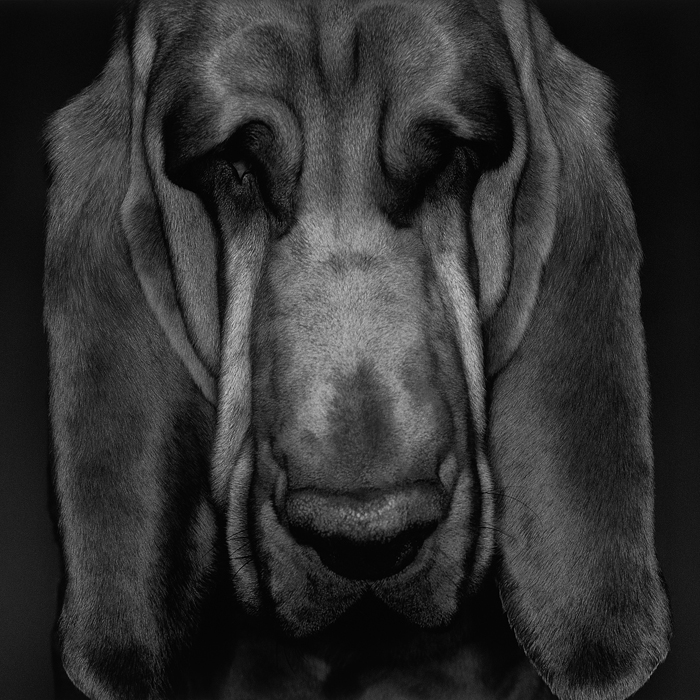
Recently, I had the opportunity and pleasure of speaking with and interviewing photographer Deborah Samuel. Deborah Samuel is a Canadian artist, living in Santa Fe, New Mexico, and is the author of Dog and Pup. After establishing a career in commercial photography, Deborah now focuses exclusively on her own photographic projects.
KATHERINE CARVER: What were your beginnings as a photographer and when did you realize it would become your chosen form of expression?
DEBORAH SAMUEL: I worked commercially for many years in the music industry and branched into fashion and editorial portraiture in order to make a living and to remain creative in the photographic arts. I worked in this industry for thirty years. I was drawn to work that was conceptually strong and creatively compelling. I was always drawn to the art of communication in photography. I studied photography at Sheridan College, located outside of Toronto, Canada. After college, I worked as a printer for two commercial photographers who worked in the fashion industry. This provided me access to a studio to pursue my personal work.
Then, in my early twenties, in the late 1970s, I opened my own studio in Toronto, where I focused on fashion, entertainment, and editorial portraiture. While working in these arenas, I always continued to work on my personal work, pushing the creative envelope. I prefer to work on a variety of different and conceptually stimulating projects. My personal projects are typically one to ten years in duration. My work is very intuitively based. I no longer live in a big city; I live in a quiet community outside of Santa Fe, New Mexico, which is very isolated and peaceful, which I find is an optimal place to create my work.
KATHERINE CARVER: Did you formally study art/photography?
DEBORAH SAMUEL: I studied photography at Sheridan College, located outside Toronto, Canada; and I have thirty-five years experience working as a photographer.
KATHERINE CARVER: Did you envision your work with dogs to become published books?
DEBORAH SAMUEL: When I first started working with dogs, I did not envision this work published in book form. I photographed dogs for ten years, from approximately 1997 through 2007. In 1997, Ernie, my sixteen-year-old Yellow Laborador died. I was heartbroken. At that time, I realized that I had not taken a formal portrait of Ernie; I only had snapshots of him, and I did not want this to happen again.
Three new dogs came into my life after Ernie, all different breeds, and I found it fascinating to see how they all reacted differently to different issues posed to them. I became really enamored with the emotional differences between each breed, which began my work with dogs. I began searching out different breeds, and one thing led to another, and I began photographing and working with cross-breed dogs as well as I became interested in the breed differences not only physically but the emotional differences as well. I have always had a love of dogs and animals, and I continued to compile more and more material relating to dogs. I was fortunate to obtain a book deal with Chronicle Books who published Dog, 2001 and Pup, 2002. However, my work with dogs ended when my Boxer, Jake, died, in 2007. This was a very difficult time and I began contemplating the life/death divide, which was the catalyst for my next body of work entitled, Passing, exploring the journey of life and death using botanicals.
KATHERINE CARVER: Where do you show/exhibit your work?
DEBORAH SAMUEL: I have exhibited my work in numerous galleries and traveling exhibitions. I really credit the expanded interest in dogs, and my work with dogs, to the advent of the internet. Dogs and other animals have always been a large part of our lives; however, we have become more isolated socially due to the arrival of internet. As a result, our animals have become much more important to us as a means of connecting emotionally to ourselves.
KATHERINE CARVER: What gear do you use while photographing?
DEBORAH SAMUEL: I prefer my Hasselblad camera. I prefer to use the square negative format. All of my work with dogs taking place during 1997 through 2007 was shot using film. I experiment with different cameras and mediums as well.
My current exhibition, Elegy, was recently exhibited at the Royal Ontario Museum, located in Toronto, Canada, part of the Contact Photography Festival in Toronto. Elegy, will be moving to Santa Fe, New Mexico, where I reside, in the fall of this year. I used a flatbed scanner to create the Elegy images – a series of animal bones photographed against black. With today’s accessible technology, it really brings into question – what is a photograph now? Photography is different from other art mediums because of the evolving digital technology. Photography is entering a new realm, which is really exciting to be a part of an evolving art form. I do not affect my digital negatives anymore than I would affect my prints in the “silver printmaking world” by primarily utilizing burning, dodging, and spotting.
KATHERINE CARVER: Looking back on your accomplishments, to date, what are you the most proud of?
DEBORAH SAMUEL: This is a difficult question to answer. Each body of work I have completed is important in its own unique way. My work with dogs was very important as it gave dogs a voice emotionally to be seen and heard. Also, animal activism is important to me – leaving people with a new way of looking at animals in the natural world. Most of all, I am in my element when I am creating and making my work, which I am very passionate about.
KATHERINE CARVER: What are you working on now?
DEBORAH SAMUEL: I typically do not disclose what I am currently working on because the work can and usually does change during the process of working through ideas.
KATHERINE CARVER: What photographers inspire your work?
DEBORAH SAMUEL: The photographers who inspired me are Horst; Diane Arbus; Arnold Newman; Irving Penn; and Yousuf Karsh.
KATHERINE CARVER: What advice do you have for aspiring artists/photographers?
DEBORAH SAMUEL: Follow your passion, even if you do not know what lies on the other side. Passion is infectious to people; and passion is at the root of creating art. Keep believing in your work and use your passion to help you push through and keep going. The right thing(s) happen when it is supposed to happen. Most importantly, put your work on the line and keep pushing your boundaries.
For further reading, please visit Deborah Samuel’s website.
All images contained in this blog post were used with the permission of Deborah Samuel.
You can read additional interviews here.
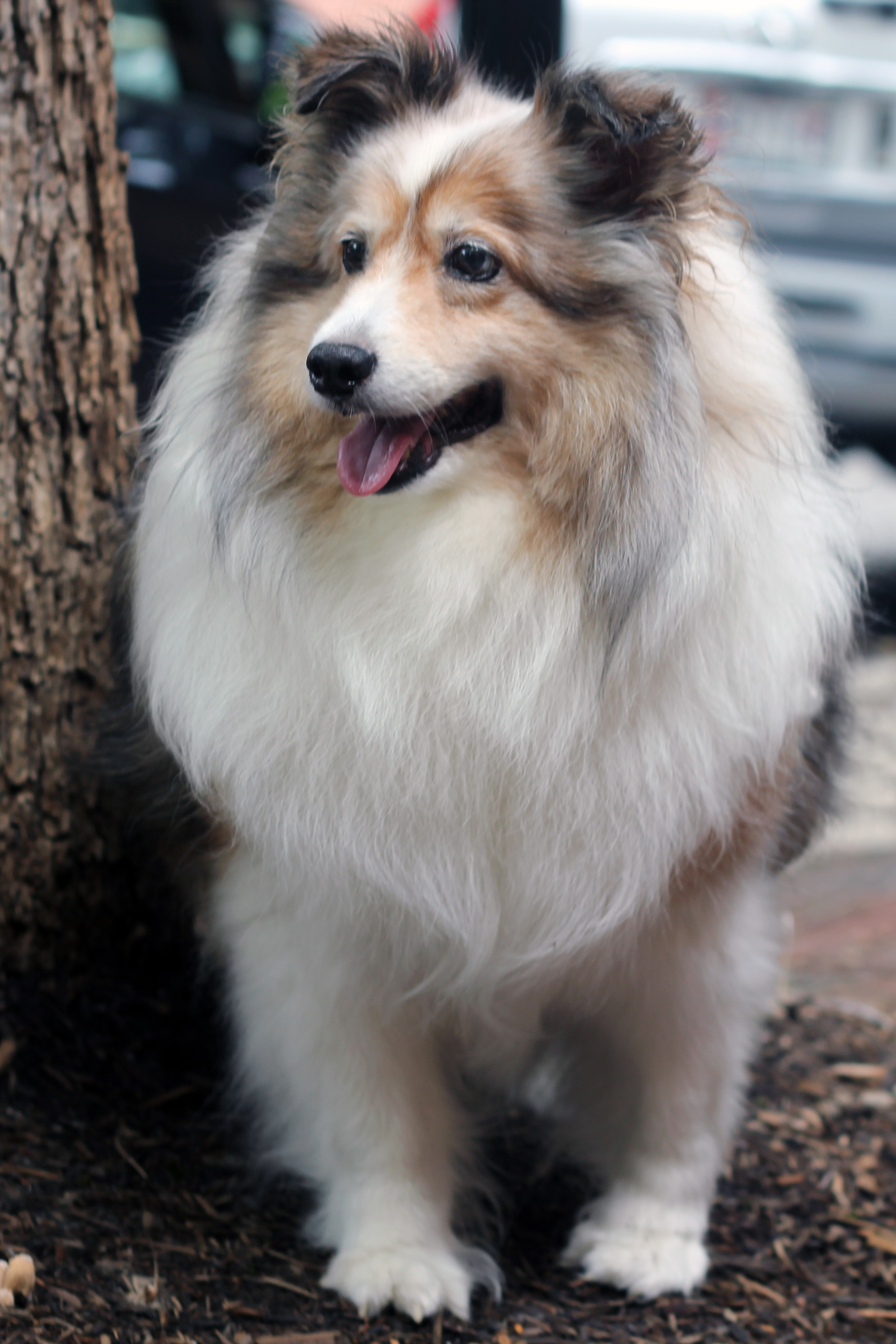
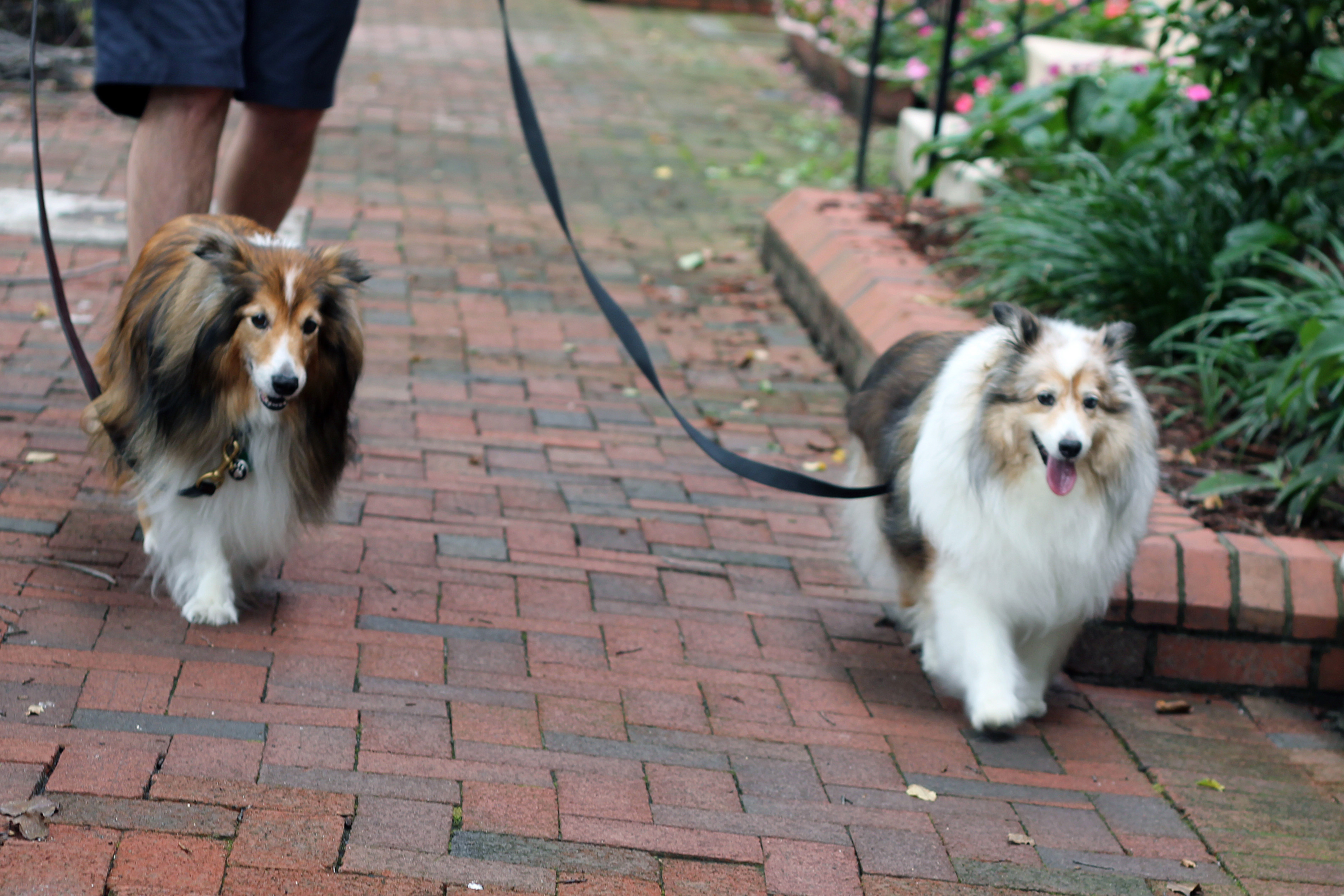
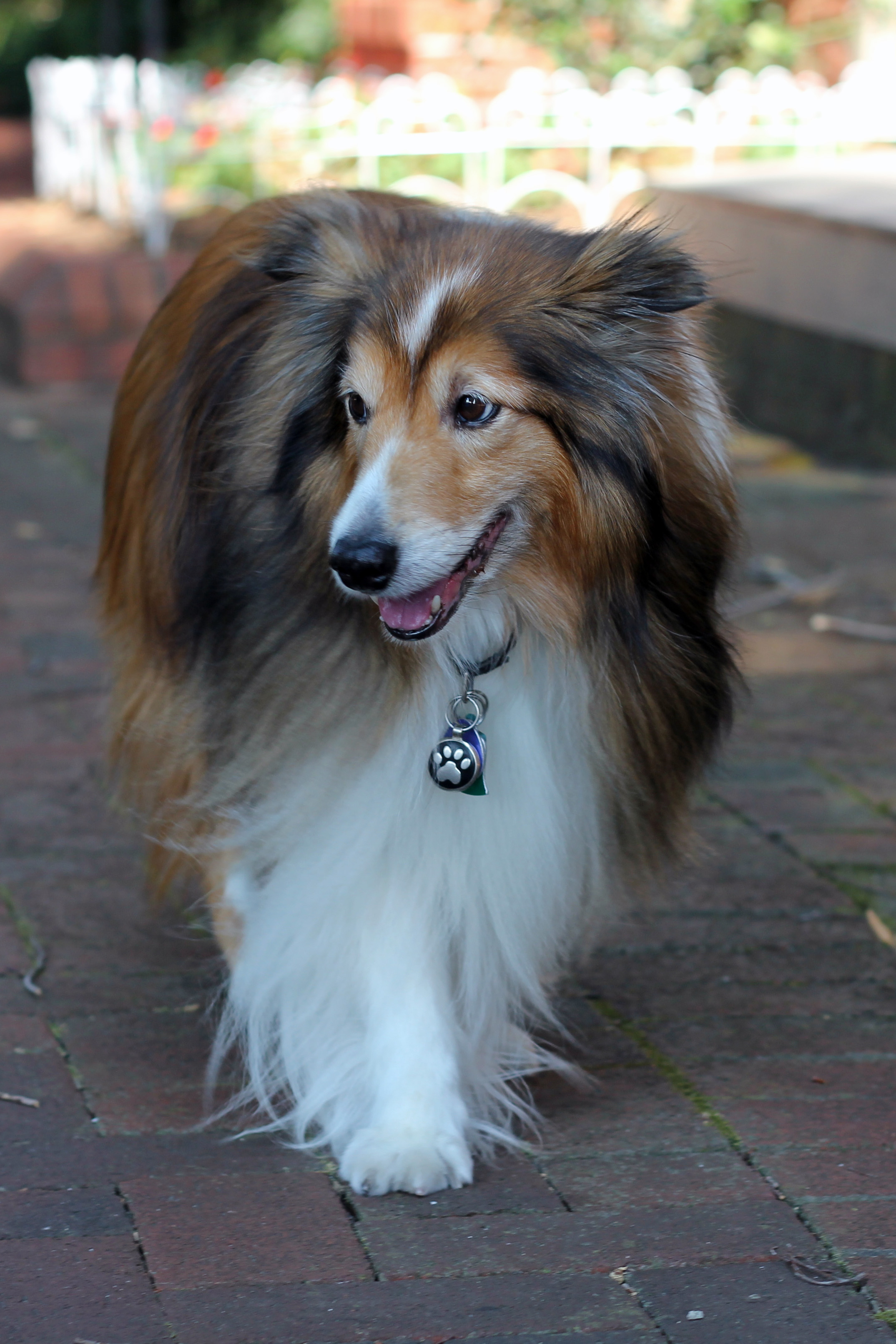
Below are a few photographs from Biscuit’s evening saunter last night. It has been especially warm here and there are many people without power due to the storms that hit Maryland, D.C. and Virginia on Friday night. We are fortunate that we have not lost power in this extreme heat.
Biscuit got groomed on Saturday, and he is looking very handsome!
Happy Monday!
Biscuit had a good weekend. We took Biscuit with us to Andy Nelson’s for BBQ, and he absolutely loved it! He could not stop smiling!
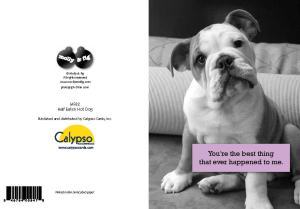
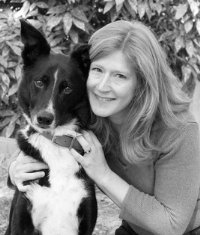
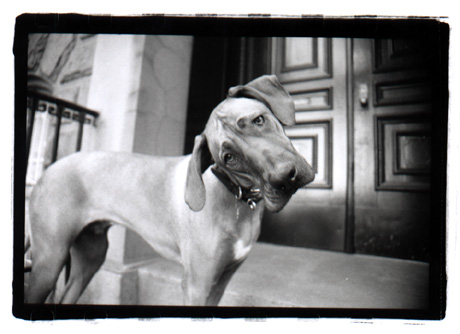
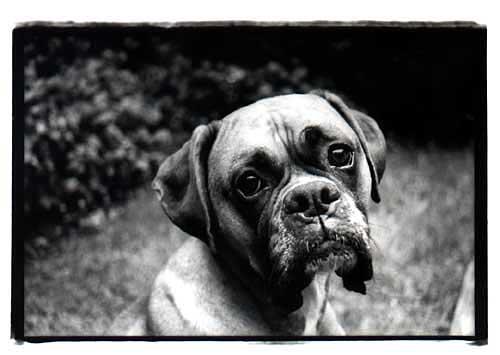
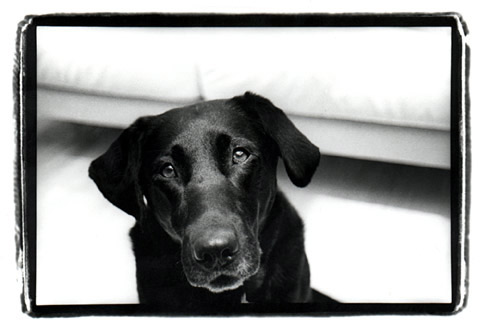
I am happy to be interviewing Kim Levin, Kim Levin Photography. Kim has been photographing dogs and working as an animal welfare activist for many years. Please read my interview below also containing some of Kim’s work.
KATHERINE CARVER: What were your beginnings as a photographer and when did you realize it would become your chosen form of expression?
KIM LEVIN: I bought my first camera when I was twelve-years-old with babysitting money I had earned. My favorite subjects back then were my friends and my dogs ironically. I also loved taking landscape images. In college (I graduated from the Newhouse School of Public Communications at Syracuse University), I took several photography courses, however, I graduated with a BA in advertising.
I was working in the advertising business in New York for about seven years and continued to take photography courses at the International Center of Photography. At about the five year mark in the ad business, I realized that I wanted to pursue a different path. I had always had a passion for dogs and animal welfare so I started a personal project called Create A Home. I went to the National ASPCA and took portraits of the dogs there, and created posters to help raise awareness about animal adoption. This was back in 1996 when there weren’t a lot of animal photographers. In fact, it was a relatively new niche and I felt that it was one that I could excel at.
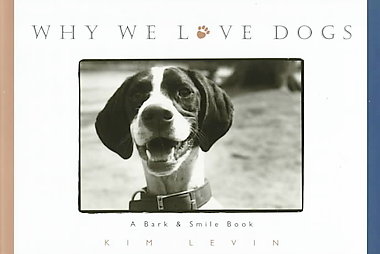
In 1996, I began my pet portrait business, Bark & Smile Pet Portraits, and by 1998, I left my full-time job in advertising to pursue my photography. I also had my first book, Why We Love Dogs (Andrews McMeel), coming out that fall of 1998 and so it seemed like the timing was right. I was also young (I was twenty-eight-years-old when my first book came out) and I didn’t have the commitments that I now have that would have held me back.
While in advertising, I learned a lot about brand management working for blue chip clients like Nabisco and Avon so I figured what better brand to manage than my own. After several years of my photography business I changed the name of my business to Kim Levin Photography because at that point I had many books published under my name and I felt that my name had more equity in it than Bark & Smile.

KATHERINE CARVER: Did you study photography formally, or are you self-taught?
KIM LEVIN: Essentially I am self-taught. As mentioned above, I did take several photography courses in college and right afterwards, but I have never had formal training.
KATHERINE CARVER: How do you balance your personal work and your commercial work? Does one feed the other? Or does the commercial work support your passion?
KIM LEVIN: I never tend to think of it as two separate entities. For the first ten years of my business, I concentrated on the publishing end of things primarily because that was an area that had momentum. I would finish one book and I would already be on the next big idea by the time that book came out. My last gift book came out in 2010 – it’s called Dogplay, the Canine Guide to Being Happy, and I have to admit I was kind of stumped on what to work on next. I had published 18 dog and cat gift books by this point and I wanted to re-group and really figure out what personal project would excite me.
I always continue to try to build my commercial work but what has worked best for me, is to find a project that I care about or have passion about and then the work tends to follow.
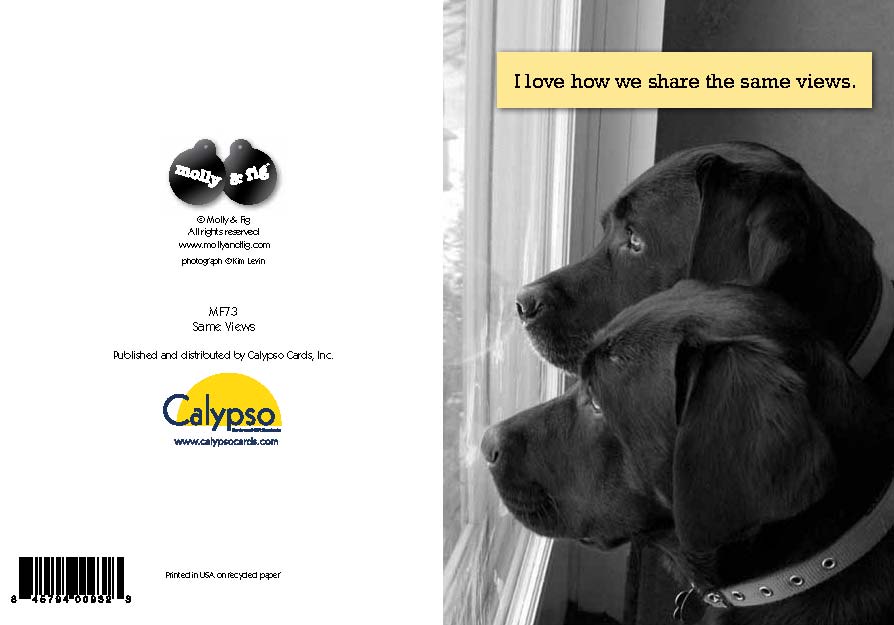
One of the new projects I do have coming out developed out of a personal loss. Two years ago, we lost our beloved dog Charlie. It was heartbreaking for me because he was my first dog as an adult and even though I now have two children, I felt his loss deeply. A friend and colleague of mine (who I collaborated on Dogma with in 2002) had also lost her dog within the same few weeks. We subsequently created a new sympathy book and card line called Saying Goodbye (licensed by Sharper Cards) which is coming out this year.

KATHERINE CARVER: What was the impetus that inspired you to begin shooting dogs (and other animals)? Did you always intend for it to be published in book form?
KIM LEVIN: Initially, I just wanted to take dog pictures. I worked hard to develop my own style and created a niche business that combined doing commissioned assignments with licensing and publishing on the side. I figured out pretty quickly that if I wanted to make my living as a pet portrait artist, I would have to find a way to showcase my work. So the books and products evolved from there. My first book came out prior to any of my other licensed work (cards, journals, calendars), however, that was not my original intention. But it sort of laid the groundwork for everything that came thereafter.
KATHERINE CARVER: Can you discuss your personal and ongoing involvement as an animal welfare activist?
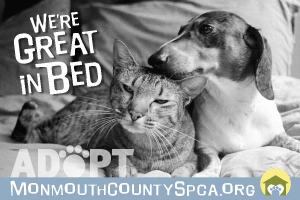
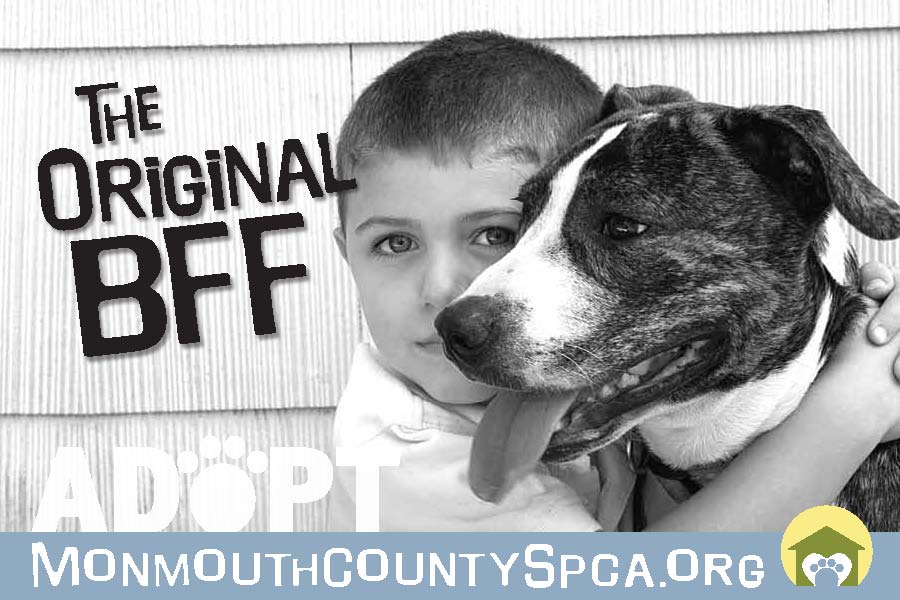
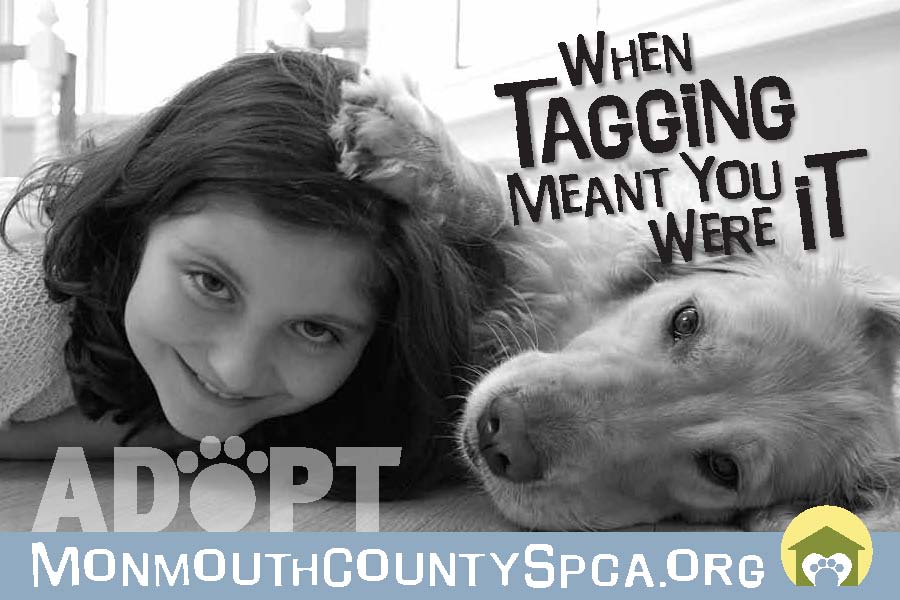
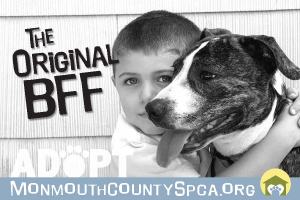
KIM LEVIN: This too has evolved over the years. After I started the first project I mentioned called Create A Home, I worked on the National ASPCA’s annual calendar for four years. At this point, I was already living in New Jersey and I wanted to help with my local shelter so I started a calendar program with the Monmouth County SPCA which ran for four years as well. That program raised over $100,000.00 for the shelter and it helped create the lasting partnership I have had with them over the years. Last summer, I was proud to have photographed their very first advertising campaign. Print and outdoor ads ran through Monmouth County, New Jersey.
I have always felt that each and every animal photographer in this country can make a tremendous difference through their photography and affiliate themselves with their local shelters promoting animal adoption. I know many who do and it is this grassroots effort that will make a difference for the millions of homeless animals in the United States.
KATHERINE CARVER: Where do you teach photography?
KIM LEVIN: I have been teaching adult education photography courses at Brookdale Community College (located in New Jersey) for three years now.
KATHERINE CARVER: Where do you show your work?
KIM LEVIN: I have my work displayed at various locations (local vet hospitals, numerous New Jersey shelters, local coffee shops and the various libraries in my area). The Monmouth County SPCA also has prints from the four years of calendars that I photographed gracing the walls of their new facility.
KATHERINE CARVER: What gear to you use? Are there any favorite lenses you keep on your camera most often?
KIM LEVIN: My main camera is a Nikon D200. I use my 18-70mm wide-angle lens most often, but I recently purchased an 80-200mm telephoto lens that I love. I don’t have as much a need to use it though. I also use a Photoflex Light when I am shooting indoors.
KATHERINE CARVER: Looking back on your accomplishments, what are you the most proud of?
KIM LEVIN: That’s a tough one to answer! There are several books I have tackled over the years that when I finished I said, “that was really hard to shoot!” The first one I can think of was called Working Dogs. Tales from Animal Planet’s K9-5 World (Discover Books/Random House). I was hired by the Discovery to travel for two months across the county and photograph working dogs. I had to book all of my own travel and traverse the country in two months. I was a fish out of water but I had the opportunity to photograph the eighth generation Lassie and the Governor Jessie Ventura and his dog for the book.
The next difficult book I completed was my book entitled, Frenemies. Lessons from Cats and Dogs about Getting Along (Stewart Tabori and Chang). Each shoot was with a cat and dog together and you can only imagine some of the scenes I encountered. About a third of all the shoots I did, didn’t work out but I was happy with how the final book turned out.
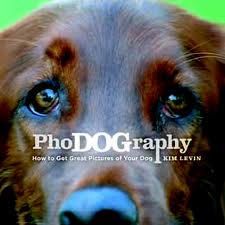
PhoDOGraphy. How to Take Great Dog Pictures (Amphoto Books) was particularly challenging for a different reason. I had five months to write the book which was essentially a “how to” book about dog portraiture. The photography was the easy part because most of it had been photographed, however, writing about how you take a certain picture was challenging. I woke up every morning at 6:00 am to work on the book for five months because my children were 4 and 2 years old at the time and I couldn’t work on it during the day or night!
The last accomplishment I will always remember was photographing the rescue dogs at Ground Zero in 2001. I was given an assignment from Bark Magazine to cover the rescue effort and it was inspiring to see the unbelievable work the dogs and their handlers did. It was a time I will never forget.
KATHERINE CARVER: What are you working on now?
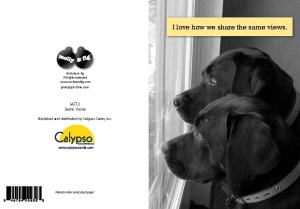
KIM LEVIN: I have been working hard on my Molly & Fig™ card and magnet line. I am also in the process of determining my next bigger book project. As I stated earlier, I have waited some time to find a project I will be inspired by. I am also looking forward to the Saying Goodbye book to come out from Sharper Cards this fall. The book will be a gift to their vet network throughout United States and Canada.
KATHERINE CARVER: What photographer(s) inspire your work?
KIM LEVIN: I love Mary Ellen Mark. She is the consummate photo-documentarian. From the dog photography world, Elliot Erwitt has always been a big inspiration as well as William Wegman.
To see more of Kim Levin’s work, please visit her website.
All images are courtesy of Kim Levin.
You can read additional interviews here.
Below is an image of Biscuit sleeping! He looks so peaceful. Biscuit is doing really well and he is thriving.
Last night, when I came home from the shelter, BARCS, Biscuit sniffed me up and down and became very excited and jumped off the sofa and started barking! I finally finished my volunteer training, and I will begin photographing the shelter dogs very soon. I am looking forward to helping the dogs at BARCS obtain furever homes as quickly as possible.