Have you seen this recent New York Times article about creativity, focusing on writing and dogs?
This article explores how dogs play a meaningful role in the lives and creative processes of several well-known writers, especially Alice Hoffman.
Hoffman, who often writes in solitude, says having a dog nearby keeps her from feeling lonely. Her dogs—past and present—have inspired her fiction, though she finds writing dog characters challenging because of their mysterious nature. After losing her longtime dog Shelby, she adopted a joyful, people-loving puppy named Violet.
Editing The Best Dog in the World, Hoffman gathered essays from other authors who share similar bonds with their dogs.
Isabel Allende includes dogs in nearly all her novels and lives with two dogs who keep her constant company, even “listening” as she writes.
Roxane Gay, once not a dog person, is now deeply attached to her dog Max, who even joins her while she works and has become part of her writing routine.
Ann Leary initially struggled to love her difficult, anxious dog Eddie but grew to appreciate him, realizing they share similar traits. He now keeps her company and even interrupts her work when needed.
Amy Tan’s small but demanding dog Bobo stays close while she writes and even humorously “chooses” books, favoring one about dogs over her own novel.
Paul Yoon credits his dog Oscar with transforming his life and perspective, ultimately influencing his fiction, including writing from a dog’s point of view.
Overall, this piece illustrates how dogs provide companionship, emotional support, inspiration, and even creative breakthroughs for writers, shaping both their daily routines and their storytelling.
In my experience, I think our dogs are essential to the entire creative process—they are almost a portal to another realm. I feel fortunate for all of our rescue dogs, who have entered our lives; they have helped my creative process, while teaching me many lessons, enriching my life immensely. I cannot imagine a life without a rescue dog as a part of our family.
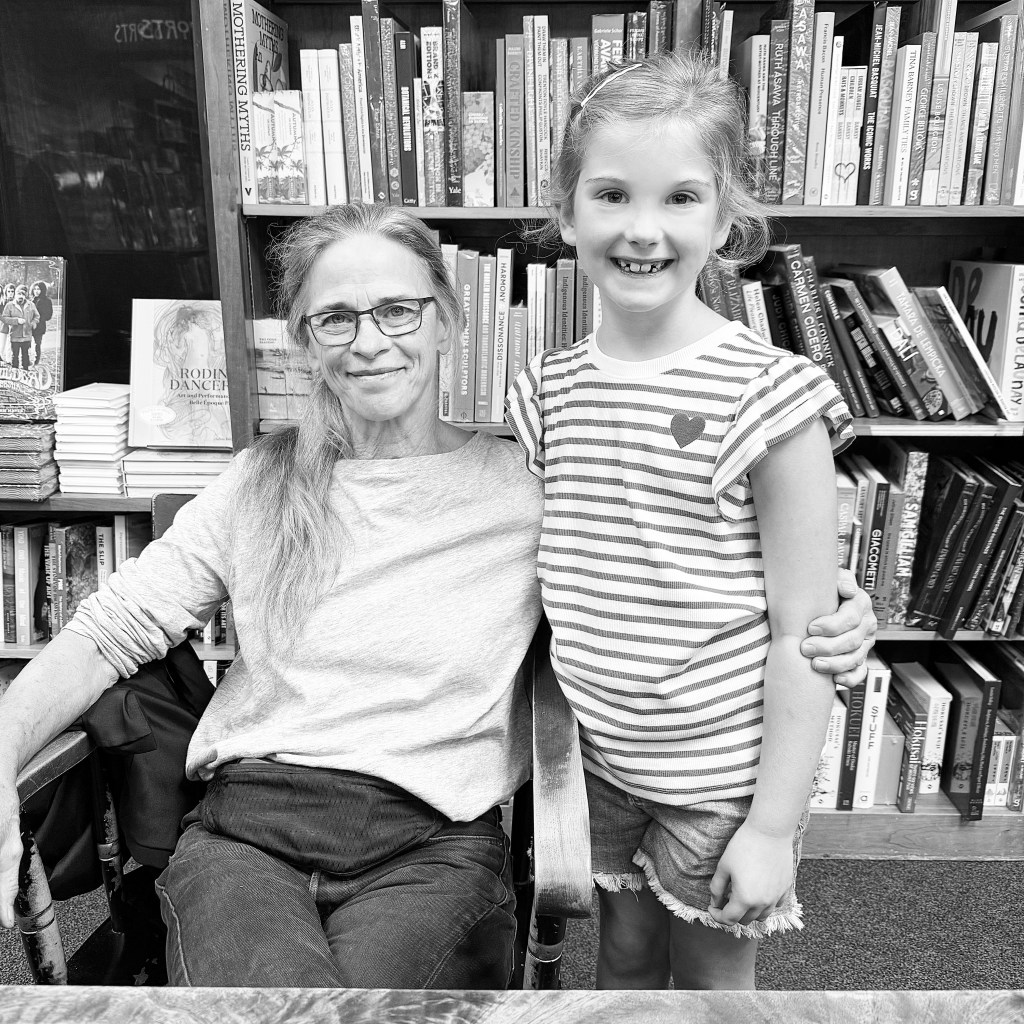
This fall, we all had the opportunity to meet Sally Mann on her book tour for her new book: Art Work: On The Creative Life. Sally kindly wrote a blurb for my book, and we began corresponding with each other, which is a dream, as she is one of my photography heroes. At the book event, Alex was even brave enough to ask Sally a question during the Q and A, and Victory came, too. Alex is a very creative being, and it has been so much fun to have her meet well-known artists who have made and and live a creative life—knowing it is possible. A few photos are shown below, along with some of my favorite quotes from this book, which offers a mix of illuminating stories, practical advice, and life lessons on being an artist, including insights about the hazards of early promise; the unpredictable role of luck; the value of work, work, work, and more hard work; the challenges of rejection and distraction; the importance of risk-taking; and the rewards of knowing why and when you say yes. I highly recommend this book for all creatives!
Below are some of my favorite quotes from Art Work. Perhaps they will inspire you, as Sally’s words have inspired me.
“So many of our fellow humans, unbeknownst to us, are quietly bearing a load of pain that would make Atlas groan with the weight of it. Despite outward appearances, most of us have an interior edifice of complex emotions, whose dimensions are unexposed, unexpected, and profound. And some of us are lucky enough to have ways to express that dark geometry, to tell our own unique stories.”
“Freedom is the scariest thing of all—when I encounter a blank calendar page, I will needlessly transplant the philodendron to avoid picking up the camera and making new work. But the discomfort of not making work eventually becomes so great that making pictures is less painful than not making them, even considering the looming uncertainty each time I pick up the camera. That looming—and, I believe, essential—uncertainty is the unshakeable companion for all of us who want to make art. Great art.“
“You say Yes even when you know, to your very bones, that you can’t do what is expected of you and that you are in way over your head. You say Yes because you will grow in ways you could never expect. And you might just luck out and get a photograph despite everything.”
“All I had to do was put my head under the dark cloth and my face to ground glass. That is all any of us ever have to do; pick up the paintbrush, the welding torch, the ball of moist clay, fire up the computer and start pecking. To defeat fear, I occasionally just set up the camera wherever I am, pull the dark cloth over my head, and look. Sometimes, by excluding outside distractions and creating aesthetic limitation, even artificial ones, I ease my fears that I will fail, perhaps in the same way Temple Grandin found relief from her anxiety by being pressed between two mattresses.”
“You take that first picture exactly as a writer bangs out that first line. Hemingway wrote early in A Movable Feast about gazing out over the roofs of Paris and exhorting himself to write. Basically, it’s simple: You have always written, you will write again, just write the one true sentence you know. Once you write that simple, declarative sentence, and ruthlessly cut out anything resembling what he called ‘that scroll-work’—in his case, a word processing more than two syllables—you go on from there. . . . Pick up your pencil, your camera, your paintbrush; find your story, keep it simple. Or let it find you, but keep going.”
“But I kept taking pictures. Perhaps the most important concept in that journal account of the trip south (and even in the 1978 letter) is that even though they were dumb pictures—and I knew they were—I kept taking them. Monkey at a typewriter. Sooner or later, there was going to be a good one, the monkey was going to get lucky, even if it was by accident.”
“But, in my case, despite being an unregenerate rebel most of my young life, I began to feel what Wordsworth called the ‘weight of liberty.’ Without quite realizing it, I began to give myself assignments; parameters within which to work. Like using just one shutter speed or one lens, or only taking pictures that had chiffon in them, or limiting my subjects to the age of twelve, or, most memorably, insisting on hand-holding my large-format view camera, making me the butt of jokes for years.”
“I am far from spiritual, but I have experienced, convincingly, the ineffable magic by which obsession, frustration, repetition, and serendipity miraculously transfigure that thin, Nabokovian slice of time, that tenth of a second, into something eternal.”
“What I see is: taking down the show and carrying it home and putting it back in its dear little box and, well, now what? What are we doing this for? Do you ever ask yourself that question? What do we really want? what is the thing that gives pleasure? What is the goal, after all? Where are the rewards when it’s all said and done, wouldn’t we rather be sitting out on the deck with a fresh gin and tonic in our hands surveying the kids gambolling in the sunset and patting the dog? I mean it? Do I care about New York? Shit, no. Do I care about and what gives me the most pleasure is that instant, when you turn on the lights and lift the film out of the fixer and turn the music up real loud and do a little crab step across the darkroom floor. I would just die for that feeling, that is it, for me, that is what matters and in the end, all work becomes ‘old work’ from that moment on.”
“For me, staying home and enjoying the simple life of a nineteenth-century Flaubertian recluse, which is what I do 99 percent of the time, helps with this approach, and perhaps something like it could work for you. Nevertheless, even today I find that I need to employ that still-serviceable protective covering, spun from the mendacious pluck, false confidence, and timeworn lies I wanted to believe, especially when I suffer rejections that sting. (Yes, I do, and yes, they still do.) All the while we keep working, making our art, whatever it is. It’s our job, just like any other job, only with longer hours.”
“So double bold that mythically bulging door, send away all the art-world impresarios and agents, do not succumb to jealousy or study the auction results, go back into your studio, sit at your desk, make your work, and ruthlessly toss out whatever isn’t good enough, for whatever reason. Do that for the next twenty-five years.”
“I try to figure out what I want next out of life and I just want more good work. I just want diversity and quality, that’s all. And the longer I work and the longer I push the limits of what I think I am capable or doing, the better I feel about being able to achieve that. Each time I sort of arbitrarily wrap up a project and begin to flounder about, wondering what on earth I’ll follow it with and will I ever do work that is as good, it always comes. Maybe not right away and maybe not without a few false starts and enormous doubt but it’s there and eventually I begin to hit my stride again and that feeling of elation and power and confidence takes over and the good flows. It’s true that some years’ work is better with a little embarrassment or chagrin but in the main, I think that the stuff is strong and it just keeps getting better. (You can tell where I am right now in the cycle—on a real roll . . .let’s talk about it again in about a year when I’m lost again. . .) In any case I wonder from time to time …”
“There are many ways to screw up; big ways, little ways, keep-you-awake-at-night ways. You will have your ways too, but mistakes are not all bad; if you haven’t made any lately, go out and make one. It will move you forward. Dog, Umbrella stand. Seven strides. Down the drive. And through it all, you will keep making your art, perhaps almost unconsciously, as if sleepwalking, because art is what you do.”
“It happens when I work, when I am taking pictures and my vision, even my hand, seems guided by, well, let’s say a MUSE. There is, at that time an almost mystical rightness about the image: about the way the light is enfolding it, the way the eyes have taken on an almost frightening intensity, the way there is a sudden, almost space-like, quiet, as if suddenly there was a weightlessness and an absolute vacuum. These moments nurture me through the reemergence into the quotedian . . . through the bill paying and the laundry and the shopping for soccer shoes . . . Although I am finding that I am becoming increasingly distant, like I am somehow living full time in those moments. I find my children’s faces turned inquisitively up to mine, floating almost like underwater plants distant and unrecognizable, the spoken question unheard, the answer impossible.”
“Not to come over all woo-woo, but maybe we artists are merely a convenient vehicle for our work to express what it needs to say. We carry it like a self-replicating virus, or like that species of Hymenoptera, the burrowing wasp described by Proust, which guarantees the survival of tis offspring by providing them with their paralyzed host’s living flesh upon hatching.
“Another way to think about it is to situate creativity within the Platonic doctrine of recollection, which asserts that we do not “create” so much as provide the vehicle for the release of knowledge that came bundled with us at birth. In this scenario, the work exists within a universal reserve of latency, of inchoate and unformed possibility that awaits the artist’s hand to be physically realized. We can only hope that what our work wants to say is worth many sacrifices we make for it to do so.”
“Despite being a person who generally likes to be in control of both my body and my mind, I relax that control where art-making is concerned. Trancelike, I allow myself to be ensorcelled as surely as Odysseus by Calypso and welcome the diversion for as long as the enchantment will last. It’s possible this only works with art. In almost any other enterprise such a high level of uncertainty would be ruinous; you would never begin a statement in court without knowing how you were going to close, but when making art, a tolerance of uncertainty is almost essential.”
“Those qualities in your work that bother people most are often precisely the ones that should be cultivated, pushed so far out on the axis of vice that they come around to be virtuous.”
“Cynical sophisticates scoff at the belief that if you make your true work with the purest intentions, your sincerity scoff at the belief that if you make your true work with the purest intentions, your sincerity will be rewarded even by the jaded art world, but you know what? I kinda buy that. Do the work of your earnest heart, with all your body and soul, for as long as you breathe and with as much craft and creativity as you can wring from your every filament, and you will have made art. Your art.”
“From my first roll of film and 1969, and in my earliest poems, so maudlin they could have been optioned for a high school musical, I was drawn artistically to the things that felt emotionally significant. And in that process, I found that the past had unavoidably shoehorned its way into the inquiry and rendered my work occasionally mysterious, even to me. I feel as inextricably connected to the history undergirding my present as the old woman in a Chekhov short story who is caught nosily weeping over a biblical incident as if it had happened yesterday. Her younger observer, a theology student muses: ‘The past . . . is linked to the present by an unbroken chain of events all flowing from one to the other.’ When one end of that chain is disturbed, the other trembles, like a spider’s web at the distant, tentative touch of her prey.”
“And now we’re there, the place you knew we’d get to eventually. Why else would I have mentioned, right at the beginning, the word I said I was never going to say again in this book? Like Checkhov’s loaded gun, you knew it was going to go off, sooner or later, before the final curtain. But not before the strut fret of the main characters: luck, organization, technique, words (on actual paper), patience, tenacity, risk-taking, moral questioning, and finding your story–or letting it find you–plus, of course, character building suffering. But all those players have had their moment in the spotlight, and here we are.”
“When does will become passion? On page 61 in my Quotes list. . .is somewhat embittered, but germane, statement form the inventor of the Post-it note: ‘In 1931 I won a Carlton Society Award, which is like winning the Nobel Prize.’ The award reads: ‘Arthur Fry, for the novel and creative approaches to the development of products based on his repositionable adhesives and for his tenacious dedication and commitment to the program that resulted in Scotch brand Post-it Notes.’ Tenacious, huh? The difference between success and failure. I was stubborn until I became a success. Then I became tenacious.”
“It is unfortunately essential that those hours comprise difficult acts, of increasing miserableness, in order for any of us to improve. We’re back to suffering here: if it were easy, then everyone would be doing it.”
“The passion for making the work exactly right seemed existentially imperative to me, as I hope it does to you.”
“Leave your fearless trace, dove sta memoria, because beauty matters. As an artist, you are a sensitive filament pock up unique frequencies and making the work they evoke. And if you are lucky, when that work is released, it will find untingled nerve endings out in the world and lustily tingle them, manifesting indelible truths in which someone will one day find beauty. That is our job.”
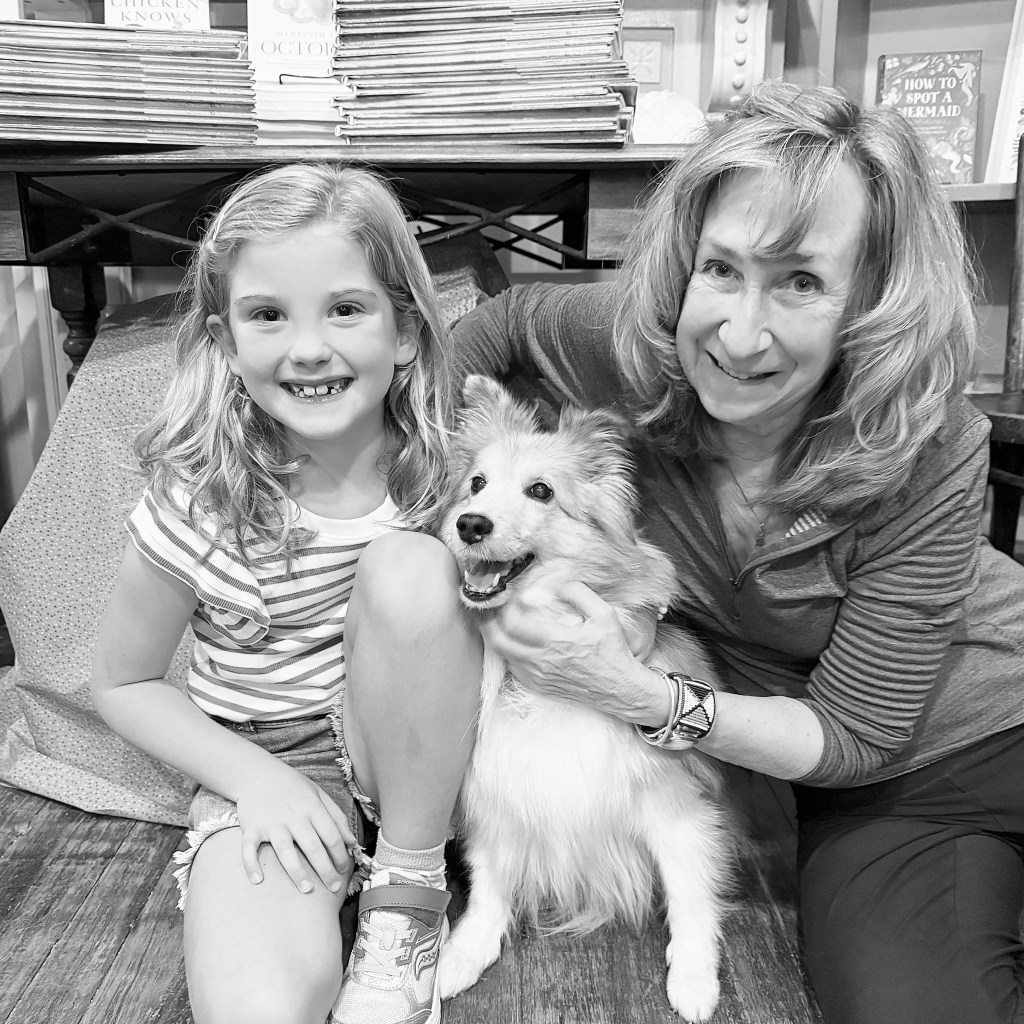
This fall, we had the opportunity to meet Sy Montgomery on her book tour for her new book: The True and Lucky Life of a Turtle, which we highly recommend! Sy kindly wrote a blurb for my book, and we began corresponding, and she has even become pen pals with Alex! Sy is a wonderful human being and she deeply cares about animals as evidenced in her books and writings. I am so grateful Sy got to meet Victory in person. When Victory sadly passed away, Sy texted me and checked in with me multiple times a day, which was such a kindness to me. We all love Sy, and wished we lived closer together on the East Coast. I am so grateful for Sy’s friendship. Alex is inspired by Sy to live a creative life, which is wonderful! I hope you check out Sy’s wonderful books. Below are a few pictures from Sy’s book event this fall. Additionally, here is a link to an interview I did with Sy earlier this year.
Here is one of my favorite quotes by Sy:
“I think all animals have souls. I feel certain that if we have souls, octopuses have souls, too. If you grant something a soul, it demands a certain level of sacredness. Look around us. The world is holy. It is full of souls.”
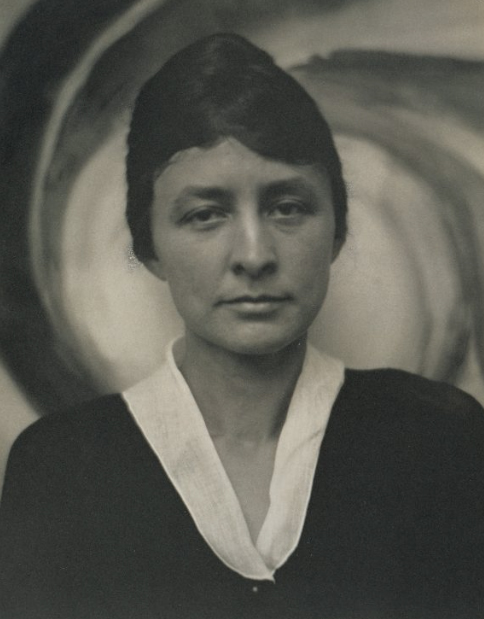
I am fascinated by the rituals of artists. It is very interesting to me to see how artists crafted and designed their life encompassing their passion, their art. This is not an easy feat. I love Georgia O’Keefee’s work and became interested and curious in how curated her days, while still making her art.
“I like to get up when the dawn comes,” O’Keeffe told an interviewer in 1966. “The dogs start talking to me and I like to make a fire and maybe some tea and then sit in bed and watch the sum come up. The morning is the best time, there aer no people around. My pleasant disposition like the world with nobody in it.” Living in the New Mexico desert, O’Keeffe had no issue finding the solitude she craved. Most early mornings she took a half hour morning walk. Then, breakfast at 7:00 a.m., prepared by her cook. If she was painting, O’Keeffe would then work in her studio for the rest of the day, breaking around noon for lunch. If she was not painting, she would work in the garden, do house work, answer letters, and receive visitors. According to O’Keeffe, painting days were the best:
On the other days one is hurrying through the other things once imagines one has to do to keep one’s life going. You get the garden planted. You get the roof fixed. You take the dog to the vet. You spend a day with a friend. . . . You may even enjoy doing such things. . . . But always you are hurrying through these things with a certain amount of aggravation so that you can get at the paintings again because that is the high spot–in a way it is what you do all the other things for. . . . The painting is like a thread that runs through all the reasons for all the other things that make one’s life.
O’Keefe’s dinner typically took place at 4:30 in the afternoon–she ate early in order to leave plenty of time for an evening drive through her beloved countryside. “When I think of death,” she once said, “I only regret that I will not be able to see this beautiful country anymore.”
Anne Truitt in Daybook: A Journal of an Artist, shares a lifetime of artistic and parenting experience. Truitt, a widely recognized sculptor, successfully weaved her family life into this artistic practice, exploring how the two could feed creatively and intuitively into one another. At the peak of her career, Truitt raised three daughters, and it was not always easy, but she proved it was certainly possible. For Truitt, the ultimate sacrifice was shutting out the external world and making time for what she called an “inside life,” that of her intimate family circle, as much as her inner world of thought.
Truitt traces her creative roots to an encounter with a single painting at the same Picasso retrospective. Truitt writes:
“I had no idea at all that I would become an artist. It was in one of those deflections that sometimes subtly predict the course of a life that I sought out, just for pleasure, the Museum of Modern Art.
On entering, I turned left and up the stairs straight into Picasso’s Les Demoiselles d’Avignon. Shocked, my eyes clamped on it. I focused on the three towering women gazing out at me with the eyes of basilisks — their breath would be fatal — and then took in the remote shadowed faces of their companions. Suddenly I understood that I knew very little of what it is to be female. Even less of art. I had not felt its naked power before, its power to shatter the appearance of things so as to reveal behind them another order. When in 1949 I began to study art, I more or less consciously looked for what I had found in Les Demoiselles: shock, an understanding deeper than my own of what it is to be human, and a mysterious revelation of a radiant order.“
Truitt, who was trained as a psychologist before she became an artist saw the two strands of her life, as mother and artist, to be intrinsically linked:
“People sometimes ask me if I feel as if my sculptures were my children. I do not. The love I feel for my children is unique in my experience. Nothing is comparable. But it occurs to me this morning that they too are transformations of secret, silent resources similar to those out of which [my] sculptures emerged.“
Truitt also revisits the subject of parenting and how it illuminates one’s creative autonomy:
“I noticed that when my children reached the age of about twelve, the balance of power shifted from me to them. I have sometimes felt myself in the quandary of a chicken who has hatched duck eggs: my children took to the water, I remained on the riverbank. But I cherish my own independence too much to begrudge them theirs. I do better on the bank cheering them on. If I keep a respectful distance, they welcome me into their lives almost as wholeheartedly as I welcomed them into mine when they were born. “Almost” because even the most affectionate adult children maintain with their parents a healthy reservation that marks the boundary of their autonomy.
I am more impressed by what my children have taught me than by what I may have taught them. The physical purpose of reproduction is, obviously, the continuation and renewal of genetic continuity, human survival. Its psychological purpose seems to me to be a particularly poignant kind of mutual learning and, matters being equal, ineffable comfort.“
Not long ago, I had soured on the idea of undertaking another big project; it didn’t come to me anymore, it seemed. And then, one day, a very clear image came to me, and it was numinous. “It” was back. Whatever “it” was, whatever is the precious substance that infuses life, elevates it, reminds us that humans can be wondrous despite our many failings: I started thinking more and working on an idea that came to me, and my creative juices were flowing after what felt like a drought.
In his famous book, The Idea of the Holy, Rudolf Otto described the “numinous” as a “non-rational, non-sensory experience that is outside of the self.”
These experiences take an infinite number of forms.
Here are three reflections on the numinous.
“The main interest of my work is not concerned with the treatment of neurosis but rather with the approach to the numinous…the real therapy. In as much as you attain to the numinous experiences you are released from the curse of pathology.” —Carl Jung
“To see a World in a Grain of Sand And a Heaven in a Wild Flower Hold Infinity in the palm of your hand And Eternity in an hour” —William Blake
“The most beautiful thing we can experience is the mysterious. It is the source of all true art and science. He to whom this emotion is a stranger, who can no longer pause to wonder and stand rapt in awe, is as good as dead: his eyes are closed. This insight into the mystery of life, coupled though it be with fear, has also given rise to religion. To know that what is impenetrable to us really exists, manifesting itself as the highest wisdom and the most radiant beauty which our dull faculties can comprehend only in their most primitive forms — this knowledge, this feeling, is at the center of true religiousness. In this sense, and in this sense only, I belong in the ranks of devoutly religious men.” —Albert Einstein
“Find a bit of beauty in the world today. Share it. If you can’t find it, create it. Some days this may be hard to do.” –Lisa Bonchek Adams
There have been many hard things going on in our world, and I truly love the quote above, and it rings so true. A bit of beauty can lift us from the mundane, from the drudgery, from the crueler aspects of living. What sweet relief.
I also love Annie Dillard, a great teacher in learning to see.In Pilgrim at Tinker Creek, Dillard writes about how, as a young child, she would hide a penny in the roots of a sycamore or a gap in the sidewalk, then draw arrows in chalk toward it, sure that discovering the copper coin would make someone’s day. Years later she could see powerful symbolism in that innocent expectation. Below is an insightful paragraph from Dillard:
There are lots of things to see, unwrapped gifts and free surprises. The world is fairly studded and strewn with pennies cast broadside from a generous hand. But—and this is the point—who gets excited by a mere penny? If you follow one arrow, if you crouch motionless on a bank to watch a tremulous ripple thrill on the water and are rewarded by the sight of a muskrat kid paddling from its den, will you count that sight a chip of copper only, and go your rueful way? It is dire poverty indeed when a man is so malnourished and fatigued that he won’t stoop to pick up a penny. But if you cultivate a healthy poverty and simplicity, so that finding a penny will literally make your day, then, since the world is in fact planted in pennies, you have with your poverty bought a lifetime of days. It is that simple. What you see is what you get.
I love this poem, shown below, by Marge Piercy. It seems so timely. For me, this poem, celebrates people who find meaning and purpose in formidable, necessary work done with patience and dedication.
To Be of Use
by Marge Piercy
The people I love best jump into work head first without dallying in the shadows and swim off with sure strokes almost out of sight. They seem to become natives of that element, the black sleek heads of seals bouncing like half-submerged balls.
I love people who harness themselves, an ox to a heavy cart, who pull like water buffalo, with massive patience, who strain in the mud and muck to move things forward, who do what has to be done, again and again.
I want to be with people who submerge in the task, who go into the fields to harvest and work in a row and pass the bags along, who are not parlor generals and field deserters but move in a common rhythm when the food must come in or the fire be put out.
The work of the world is common as mud. Botched, it smears the hands, crumbles to dust. But the thing worth doing well done has a shape that satisfies, clean and evident. Greek amphoras for wine or oil, Hopi vases that held corn, are put in museums but you know they were made to be used. The pitcher cries for water to carry and a person for work that is real.
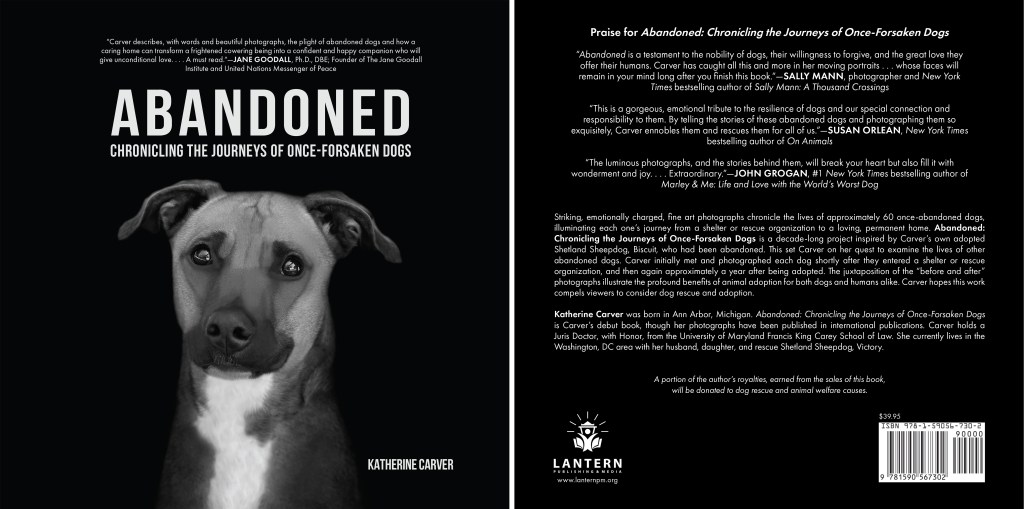
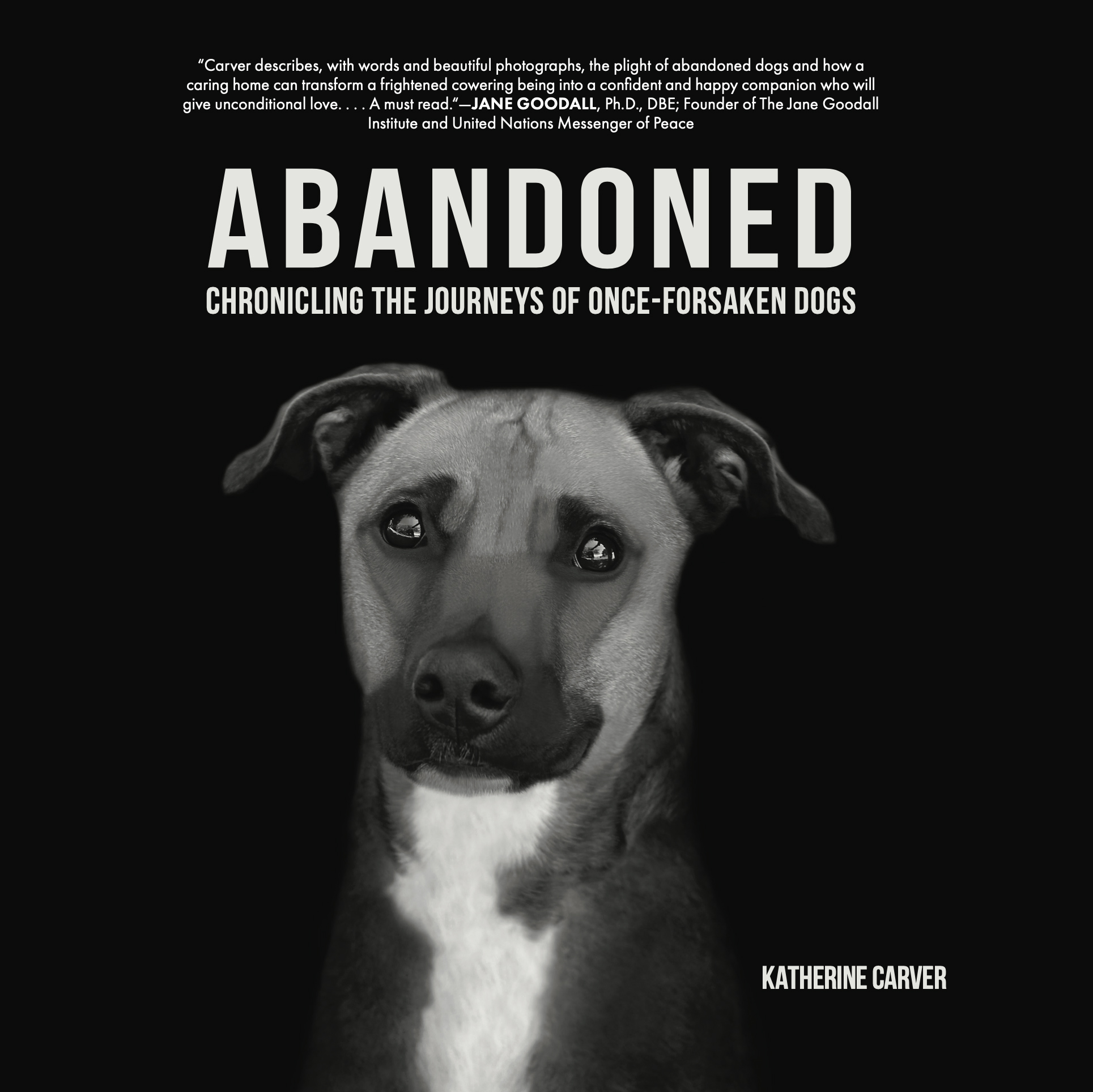
Additionally, I am donating a portion of my royalties, earned from the sales of this book, to the SPCA International, helping dogs in need around the globe. You can read more here and here.
And, if you have not ordered your copy of ABANDONED, I hope you will consider ordering ABANDONED today! Additionally, ABANDONED will also make a great Holiday gift for friends and family, especially those who love dogs—especially shelter and rescue dogs! Many thanks for your support!
When despair for the world grows in me and I wake in the night at the least sound in fear of what my life and my children’s lives may be, I go and lie down where the wood drake rests in his beauty on the water, and the great heron feeds. I come into the peace of wild things who do not tax their lives with forethought of grief. I come into the presence of still water. And I feel above me the day-blind stars waiting with their light. For a time I rest in the grace of the world, and am free.
I wish you a graceful day; it is a big week in our country. Sending you all the best.











 biscuit's space | The blog of photographer Katherine Carver