Skip to content

Posts from the ‘Interviews’ Category

Interview with Sophie Gamand, Photographer

Interview with Sophie Gamand, Photographer

_ANT2787LL


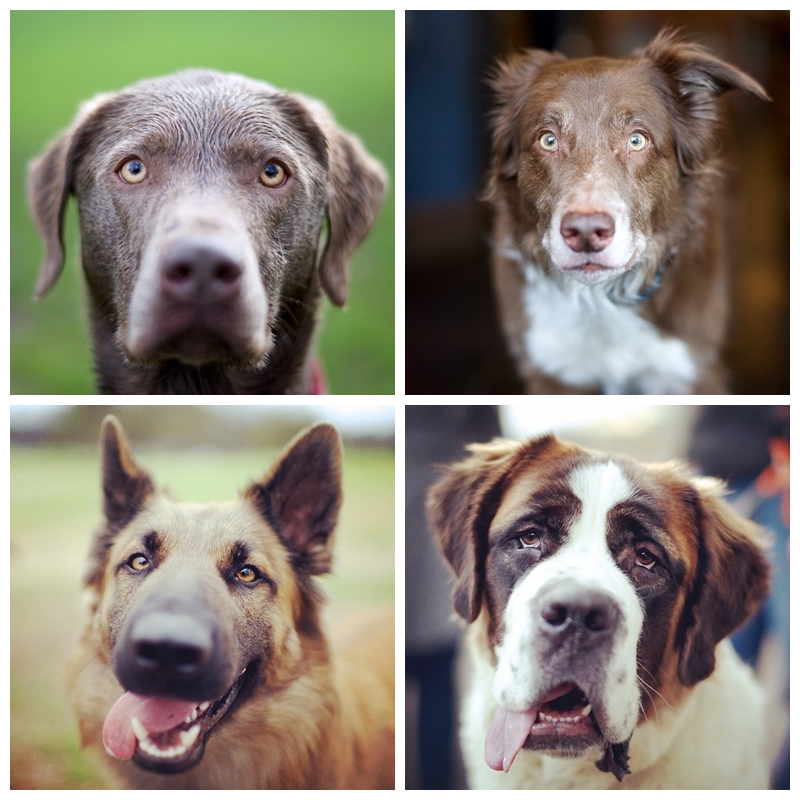
Recently, I had the great pleasure of interviewing Sophie Gamand, photographer.  Sophie is originally from France and she now resides in New York City, where she photographs dogs as the subject of her work.


KATHERINE CARVER: What were your beginnings as a photographer and when did you realize it would become your chosen form of expression?

SOPHIE GAMAND: I think I demanded my first camera to my parents when I was ten years old.  During high school, I worked with an analog camera I had taken from my Dad and developed my own black and white photos.   At that point, photography was just an art medium amongst others for me.  I integrated photos into paintings, montages, etc.  Then I stopped while studying Law.  In 2007, I discovered the world of digital cameras and I bought a simple DSLR and started photographing again.  It was very liberating!   I did a lot of self-portraiture, with heavy Photoshop work.  It was easier than painting and I could achieve the results I wanted more quickly.  Since then, the presence of photography has grown in my life, especially after I moved to New York in 2010, when it became my main activity.  I even met my husband through photography!


KATHERINE CARVER: Did you study photography formally?

SOPHIE GAMAND: No, I did not study photography.  Since 2010, I have taken a couple of classes here and there, just to tie up loose ends.  For example I took a studio lightning class in 2011 and that completely changed the way I photograph. I also took a class about carrying long-term projects and it was very inspiring.  I don’t believe in studying the arts extensively, but I believe taking a class every once in a while is a great way to push your boundaries, and meet fellow artists.


KATHERINE CARVER: How do you describe your style?

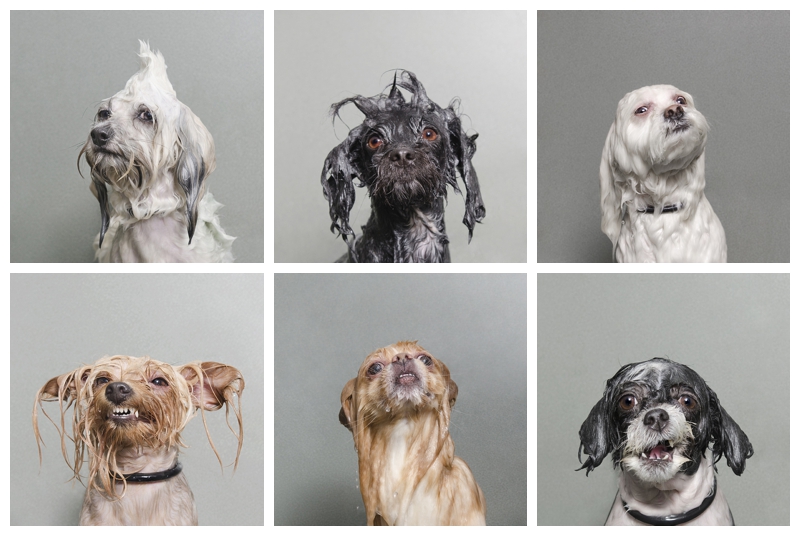
SOPHIE GAMAND: I think I am in-between fine art and commercial photography.  My work used to be very dark, but with dog photography, I became more commercial.  Now I am navigating between both worlds.  For example my Wet Dog series won a big fine art award, but is also the subject of my first commercial book…
 

oscar1


KATHERINE CARVER: Can you describe the time when you first realized that photographing was absolutely something that you had to do?

SOPHIE GAMAND: As a child, I was obsessed with it.  I am not sure why.  I loved taking portraits, especially close-ups.  I wanted to be sucked in the faces I photographed.  I think I was a lonely child and seeking more love and tenderness in my life.  Photographing faces was like hugging those people, being very close to them.  I loved photographing animals too, because there was no expectation from them.  And also, I did not have to talk to them.


KATHERINE CARVER: What was the impetus that inspired you to begin photographing dogs?

SOPHIE GAMAND: In 2010, having moved to NYC, I wanted to reinvent my photography.  I was used to taking self-portraits, in the intimacy of my studio.  I was very scared to take my camera outside and photograph strangers, so I signed up for a documentary class.  The first assignment was to go in my neighborhood and photograph a stranger.  It was very scary.  As I wandered in my new neighborhood, I saw a vet clinic and it looked so safe and inviting, I decided to hide in it!  I thought I could photograph someone there.  And as I was sitting in the waiting room, I saw a dog peeking from behind a wall (shown below).  He looked completely worried and out-of-place.  I snapped a portrait and it fueled everything!  I became obsessed with the idea of urban dogs and the place they occupy in New York, and with all the things we do with and to dogs here.


01


KATHERINE CARVER: What was the impetus that inspired you to begin photographing wet dogs in your work entitled, Wet Dog?

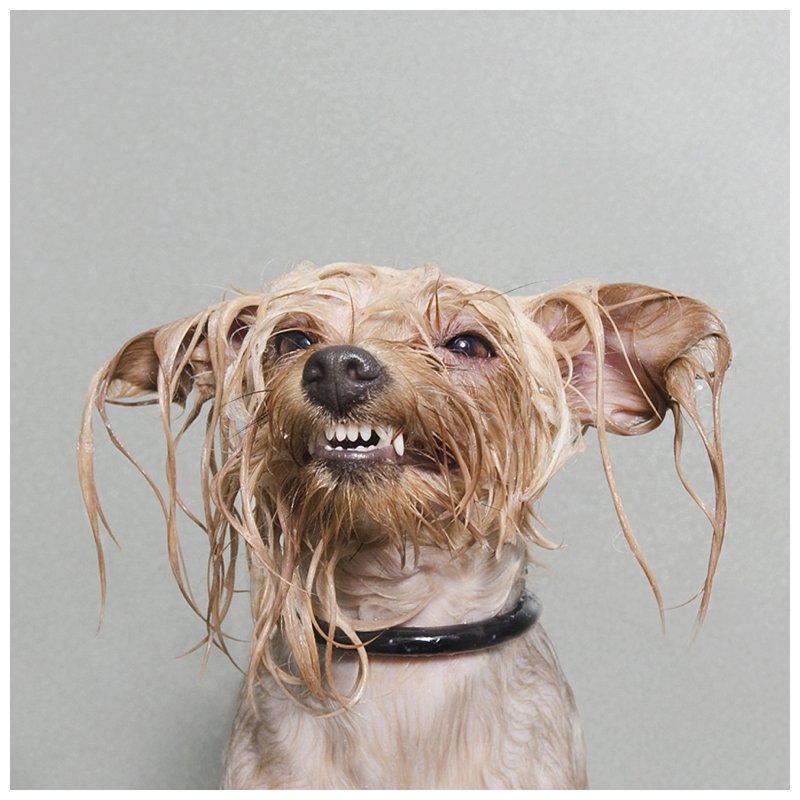
SOPHIE GAMAND: For one of my projects I wanted to photograph the grooming process, and how we alter the way our dogs look.  It is a project I called “Metamorphosis”.  I met with a groomer who let me set a studio in his grooming parlor and I photographed his work.  During the process, he started bathing the dogs.  I loved the way the water played with the fur, the dogs looked dramatically different!  And then I noticed their irresistible expressions, and I knew I had something unique and fun.  I want to show the humanity there is in dogs.  Photography is a great tool for that because it allows me to capture half a second – the moment their expression is the most poignant.  Something I would probably not really see with naked eyes.  I knew dogs had a wide range of emotions and facial expressions before I started Wet Dog, and I believed those had not been explored fully by contemporary photography.  My mission was to photograph dogs as I would photograph humans.  That’s why I focus on headshots. I care about the face, the eyes, the soul, what makes dogs human.  Wet Dog allows me to magnify those expressions.


 KATHERINE CARVER: Where do you show/exhibit your work?

SOPHIE GAMAND: Mostly online. When living in Europe, as a photographer, I spent a lot of time organizing exhibitions, and trying to be shown in different places.  After a while, I lost touch with my own creativity because I was too caught up in marketing and logistics.  So now I take it as it comes.  I would love to exhibit again at some point, but I want to focus on creating and producing images.  I would also love to create a mix media show.  My Wet Dog series won the Sony Awards and I went to London to see the exhibit.  As I entered the room, there they were, nine (9) of my wet dogs lined-up on the wall.  It was amazing. I had goose bumps and teared-up and giggled.  I think I whispered out loud “oh my god they are so cute, my little babies.”  I wanted to kiss each and every one of them, and tell them the bath was almost over.  Seeing your work exhibited is amazing.  The series will be exhibited in Paris in September 2014 as well.

oscar1


KATHERINE CARVER: What does “being creative” mean to you?

SOPHIE GAMAND: It is the blood flow.  The ideas and desires are constantly there.  I tried to live without the creative life in the past, but it was clear I could not escape it.  Creative ideas are all I think about, day and night, until I act on them and make them happen.  If I do not act on them, I become depressed and difficult to live with.  They work like visions almost.  Sometimes they are strong and ready to go, so I just create the images, take the photos, write, and then it’s done.  At other times, I am not sure what the idea is exactly, I cannot see the picture in my head yet, and I go crazy.  It’s hard to explain, but I guess it is like phantom pain.  My soul wants to create that thing that my brain does not visualize yet.  There is nothing to be in pain for, but the pain is there and it is real and overwhelming.  I know it might sound a little crazy, but I literally feel like I am dying.  I used to be lost during those times because it was really painful and confusing, and nobody could help me through them.  Then I realized those dark moments were part of my creative process so now I try to embrace the cycle more.  I am very lucky to have found a wonderfully supportive husband, also a creative person, who totally understand those cycles and respect my creative process.


KATHERINE CARVER: What is the most challenging aspect of being a photographer?

SOPHIE GAMAND: With my work, photographing dogs, one of the challenging aspects is to not having access to my models all the time.  I am very jealous of artists who live with their muse!  Sometimes, the idea is ready and I need to photograph it NOW.   But I have to wait days, weeks, before my models can come to the studio.  It makes the creative process less smooth.

Generally speaking, I would say that photographers are faced with a huge challenge nowadays: everyone thinks they are a photographer; and everyone can be one, technically.  So how do we define ourselves in the constellation of photographers that surrounds us?  Also some people still think photography is not an art per se.  Photography can take many shapes: you can be at the service of a client, in which case photography is simply a tool; you can use photos in intricate art pieces; retouch or not; you can document stories, etc… Photography takes so many different shapes that it is difficult to educate the public to what constitutes good contemporary photography.


KATHERINE CARVER: What inspires you to keep going and what keeps you motivated?  

SOPHIE GAMAND: I don’t have a choice!  I am obsessed with what I do, and I cannot explain why.  I want to become better: a better artist; and a better person.  I keep receiving new ideas and desires.  I have a list of maybe 20 series I want to photograph involving dogs.  I don’t think I’ll have the time or energy to do them all, so I don’t have the luxury to just stop.


KATHERINE CARVER: What is the most rewarding and satisfying part about being an artist and creating photographs?

SOPHIE GAMAND: When you finally start making a living photographing, you know that you will not have to divide yourself anymore.  I want to be whole with my art, and I want to be able to focus on just that: creating more images and projects.  I don’t think about my art in terms of rewards or satisfaction.  I don’t do it for anybody in particular.  I just don’t have a choice.  I cannot do anything else with my life, or I would go crazy.

nicole 

KATHERINE CARVER: What are you working on now?

SOPHIE GAMAND: I have a long list of projects in a notebook.  I try to focus on one or two projects at once, but right now I have about 4-5 series I am working on in parallel – all involving dogs.  I have 2 series ready to be released but I don’t seem to ever find the good moment to release them… I am working on my first book – the Wet Dog book – and another big fine-art project that is very demanding.  I also work on several projects for animal rescues.


KATHERINE CARVER: What artists inspire your work?

SOPHIE GAMAND: I have stopped looking at what other artists do, because it can be very destructive.  All my life, I self-doubted myself and my art.  So now I feel the need to protect my inner artist from all the amazing stuff that’s out there!  If I really had to mention names, it would be William Wegman because he has photographed the same breed of dogs since the 1970s and made a career out of it!  It reminded me that freedom can be the death of art. Sometimes, setting ourselves strict limitations is the most inspiring thing.  The other artist that blew my mind was Jill Greenberg, for her esthetic and her use of light.  I thought, if you can combine Wegman’s creativity with Greenberg’s sleek looks, you are golden!


KATHERINE CARVER: What advice do you have for aspiring artists?

SOPHIE GAMAND: Start doing.  Stop thinking, questioning, agonizing, etc.  Things only come to those who do.  Do what you love and love what you do – that means, follow your gut feelings when creating, but also be proud of every single piece you put out there. Hold your art to the highest standards.
diamond


KATHERINE CARVER: How can people view and purchase your art works?

SOPHIE GAMAND: In the US, people can purchase Wet Dog prints here, and Dog Vogue prints here.

For the rest of the world, wet dog prints are available here, and Dog Vogue prints here.

My best work is on www.sophiegamand.com.

With my Striking Paws website, I help rescue groups and participate in charitable projects. 

Instagram and Twitter accounts: @SophieGamand

Facebook: www.facebook.com/sophiegamandphotography.

Striking Paws Facebook: www.facebook.com/strikingpaws.

Thanks!

S.


The photographs included in this blog post are courtesy of Sophie Gamand.

You can read additional interviews here.

Interview with Gail Buchwald, Senior Vice President, ASPCA

Interview with Gail Buchwald, Senior Vice President, ASPCA

Gail_Buchwald_-sent_by_ASPCA_medium


Recently, I had the great pleasure of interviewing Gail Buchwald,  Senior Vice President, ASPCA.  Gail’s primary responsibilities include animal adoption and running the ASPCA adoption center.  Below is a very detailed interview about how the ASPCA helps animals who are part of animal cruelty cases and how the ASPCA promotes animal adoption and rescue!


KATHERINE CARVER: What does your work at the ASPCA entail?

GAIL BUCHWALD: I am the Senior Vice President of the ASPCA Adoptions Center which is located in New York City. I manage the ASPCA’s Adoption Center, which is a 12,000-square-foot, state-of-the-art facility that places approximately 3,000 animals into loving homes each year. I also oversee the Adoption Center’s Behavior & Training Program, Mobile Adoption Center and all of the adoption events we hold throughout the year.


KATHERINE CARVER: What is the mission of the ASPCA?

GAIL BUCHWALD: The ASPCA’s mission is to fight animal cruelty and end homelessness throughout the United States.

Our belief is that animals are entitled to respect and kindness, and we need to be their voice to ensure they receive both. While we’re headquartered in New York City, the ASPCA is a leader in animal welfare both locally and nationally. We focus on caring for pets and pet parents, serving animal cruelty victims and providing resources to ensure positive outcomes for at-risk animals.


KATHERINE CARVER: Does the ASPCA partner with any other organization(s) to promote its mission?

GAIL BUCHWALD: Yes, we could never make such a positive impact on animal welfare without the help of other organizations and groups throughout the country.

We launched a Partnership Community program in 2007 that allows us to collaborate with cities and regions seeking the expertise of ASPCA employees to save the lives of at-risk animals in their neighborhoods. We are able to provide resources and encourage the implementation of new tactics that increase adoption rates and decrease euthanasia. We currently have five active Partner Communities and eight that have graduated from the program!

In addition to our Partnership Communities, we are also the largest-founding member of the Mayor’s Alliance for NYC’s Animals. This is an umbrella organization for animal welfare, with the goal of making New York City a no-kill community. The Mayor’s Alliance includes more than 150 rescue groups and shelters, encouraging collaborative efforts to place adoptable animals and decrease euthanasia. The ASPCA has provided more than $5M in grants to assist with these services, including spay/neuter and transport efforts.

Another great example of working with partners is our recent enhanced commitment to Los Angeles, where we’re collaborating with Downtown Dog Rescue, the Amanda Foundation, Best Friends Animal Society, Stray Cat Alliance, Fix Nation, the Heigl Foundation, Bark Avenue, Found Animals Foundation, and others to keep families and their pets together, protect animals, and save lives.

On the animal cruelty side, we work with local law enforcement and local animal welfare agencies around the country to rescue animals from large scale cruelty cases like dog fighting and puppy mills. In New York City, we collaborate with the NYPD to address animal cruelty issues. NYPD takes the lead role in responding to all animal cruelty complaints in the five boroughs, while the ASPCA provides direct care support for animal cruelty victims, including medical treatment, behavior assessments and rehabilitation, and housing and placement. 

We also partner with human social service agencies to address animal cruelty at its root cause through our Cruelty Intervention and Advocacy program, which works in three main areas:  animal hoarding, emergency veterinary care for underserved communities and resources for domestic violence survivors.


KATHERINE CARVER: What services are provided to the animals while they are staying at the ASPCA?

GAIL BUCHWALD: We can house more than 300 cats and dogs in our Adoption Center, and we provide much more than just shelter. We have a team of veterinary specialists and behavior counselors who provide critical medical and behavioral rehabilitation for the animals coming into our care. Another incredibly important aspect is the assistance we receive from our more than 500 volunteers. Our Volunteer Program allows for cat socialization, dog walking, training and enrichment, foster care and adoption counseling, which is imperative in making sure an adopter is choosing the perfect match for his or her lifestyle. We also provide obedience classes and organized dog play. All of these resources improve the lives of the animals housed in our Adoption Center and our ability to place thousands of cats and dogs in loving homes every year.

Samuel-A22098964_2014Mar11_01


KATHERINE CARVER: What experience at the ASPCA has moved or inspired you the most?

GAIL BUCHWALD: Seeing animals arrive scared and shaking, and watching them become comfortable and trusting, to the point at which they give kisses (dogs) and head-butts (cats) is an amazing experience.  In addition to seeing this on a daily basis in the shelter animals, I have witnessed this transformation with my own adopted dog and cats, all of whom arrived at the shelter homeless, afraid and confused, and then blossomed into pets who crave love and have so much love to give.


KATHERINE CARVER: What is the most challenging aspect about running the ASPCA Adoption Center?

GAIL BUCHWALD: There is a constant need to be flexible and dynamic, always accommodating varying influxes of animals, and all the animals are very needy.  This requires flexibility, creativity, vision and planning- all with the ability to turn on a dime.


KATHERINE CARVER: What types of animal cases are most prevalent at the ASPCA Adoption Center?

GAIL BUCHWALD: The Adoption Center takes in a wide range of animals.  Many come from cruelty cases, such as having been starved or neglected.  Others arrive because they have been left homeless, and being homeless is the leading risk factor for animals across the country.  It’s important for us to help them all, because in the end they are all great animals who deserve a second chance.


KATHERINE CARVER: How does the ASPCA promote animal adoption?

GAIL BUCHWALD: By holding both large- and small-scale adoption events throughout the year, we’re able to make adoption more accessible for people, and remind them why it should be their first option.

For the last four years, we have been holding the ASPCA Rachael Ray $100K Challenge. This three-month national competition inspires animal shelters—and those who support them—to go above and beyond to increase pet adoption, reunite lost pets with their families and save more animals’ lives. Since 2010, hundreds of shelters across the country have used the $100K Challenge to inspire teamwork, come up with new approaches and rally community support to place more animals in loving homes than they did during the same period the year before. The 100K Challenge creates a sense of comradery in communities and rewards shelters for their innovative efforts. Last year, 49 contestants saved more than 55,000 animals’ lives!

One of our priorities is also to educate the public on the importance of adoption over purchasing a pet from a pet store. Our No Pet Store Puppies Campaign strives to make people aware of the deplorable conditions in commercial breeding facilities, where the vast majority of pet store puppies come from. By keeping people informed, we can encourage adoption.

One of the best ways we can promote adoption is through our communications with supporters, animal advocates and professionals in the animal welfare industry. Through our media outreach, and by engaging with people on Facebook, Twitter and Instagram, we can keep people in the know about animals that are up for the adoption and provide information on how to increase adoption in local shelters. By sharing photos and profiles of our adoptable animals and highlighting success stories of cats and dogs that have found forever homes, we’re able to get people excited about adoption.

Captain-A21996202_2014Apr18_01


KATHERINE CARVER: Does the ASPCA participate in or host any events throughout the year?

GAIL BUCHWALD: In addition to many of the adoption events throughout the year, we hold various fundraising events which are designed to educate and engage supporters, adopters and those in the animal welfare profession.

Every year, we hold the ASPCA Humane Awards Luncheon, which not only recognizes individuals who have made an outstanding difference in the lives of animals, but also celebrates animal heroes who have demonstrated extraordinary efforts. ASPCA Humane Awards are given in six categories: ASPCA Dog of the Year, ASPCA Cat of the Year, ASPCA Tommy P. Monahan Kid of the Year Award, ASPCA Public Service Award, ASPCA Henry Bergh Award and the ASPCA Presidential Service Award.

We also host the ASPCA’s Annual Young Friends Benefit, an event that attracts more than 500 young professionals and animal advocates who want to show their support for the ASPCA’S mission. This event provides an opportunity to inspire young professionals to make a difference in the lives of animals through social, educational and philanthropic change.

Our signature event of the year is our annual Bergh Ball. Held in New York City, this gala brings together hundreds of animal supporters, including community leaders, celebrities and generous donors. Here, we are able to engage with our donors and update them on both our recent accomplishments and future plans.


KATHERINE CARVER: What are the best reasons for adopting an animal versus going through a breeder?

GAIL BUCHWALD: We often hear that people purchase from pet stores because they want a pure breed dog or a pet that doesn’t have preexisting health conditions or behavioral issues. What many people don’t realize is that the vast majority of dogs bought in pet stores, even those sourced from USDA licensed breeders, are coming from puppy mills. These are large-scale commercial dog breeding operations where profit is given priority over the well-being of the dogs. Dogs are often housed in overcrowded and unsanitary cages with wire flooring that can injure their paws and legs. Oftentimes, they go without sufficient veterinary care, food, water and socialization.

Unfortunately, some pet store puppies coming from these commercial breeders have health conditions because puppy mill operators fail to apply proper practices that would remove genetically compromised dogs from their breeding pools. The conditions within the puppy mills can also contribute to further illness and emotional distress. One benefit of adopting from a shelter is that it allows you to know exactly what you’re getting and whether you’re prepared to handle any issues that may arise.

It’s also important to note that there are many breed-specific rescue organizations that give people the opportunity to adopt a pure breed. In fact, 25 percent of dogs that enter shelters are pure breeds. If you can’t find what you want through a shelter or breed rescue group, be sure to learn how to recognize a responsible breeder. Always meet the puppy’s parents or at least the mother, and see where the dogs live. Never meet a breeder at an off-site location, and never have a puppy shipped to you sight-unseen.

As part of our No Pet Store Puppies campaign, we launched nopetstorepuppies.com which includes a database of 10,000 photos of U.S. Department of Agriculture (USDA) licensed commercial dog breeders and links many of them to specific pet stores throughout the country. This database further demonstrates that just because a pet store sells puppies from a USDA licensed breeder, it doesn’t necessarily mean the dogs were raised in humane conditions.


KATHERINE CARVER: How can people adopt animals from the ASPCA?

GAIL BUCHWALD: The ASPCA operates one adoption center, which is in New York City. We’re always thrilled when people are ready to add a companion animal to their home, and we try to make sure anyone looking to adopt is finding a perfect match.

Before you come to visit our Adoption Center, it’s helpful to be prepared. You can download our adoption application from our website, which includes our Meet Your Match survey. This is a program we created to make sure we are pairing each adopter with a cat or dog that best fits his or her lifestyle. It’s easy to fall in love with a cute face, but adopting a pet is a long-term commitment, so it’s important to make sure you get to know your pet’s feline- or canine-ality.  Meet Your Match is the only existing method that evaluates an animal’s behavior and interests and matches them to an adopter’s preferences.

We also encourage adopters to visit the Adoption Center with all members of their household, including dogs. This way we can make sure your new pet is a great fit for everyone. To learn more about what you’ll need to bring with you, and some of the great benefits of adopting from the ASPCA, you can visit our How to Adopt page on our website.

If you don’t live in New York, check out our nationwide database of adoptable cats and dogs in local shelters near you!


KATHERINE CARVER: What advice can you give to someone who might be considering getting involved with volunteering at an animal shelter?

GAIL BUCHWALD: Anyone can make a huge difference for their local shelter, and there are so many different ways to get involved and help animals. Here are some ideas:

  • Visit your local shelter’s webpage to find out about volunteer opportunities. Often times, volunteers will need to undergo a training or orientation session before beginning to work with the animals.
  • Check with your shelter to see what types of product they might need. Popular items of need include money, canned food, blankets, towels, newspaper, litter, animal toys, cat boxes, collars, leashes, crates, hand sanitizer, laundry detergent, cleaning tools, animal beds, paper towels, food bowls, plastic shopping bag.
  • Fostering pets is a vital way to help them find permanent homes, but it also creates valuable space in your shelter. It’s important that animals get out of their cages and accustomed to home environments. Once there, these pets will meet people they may never encounter in a shelter – namely, your visiting friends and family, some of whom may be in need of a new companion.
  • If your workplace is the kind of environment where people like to help each other out, suggest a day for your colleagues to donate a few bucks or tips to benefit your community shelter. You can also post signs advertising their adoption events, or show photos of specific animals up for adoption. Ask the shelter for assistance – they’ll probably love to help out.
  • Every business needs a good writer, but not every place has one. If you’re good with words, volunteer your services to a local shelter. Often they have to produce brochure copy, letters to the editor, website text, newsletter articles, advertising slogans, and other needs for a smart scribe. And what could be more fun or fulfilling than using your talent to save lives? Even if you’re not a writer, do you have a special skill they can use, like accounting, public relations, social media, plumbing, carpentry, or electrical work? Name it; they need it.


KATHERINE CARVER: What are the future visions and goals of the ASPCA?

GAIL BUCHWALD: The ASPCA’s long-term vision is a society in which animals are increasingly saved, protected and treated more humanely due to collective and individual human efforts on their behalf.


KATHERINE CARVER: How can people make donations and/or volunteer with the ASPCA?

GAIL BUCHWALD: The ASPCA relies on the generosity of donors and volunteers to save the lives of animals across the country. If someone is interested in making a donation, they can visit our website, where they’ll be able to make a one-time contribution or become a member.

As I mentioned earlier, our more than 500 volunteers are vital to providing loving care to the dogs and cats in our shelter.

 The ASPCA’s Volunteer Program accepts online applications on a quarterly basis. We often receive an overwhelming number of volunteer applications and we sometimes cannot accept all of them. For other volunteer opportunities in NYC, please consider volunteering at the NYC Animal Care and Control (AC&C) shelters in Brooklyn, Manhattan and Staten Island. You also can go to the Mayor’s Alliance website to find a list of shelters and rescue organizations in New York City that use volunteer support. If you live outside of New York City, petfinder.com is a great resource for finding local shelters that can always use an extra hand.


KATHERINE How can people obtain further information about the ASPCA?

GAIL BUCHWALD: Our website has a ton of tips for pet parents and anyone looking for information on animal welfare. There, you can also sign up to become a member of our ASPCA Advocacy Brigade, where you would receive important alerts from the ASPCA when we need their help to fight laws against animal cruelty. You can also visit our ASPCA Parents site if you are looking for information geared toward children. 

For real-time updates on ways you can help us spread the word and fight animal cruelty, be sure to follow our Facebook, Twitter and Instagram pages!

Please contact the ASPCA if you are interested in adopting an animal in need of a furever home!

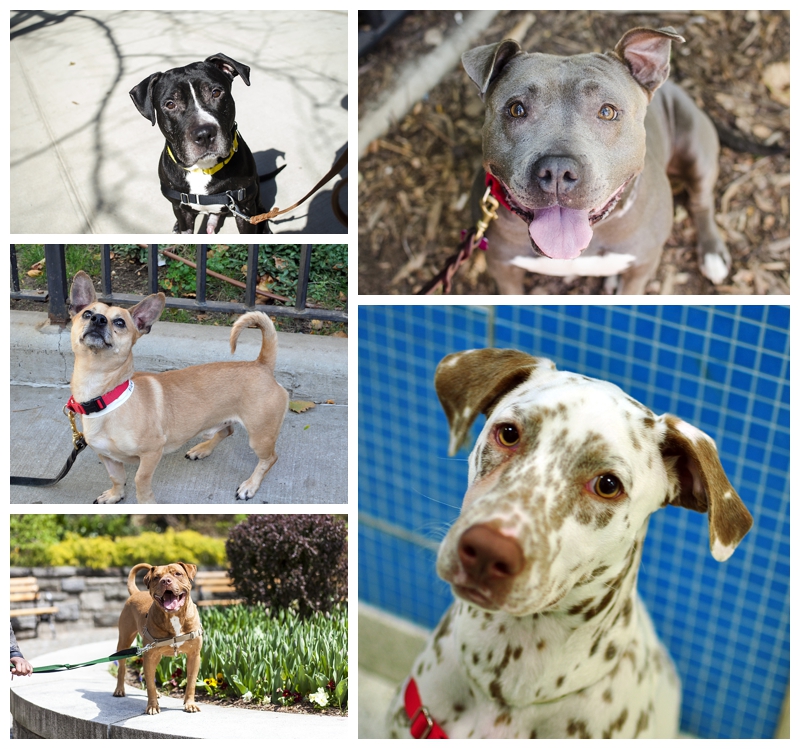
The photographs included in this post are courtesy of the ASPCA.

You can read additional interviews here.
Interview with Lorna Evans, Photographer

Interview with Lorna Evans, Photographer

Me & Cassie


Recently, I had the great pleasure of interviewing Lorna Evans, photographer.  Lorna is a Welsh documentary photographer based in South East and South West Wales.  The main focus of her work is exploring animals, our relationship with them and the natural world.  Please visit Lorna’s website to view more of her wonderful work!


KATHERINE CARVER: What were your beginnings as a photographer and when did you realize it would become your chosen form of expression? Did you study photography/art formally?

LORNA EVANS: It wasn’t until I was 17 that I discovered I had a love for photography.  I went on holiday to Kenya to go on safari and bought a little point and shoot digital camera. It was during this time that I discovered how much I loved taking photographs.  So, when I returned to art college in the UK I left behind my painting and drawing and started to pursue my interest in photography.  After art college I attended The University of Wales, Newport where I studied Documentary Photography at BA (hons) and MA level.


KATHERINE CARVER: How do you describe your style?

LORNA EVANS: I think what really differentiates my work is the subjects that I choose to photograph; I’m interested in exploring inter-species relationships and I do this through documentary photography.  I think each project I set upon requires a different strategy to be able to translate what I’m trying to say.


KATHERINE CARVER: Can you describe the time when you first realized that creating photographs was absolutely something that you had to do?

LORNA EVANS: This was during my BA studies. It took me a while to come to grips with photography and my camera – I struggled at first.  It was during creating ‘Vestige’ that I realized this was something that I had to continue, as I had finally discovered what photographs I was interested in making – images that explored our relationships with animals.  When I discovered this I found I couldn’t stop.  So much so, that when I finished my BA, I decided to go straight into my MA.


KATHERINE CARVER: What was the impetus that inspired you to begin having dogs as the subject of your work?

LORNA EVANS: I have always been drawn to animals.  I loved animals as a child (and still do) and grew up with dogs.  I use my photographic practice to explore the different relationships between man and animals.  Domesticated animals are closest to us, especially dogs. Humans have had a very close connection to dogs for thousands of years and I find this relationship fascinating.


KATHERINE CARVER: Where did you get the idea for your body of work entitled, ‘Vestige’?

LORNA EVANS: My father died in my presence when I was 12 years old and ever since then I have been very interested in death and transcendence and how people cope with it. I think encountering death at a young age fueled my curiosity.  ‘Vestige’ stemmed from not only my fascination with death but also my fascination with animals.  People are aware of the tremendous feelings of loss one can feel after a family member or friend dies – ‘Vestige’ was intended to explore how people feel when non-humans die, that a loss is still a loss, and it can hurt so much they can’t let go.

img008


KATHERINE CARVER: Where did you get the idea for your body of work entitled, ‘Of The Night’?

LORNA EVANS: ‘Of the Night’ started from going out with a group of hunters. These people were my initial focus of the work; photographing them hunting rabbits under the cover of darkness. However, after a while, my focus shifted to the wildlife that was encroaching on the peripheries of the hunt.  It was seeing these creatures, some that I had never seen before, that I became acutely aware of the distance between these animals and myself.  It was then I decided to explore how humans have become estranged from the natural world.


dogjumping 

KATHERINE CARVER: How have your own dog(s) influenced your artwork?

LORNA EVANS: ‘First Love’ was inspired from my own experience growing up with a dog, Bosun, who was my best friend. ‘ Vestige’ was influenced because when Bosun died it really affected the family, especially my mother who could never let go of his ashes that are still in her living room.  After many years, I now have another dog, Cassie, who has become the main subject on my Instagram page!  My name is @lornizzle, if you wish to follow my adventures with Cassie.

08


 KATHERINE CARVER: Where do you show/exhibit your work?

LORNA EVANS: So far my work has just been exhibited in the UK, The Photographers Gallery in London being one of my proudest moments. To see where else my work has been please check out my website, www.lornaevans.co.uk.


KATHERINE CARVER: What does “being creative” mean to you?

LORNA EVANS: I guess being creative is doing anything that gets your imagination going and your mind thinking, whatever the output may be.  For instance, I may not work on ‘serious’ photography every day, but I would say I use Instagram most days.  It gets me thinking about my surroundings and the aesthetics, and I feel better for making those images, even if they are just snapshots of my day-to-day life.


KATHERINE CARVER: What is the most challenging aspect of being a photographer?

LORNA EVANS: At the moment I’m finding trying to juggle photography, earning money, and life to be difficult.  I still haven’t found that perfect balance yet!


KATHERINE CARVER: What inspires you to keep going and what keeps you motivated?  

LORNA EVANS: Competitions and submissions keep me motivated – getting good feedback makes me realize that I should continue what I’m doing and it gives me that extra boost that’s needed to keep on going.


KATHERINE CARVER: What are the most rewarding and satisfying parts about making photographs?

LORNA EVANS: I guess it’s what got me into photography in the first place, and that’s seeing and learning new things.  You get to talk to people and see and experience things you may not have otherwise.


KATHERINE CARVER: You mentioned that you recently photographed at Crufts, can you describe this experience?

LORNA EVANS: It was an exciting, bustling atmosphere – people everywhere, so much so I found it made it very difficult carrying all my equipment around.  Lots of people were happy to be there and talk to me.  Others were less so and took it much more seriously, you could feel how tense they were. It was quite overwhelming seeing so many dogs – I don’t think you can really comprehend it unless you see it.  There were five huge halls in which consisted of food stalls and shops selling some of the craziest dog paraphernalia (I remember one was selling what looked a bit like a microwave that you put small dogs in to blow dry their hair). There were also small rings for showing and then rows upon rows of divided stalls where the dogs were kept.  The dogs were segregated into breeds so it was quite surreal to see so many of the same dog – imagine hundreds of golden retrievers in front of you, row after row! I heard at Crufts that something ridiculous like 57,000 dogs attend and participate over the course of 4 days. Making images was really fun, every dog has a different personality and so they all reacted differently.  Some were well behaved and did exactly what their owners told them, others were young and excitable and less inclined to stay in one place. Some were even a little scared of being on the backdrop, the flash, and the event as a whole. I took a squeaky toy with me, which proved to be a lifesaver!  This is great for grabbing a dogs attention and getting them to look at the camera.

IMG_3455


KATHERINE CARVER: What are you working on now?

LORNA EVANS: My newest project is in the early stages and as of yet is untitled, but the premise of the work is about a black panther – that may or may not exist.  I remember when I was younger people in my town talking of a supposed large panther type creature.  It was dubbed The Beast of Blaenavon by the local paper.  There were several sightings and victims were found savaged (geese, chickens and ducks). Not only does the sighting of the creature excite me, but I am fascinated by peoples’ reactions to it and I am interested in blurring the lines of reality and fiction.


KATHERINE CARVER: What artists inspire your work?

LORNA EVANS: Some of my favourite photographers include Alessandra Sanguinetti, Ricardo Cases, Charlottle Dumas, Clive Landen – the list is endless!  These photographers in particular all explore human-animal relationships. Also, my friends who are practicing photographers inspire me everyday when I see what they’re working on.


KATHERINE CARVER: What advice do you have for aspiring artists?

LORNA EVANS: Nothing happens overnight so it’s important to keep plugging away and doing what you love.  Entering competitions is essential, it’s really important to keep putting yourself out there. Don’t let yourself get knocked backed if you aren’t successful with a submission – your work may have not been right for them.  Art and photography is very subjective.  If you don’t try you’ll never know.


KATHERINE CARVER: How can people view and purchase your art works?

LORNA EVANS: You can view my work on my website www.lornaevans.co.uk. If people would like to purchase prints, I can be contacted at lornarebeccaevans@gmail.com.

The photographs included in this post are courtesy of Lorna Evans.

You can read additional interviews here.

Interview with Elias Weiss Friedman, Photographer, The Dogist

Interview with Elias Weiss Friedman, Photographer, The Dogist

elias weiss friedman


Recently, I had the great pleasure of interviewing Elias Weiss Friedman, photographer, known as The Dogist.  Elias lives in New York City, and a selection of his work is displayed below.  Please visit The Dogist to view more of Elias’ work!


KATHERINE CARVER: What were your beginnings as a photographer and when did you realize it would become your chosen form of expression?

ELIAS WEISS FRIEDMAN: I grew up with a darkroom.  My dad made portraits of all the kids every year and hung them in series on the walls – I guess my first impressions for portrait aesthetic were made there.  I got my first Nikon SLR when I was 12 and it’s been a constant evolution since then – mostly as an avid hobby.  I knew pursuing photography as an artist would be challenging.  I fell back in love with it when I realized I could use it to connect with people (and their dogs).


KATHERINE CARVER: Did you study photography formally?

ELIAS WEISS FRIEDMAN: I took classes in high school, was an assistant teacher during a summer program, and took a digital course during college.  I had fun with it and did a few events, but it was never my primary focus.


KATHERINE CARVER: How do you describe your style?

ELIAS WEISS FRIEDMAN: I might describe it as candid.  With The Dogist, you only see one image, but there’s a whole interaction and often silly set of images you get with dogs.  They come up to the lens, they bark, they hide behind their owners, etc – eventually they settle down and just look right at me.  That’s when you hear the shutter flutter.  They don’t know they’re having their picture taken per se, but they know I want them to be “good.”  I try to capture them in this state. They look posed like something a human might do, but it’s really just them trying to please (and to possibly get the tennis ball I have above my lens).


tumblr_n37i2dpxxa1slm9b6o1_500


KATHERINE CARVER: Can you describe the time when you first realized that creating photographs was absolutely something that you had to do?

ELIAS WEISS FRIEDMAN: Telling stories about dogs and realizing I could connect with people through their dogs was and is the biggest part of it.  Dogs are a huge part of our society, and it seemed nobody knew who they were – ‘Dogs are people too’, I say.  I get a lot of messages from people around the world telling me my photographs are the bright point in their day.  That’s very fulfilling as an artist.


KATHERINE CARVER: What was the impetus that inspired you to begin your photography project, The Dogist?

ELIAS WEISS FRIEDMAN: A lot of it has to do with Instagram. “Good art” is art that people like. I was always frustrated with the mediums through which people shared photos.  I always felt like I was asking people to go out of their way to see my pictures.  Everyone’s got Instagram in their pocket now.  It’s simple and intimate.


KATHERINE CARVER: What is your goal, vision with your photography project, The Dogist?

ELIAS WEISS FRIEDMAN: I want The Dogist to grow.  I want to photograph dogs around the world doing different things.  So much of news is negative or unfortunate; I’m glad I can document something fun and positive.  It’s kind of a dream job if I can make it work. The Dogist is a photo-series but also a business since I’m doing it full-time.

 tumblr_n38610dKTA1slm9b6o1_500


KATHERINE CARVER: How have your own dog(s) influenced your work?

 ELIAS WEISS FRIEDMAN: I grew up with dogs around the house – each color of Lab, some poodles, some doodles. They always made great photo subjects. I’m a very goofy guy at heart – I always treated our dogs like people and spoke on their behalf (dog ventriloquism). The Dogist is about the dogs, but it’s also about me taking something as formal and serious as portraiture and applying it to pets.


KATHERINE CARVER: What does “being creative” mean to you?

ELIAS WEISS FRIEDMAN: Being creative means making stuff. I have no idea what I’m going to get when I walk out the door with my camera. People always ask me about what camera I use, what techniques I use, where I find all the dogs, etc. They’re asking the wrong questions.  Creating is actually the easy part – the hard part is putting yourself in a position to do it every day.


KATHERINE CARVER: What is the most challenging aspect of being a photographer?

ELIAS WEISS FRIEDMAN: Making a living.  Everyone has a camera these days.  Lots of people are doing it professionally or are working part-time to support their passion.  If you’re going to be a successful photographer, you also have to be an entrepreneur.

On a day to day basis, it’s getting yourself out to new places and not dropping your lenses.


tumblr_n2hgdiHV8I1slm9b6o1_500


KATHERINE CARVER: What inspires you to keep going and what keeps you motivated?  

ELIAS WEISS FRIEDMAN: The Dogist has gotten a lot of traction and attention since I started doing it five short months ago – that’s encouraging. I still get excited watching the activity and reading the comments around my photos. I make a difference in many people’s and dog’s lives every day – what’s more inspiring that that!?


KATHERINE CARVER: What kind of patterns, rituals, and routines do you have while making photographs?

ELIAS WEISS FRIEDMAN: I always approach the owner first, making sure they’re comfortable with me distracting their dog for a few minutes. Any reluctance on the owner’s part and I’m on to the next dog across the street. Once I do get an “okay,” I typically use a squeaky tennis ball to get the dog’s attention if it’s not otherwise interested in me. I have a pretty good bark too if all else fails.


KATHERINE CARVER: What photographers/artists inspire your work?

ELIAS WEISS FRIEDMAN: Richard Avedon is the first name that comes to mind. He was the guy everyone had to have take their portrait back in the day.  His work has its own style and variety but he as a person was a real charmer.  I like that combination. I like my work to have that variety of seriousness with tongue-in-cheek playfulness.

 tumblr_n2a8xlwxhT1slm9b6o1_500


KATHERINE CARVER: What advice do you have for aspiring artists?

ELIAS WEISS FRIEDMAN: Don’t let anything get in your way.  People love creativity and there are more channels to make your work known than ever before. No excuses.  The difference between an ‘aspiring artist’ and a true artist is action.  Talent comes through practice.


KATHERINE CARVER: How can people view your work?

ELIAS WEISS FRIEDMAN:

I post 3-4 photos a day on The Dogist, which can be viewed at thedogist.com and @thedogist on Instagram, Facebook, and Twitter.

The photographs included in this post are courtesy of Elias Weiss Friedman.

You can read additional interviews here.

Interview with Katy Widger, Painter

Interview with Katy Widger, Painter

Katy Zoo 60th edited-1


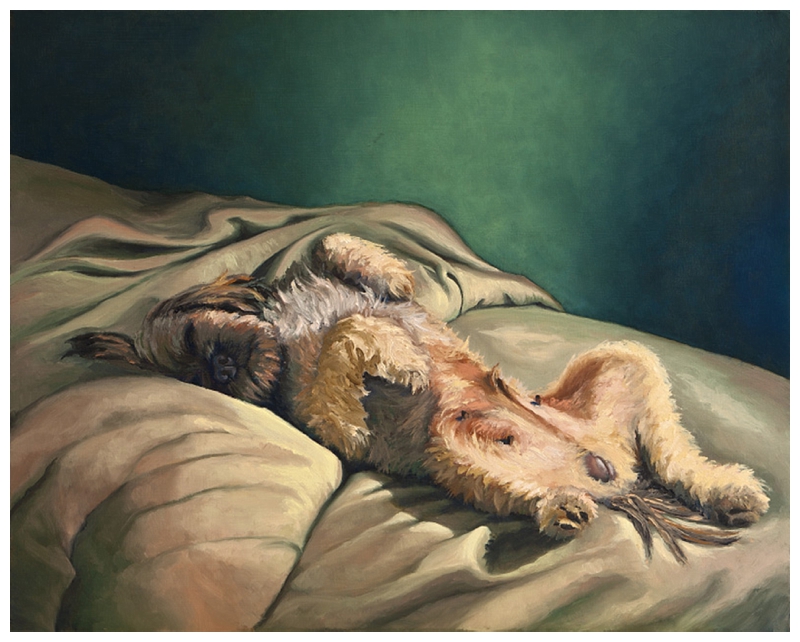
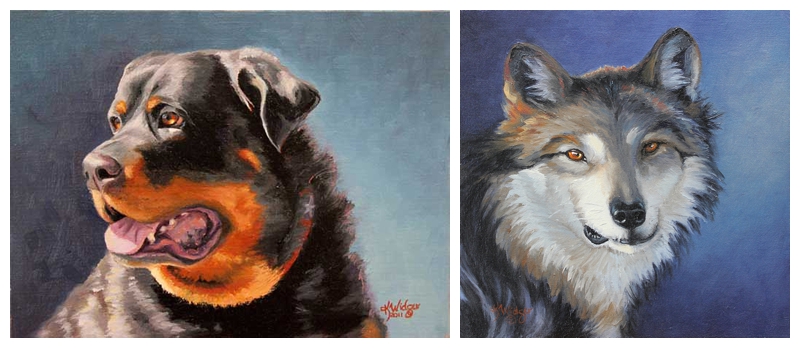
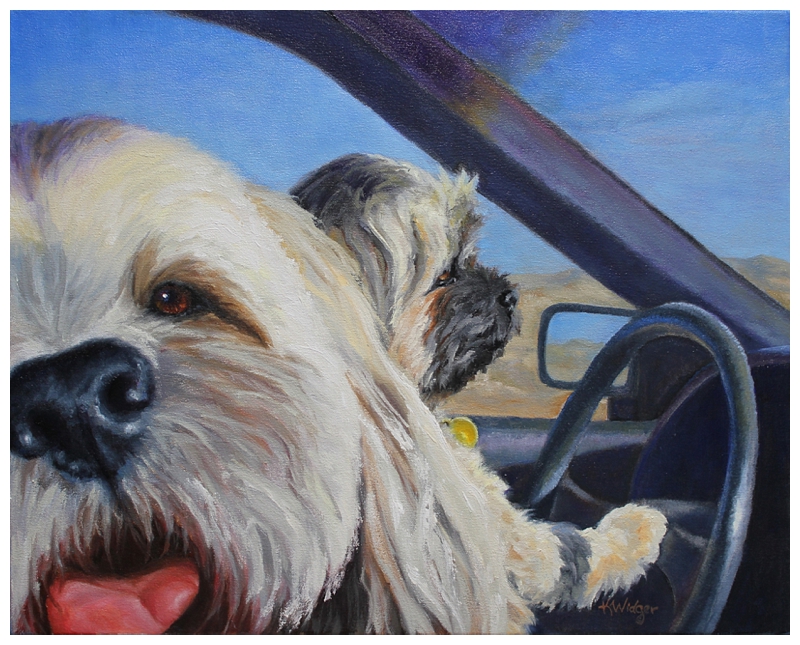
Recently, I had the  pleasure of interviewing Katy Widger, a painter living on a small acreage in north central New Mexico with her husband and four furry family members.  A selection of Katy Widger’s work is displayed below.  Please visit Katy Widger’s website to view more of her work!  Katy also does commissions upon request.


KATHERINE CARVER: What were your beginnings as a painter and when did you realize it would become your chosen form of expression?

KATY WIDGER: Life changing events in 2001-2002 caused me to re-think my path as an artist, and I began a rather abrupt transition from art quilting, in which I hand-dyed, painted and printed my own fabric, to oil painting. I had become increasingly unsatisfied with the medium of art quilting as my personal means of artistic expression, something I had been doing for more than two decades. The events that transpired in my life during a two-year period convinced me that, “if not now, when?” applied to my longing to paint in oil. I divested myself of my hand-dyed fabric business, remodeled my studio to accommodate my needs as an oil painter, and began the journey that will be my life’s work.  I am an oil painter whose focus is primarily on animals and dogs in particular. How energizing it is to know that!

Apso Repose edit blurb_edited-1


KATHERINE CARVER: Did you study art formally?

KATY WIDGER:  In my early years, I took art classes throughout high school, attended San Juan College in Northern New Mexico for three years as an art major (no degree) with an emphasis on drawing, color theory and design. From 2003-2006 I studied oil painting at the Albuquerque School of Fine Arts and have taken many workshops in  landscape, still life, and portrait throughout the years from notable artists.  Regarding  painting animals and dogs, I am self-taught.


KATHERINE CARVER: What was the impetus that inspired you to begin painting and, in particular, painting dogs and other animals?

KATY WIDGER: I had been happily painting all the usual stuff that representational artists paint, receiving some early recognition for my work, and pondering what direction my vision would take me, when my beloved Mychal Angelo, a black standard poodle that was the love of my life, began having  Grand Mal seizures.  We fought a lengthy battle to save him, and in the end, I held him in my arms as we gently gave him back to God.  It was a horrific education on the dangers of the rabies vaccine and over-vaccination in general.  Mychal’s story is told as a cautionary tale on my animal advocate site, www.zeketheapso.us.  

On the first anniversary of Mychal’s death in 2007, my grief barely abated, I stood at my easel and drew his portrait in charcoal.  Soon thereafter, I painted a small portrait of the dog we had since adopted, an amazing Lhasa Apso named Zeke.  I had found my Muse!  Dog portraits poured from my studio, like balm on a wounded heart!  My lifelong love of dogs and all animals had found its voice through my art.  Soon, requests for commissions began arriving, and my joy and satisfaction grew along with the experience I acquired in painting dozens of dogs.  There’s nothing quite like seeing the tears of joy on someone’s face when you present them with a portrait of their own beloved dog or cat, especially those who have passed over that Rainbow Bridge.  I can’t imagine any artist finding more satisfaction in their work than what I experience in this venue!

 hunter on pink


KATHERINE CARVER: Where do you show/exhibit your work?

 KATY WIDGER: Watermelon Gallery of Fine Art in Cedar Crest, New Mexico is my primary gallery, showcasing bird, wolf and other paintings.  Right now I have a show of dog paintings at the Animal Neurological Imaging Center, a large MRI and surgery clinic serving a multi-state area in the Southwest near Santa Fe.  And I regularly show (and receive awards) in juried exhibits of fine art in the Albuquerque area. Plus my blog at www.katywidger.blogspot.com is always the first place a new painting appears, with appropriate commentary.  In fact, I love posting to my blog because I can tell each dog’s personal story. 


KATHERINE CARVER: What artists inspire your work?

KATY WIDGER: Bonnie Marris is just a superb animal artist. She has a remarkable education and is amazingly hard-working and thereby extremely talented.  I am always amazed at her work, and her obvious understanding  and love of animals, both anatomy and psyche.

Of the Old Masters, Vermeer, Rembrandt (especially his renderings of animals), Michael Angelo and Chardin top my list.   And I love Klimt for his surface design. 

zeus 9 x 12_edited-1


KATHERINE CARVER: What advice do you have for aspiring artists?

KATY WIDGER: Learn how to draw, paint what you love, share what you know.  I have been a volunteer art teacher since 2006 at Shepherd Lutheran School in Albuquerque, teaching sixth through eighth graders the “FUNdamentals of Drawing.”  Good drawing technique is foundational to any good art, whether representational or abstract.  Outside of representational art, (which is in no danger of “dying out”, contrary to predictions made decades ago), there is not much emphasis on drawing, which is a shame.  Being able to draw well enables an artist to pursue any type of art they desire with confidence.  I hope to continue learning how to draw for the rest of my life.

Joy Ride crop edited-1_edited-1


KATHERINE CARVER: How can people view your work?

KATY WIDGER: My website is at www.katywidger.com, where all of my oil paintings are eventually posted.  My art blog, Katy Widger’s Raindance Journal at www.katywidger.blogspot.com is usually the most up to date with new postings as each painting is finished, and the stories behind each painting.  I also post invitations to upcoming shows there, also.  

Thank you, Katherine, for the opportunity to share my love of dogs and other critters through my paintings with your readers!

*All images contained in this blog post are courtesy of Katy Widger.

You can read additional interviews here.

Interview with Moira McLaughlin, Art Entrepreneur and Blogger

Interview with Moira McLaughlin, Art Entrepreneur and Blogger

moira-mclaughlin-and-tyler-foote-b-w-2


Photo Credit: Sheila Cameron.


Recently, I had the great pleasure of interviewing Moira McLaughlin, an artist and blogger living in California.  A selection of Moira McLaughlin’s work is displayed below.  Please visit Moira McLaughlin’s website and Etsy shop to view more of her work!


KATHERINE CARVER: What were your beginnings as an artist and when did you realize it would become your chosen form of expression?

MOIRA MCLAUGHLIN: Before she became a wife and mother, my mom was an art teacher.  She encouraged my three sisters and me to be artistic right from the start.  We were raised in Cleveland, Ohio with frequent visits to the world-renowned Cleveland Institute of Art.  And our extended family lived in New York, so yearly visits to the Met, MoMA,and the Guggenheim were common.  At Christmas, we always got fresh boxes of crayons, sketchbooks, and magic markers.  I never chose to be an artist.  I just was always surrounded by art.  I thought that was normal.


KATHERINE CARVER: Did you study art formally?

MOIRA MCLAUGHLIN:  I don’t have a fine art degree.  I have a BA in history with a film studies minor from Boston College.  But, since the age of five I’ve taken art classes.  And during college, I spent year in Italy studying art history, photography, and Italian cinema.  While abroad, I visited many museums in Europe and viewed many of the masterpieces of the western world first hand. It’s been unconventional and awesome.


 KATHERINE CARVER: How do you describe your style?

 MOIRA MCLAUGHLIN: Evolving.


darby_july_calendar_post


 KATHERINE CARVER: Can you describe the time when you first realized that making art was absolutely something that you had to do?

 MOIRA MCLAUGHLIN: I don’t think I ever felt that way.  In fact, I’ve always wanted to invent something more than I’ve wanted to be an artist.  I consider myself more of an “art entrepreneur” than an artist.

Part of this resistance stems from not liking to have a lot of things.  I’m a minimalist.  I like paring down.  So making things, even making art, stresses me out.

And, this resistance to things coupled with an anti-consumerism bent has intensified since 2009 when I moved from Los Angeles, where I worked in the film business for 15 years, to the rural Northern California town of Grass Valley.  Now, I’m submerged in nature in a way I’ve never been before. There’s a part of me that asks “Why bother making something, when nature is so brilliant?” 

That’s sparked my interest in looking at art not as something artificial, separate from nature, but something organic, created in collaboration with nature.  I’ve become interested in environmental art and biodegradable houses.  I find the beauty of a perfectly stacked woodpile really exciting, and I’ve become obsessed with collecting sticks and building teepees.  And, to be totally honest, when I watch documentaries of artists working in sterile, white studios, with store-bought paints and canvases, it looks depressing to me, not something to aspire to.  I feel very conflicted about much of the “art world” today and my relationship to it.  The industry is not sustainable.


KATHERINE CARVER: What was the impetus that inspired you to begin painting and making art of dogs?

MOIRA MCLAUGHLIN:  In 1999, I became very sick after working in a building that I later found out was built on a toxic landfill. I was diagnosed (and still struggle) with chronic fatigue, fibromyalgia, multiple-chemical sensitivity, low thyroid, and an autoimmune disorder that affects my eyes.  By 2005, I had no job and very little money, so I decided to make handmade gifts for Christmas.  Everyone in my family owned a dog, so I made custom collages of each pet and framed them with $5 Ikea frames.  They were a big hit. I made some more and posted them on ebay. They sold. And I became a dog artist. 


KATHERINE CARVER: What was the inspiration to begin your blog, Dog Art Today?

MOIRA MCLAUGHLIN:  By 2007, I spent most of my time in bed, very sick and in chronic pain.  It was very isolating.  I started Dog Art Today as a way to connect to other people when I rarely left my house. 


KATHERINE CARVER: How have your own dogs influenced your work?

MOIRA MCLAUGHLIN: Darby, my Longhaired Dachshund who died at age 17, was a beautiful, soulful, and clever creature who constantly outwitted me.  Tyler Foote, my mixed-breed Terrier, is a graphic, macho, survivalist. They both inspire my work.  But even more so, their companionship allows me to enjoy solitude, which for me is necessary for creativity (and my health).  Most important are the walks; my best ideas happen when I’m walking my dog.


darby_b_w_full-kc

 Darby pictured above on the left; and Tyler Foote pictured above on the right.


KATHERINE CARVER: Can you talk about your new work entitled, “dox-ZENs”?  How did this body of work come about?

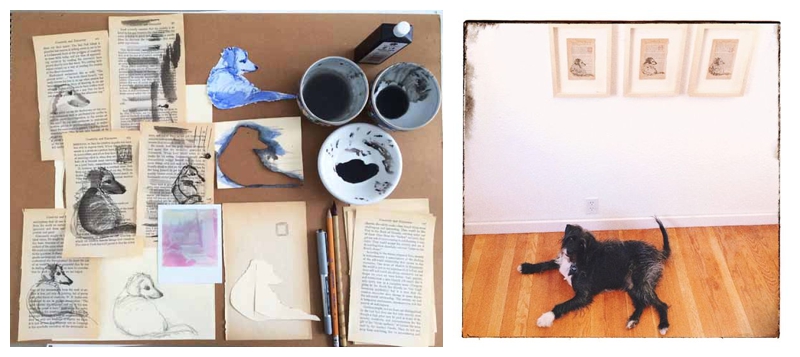
MOIRA MCLAUGHLIN: After Darby died I was devastated by grief and creatively blocked.  I made a few artworks, but soon got frustrated, angry that they weren’t good, like I wasn’t doing him justice. And I would just sob.  So I shut my studio door a quit trying.

A few months later, I discovered erasure poems on a wonderful blog that I think your readers would love called Gwarlingo.  The poems are created by erasing texts of a book. I became fascinated with this subtractive, messy, experimental art form and started exploring my grief on the pages of an early 20th century spelling primer. 

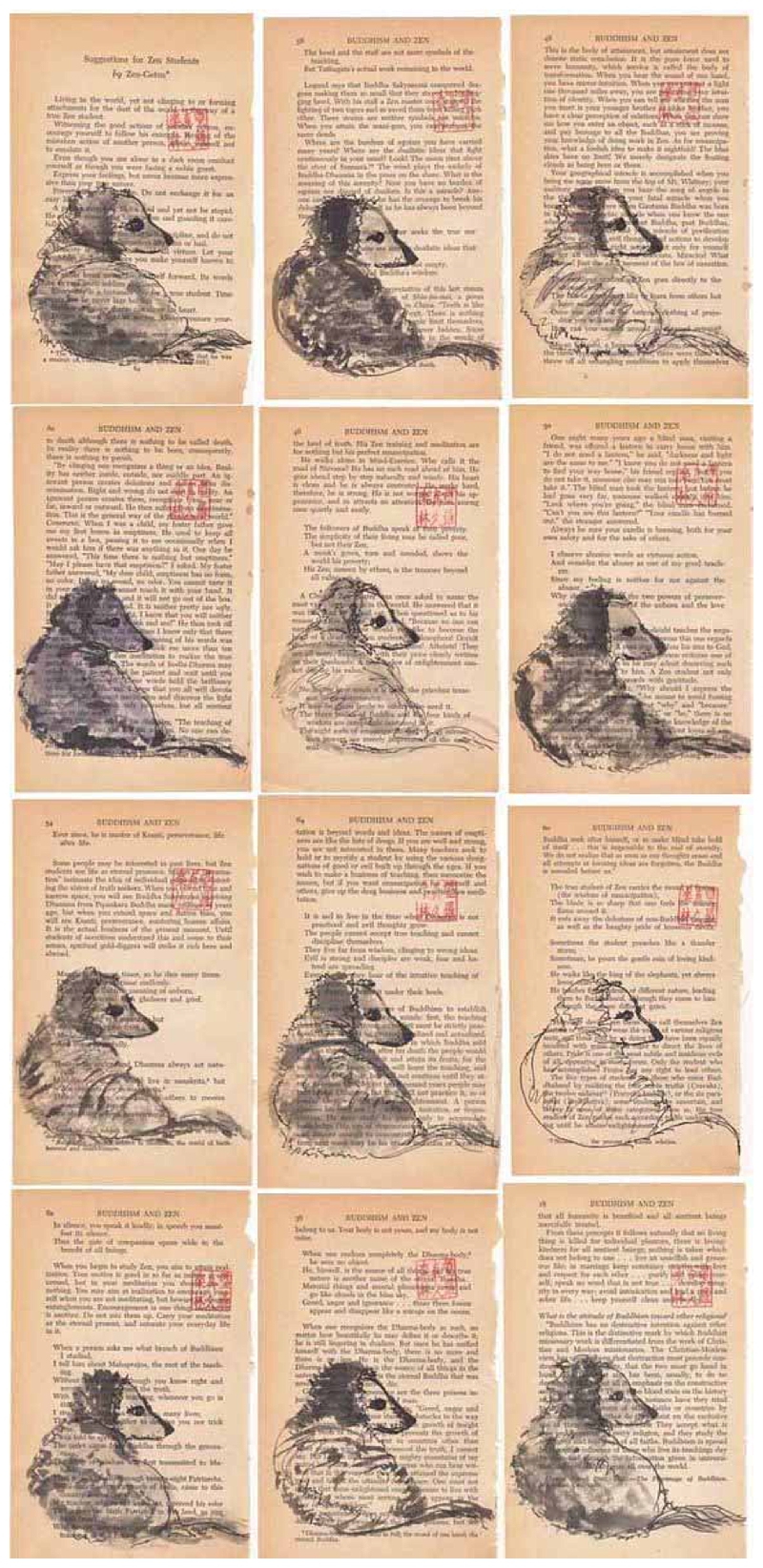
Years ago, I had created a “dox-ZEN” collage, a generic image not related to Darby.  So, later, when I spotted a book on my shelf entitled Buddhism and Zen, it sparked the idea of combining my new interest in erasure poems with a tribute to my own beloved dox-ZEN.  

One of the first concepts discussed in the Buddhism and Zen book, which I read as I deconstructed it, is that the mind is an endless process of three series: craving, acting and discontentment.  It was the discontentment that was paralyzing me.  So I decided to paint Darby in the exact same manner on every page.  The art was the discipline, the meditation, not the outcome.  I also looked to one of my favorite works, painted in 16th century Korea, for inspiration, Mother Dog and Puppies by Lee Am, 1507-1566.

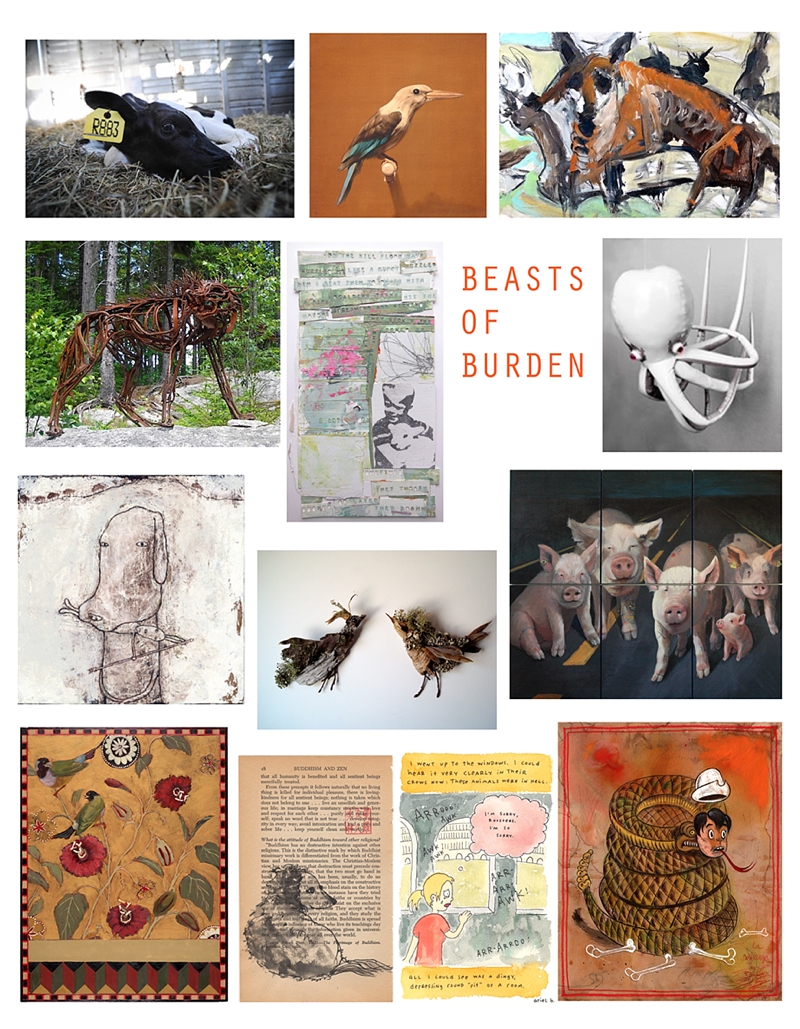
Around the same time, Jane O’Hara, a fellow dog artist whom I greatly admire, was putting together a group art exhibition entitled “Beasts of Burden.”  She asked if I had something in addition to my “Dogs in Art” video (which was already included) to contribute.  When I explained the “dox-ZENs” series she said yes.  Having a deadline forced me to actually do it.  It’s been extremely cathartic.


love-redacted-moira-mclaughlin 


dox-ZEN-wip-adjusted


dox-ZENs-post


KATHERINE CARVER: Where do you show/exhibit your work?

 MOIRA MCLAUGHLIN: My “Twelve dox-ZENs” and my video “Dogs in Art,” a three minute tribute to 5,000 years of canine art, will be in the upcoming exhibition, “Beasts of Burden” at the Harvard Allston Educational Portal in Allston, Massachusetts.  March 13 – May 4, 2014. 

Visit BeastsofBurden.org for more information.


http://www.youtube.com/watch?v=mpIp0Ebao8k


Beasts-of-Burden-card


dox-ZEN-VI-Framed-600


KATHERINE CARVER: What does “being creative” mean to you?

 MOIRA MCLAUGHLIN: Trying.


KATHERINE CARVER: What is the most challenging aspect of being an artist?

 MOIRA MCLAUGHLIN: Navigating between the rhythm of blogging and the rhythm of making art.


KATHERINE CARVER: What inspires you to keep going and what keeps you motivated?  

 MOIRA MCLAUGHLIN: Lack of alternatives.


 KATHERINE CARVER: What artists inspire your work?

 MOIRA MCLAUGHLIN:  Romare Bearden, David Hockney, Matthew Rose, Pearl Fryer, Patrick Dougherty, Louis CK, and Kenya Hara.


KATHERINE CARVER: What advice do you have for aspiring artists?

MOIRA MCLAUGHLIN: We are living in a visual age. Realize that you have tremendous power.  And don’t undervalue yourself.


KATHERINE CARVER: How can people view your work?

 MOIRA MCLAUGHLIN: You can view my work by visiting the sites below.

Dog Art Today

My Etsy shop

Pinterest

If you live near Boston, please come to “Beasts of Burden” at the Harvard Allston Education Portal from March 13 – May 5, 2014.

Thank you, Katherine for including me on your wonderful website.


All images contained in this blog post are courtesy of Moira McLaughlin.

You can read additional interviews here.

Interview with Eleonor Boström, Artist

Interview with Eleonor Boström

1


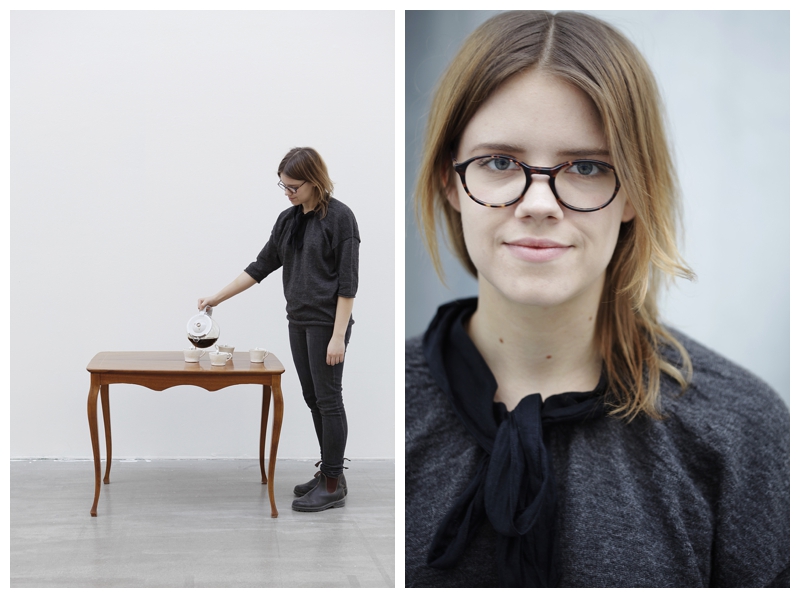
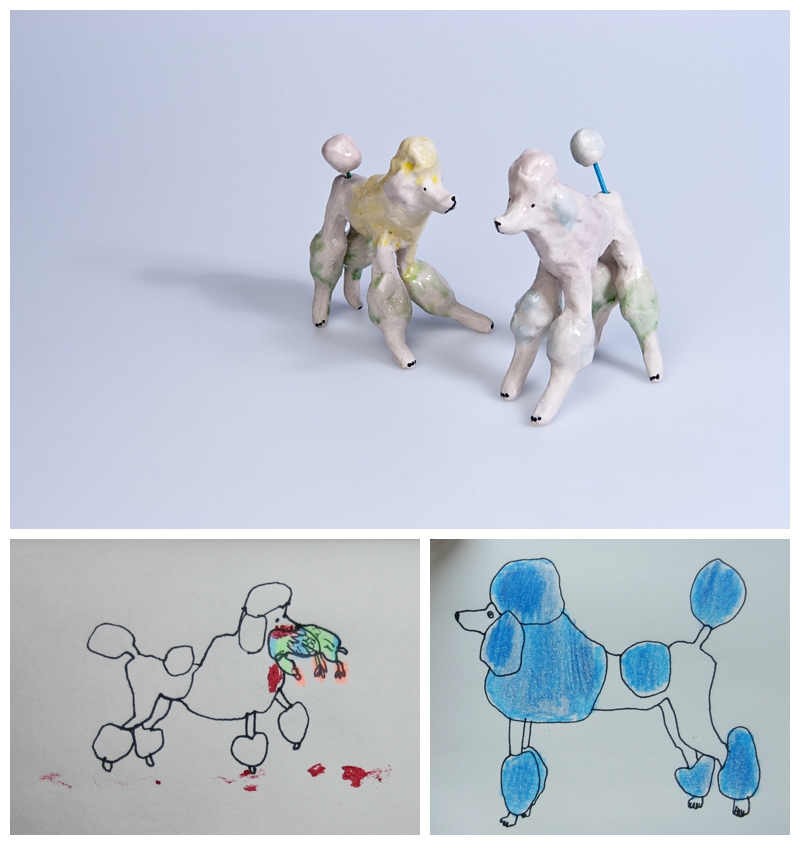
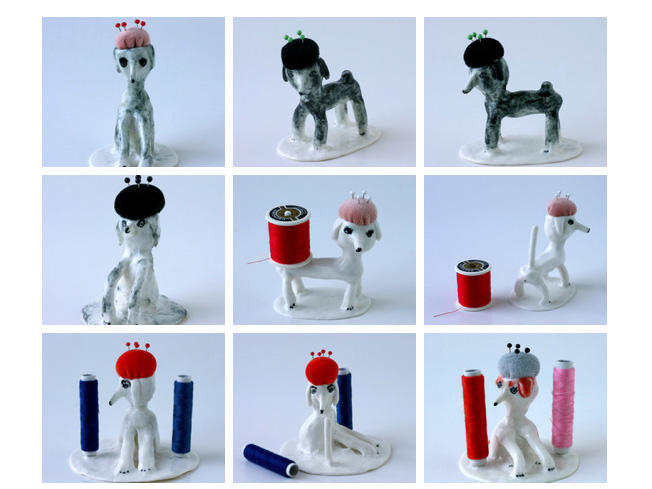
Recently, I had the great pleasure of interviewing Eleonor Boström, an artist living in Berlin, Germany.  A selection of Eleonor Boström’s work is displayed below.  Please visit Eleonor Boström’s website to view more of her wonderful work!  (We are excited because Eleonor is currently making a sculpture (Dog in a Cup) of little Victory!)


KATHERINE CARVER: What were your beginnings as an artist and when did you realize it would become your chosen form of expression?

ELEONOR BOSTRÖM: I have always drawn a lot, built stuff, and crafted since I was a kid.  As a child, I submitted my drawings to competitions that I found on the back of cereal boxes.  I even won my first portable cd-player in the 90s through one of those competitions!  After finishing my compulsory education, I studied art history at the University in Stockholm and as interesting as I found that area of study, I knew that I was not passionate about this subject matter.  As a result, I started working as an assistant to a ceramicist.  After that, I studied at two different preparing art schools for two years, testing out all kind of crafts, including ceramics and sculpture.  What I loved about ceramics was that I could bring drawing into it as well.

When I was attending art school, I found that it was difficult to determine what to do after graduation.  One of my former classmates had a difficult time making a living making her art.  Before I finished art school I made sure that I already had a cheap studio rental with a kiln, so I could continue working straight away after earning my bachelor’s degree.

During the first few years after graduation I worked a lot in elderly care and as a hotel breakfast hostess to make ends meet.  This did not leave much time for studio work.  Today I would say, four years after completing my bachelor’s degree in fine art, I’m sure about what I want to do.  But I’m still in this phase where I work really hard, but I am not making a lot of money.  However, I do not mind it too much because I get to do what I love.


KATHERINE CARVER: Did you study art, sculpture formally?

ELEONOR BOSTRÖM: Yes, I completed a three-year bachelor’s degree in Ceramics and Glass; however, also while earning my bachelor’s degree, I worked at an old pottery learning old school throwing clay.


KATHERINE CARVER: How do you describe your style?

ELEONOR BOSTRÖM: I would describe my work as — sculptures with function; and sculptural utility goods.  Also, my work is playful, unique, and cutesy.


KATHERINE CARVER: Can you describe the time when you first realized that making sculptures was absolutely something that you had to do?

ELEONOR BOSTRÖM: I think during my years in art school, I went from making functional cups and other things to creating sculptures instead.  However, I love function, so I haven’t left that behind.  I am always trying to incorporate function into my sculptures. There was not necessarily a first time that I realized making sculptures was something that I had to do.  It has been something that has grown.  When people, friends, and family want to custom order something, or when a gallery or store says it wants something precise, or something I usually don’t do, in the beginning I always took the commission, thinking I couldn’t say no to an offer or an opportunity.  However, after completing the commission, I always had the feeling that it wasn’t me and I felt badly and that I was disappointing myself.  Sometimes even though you have to say “no” to potential clients and assignments, the outcome is better.  That sounded a bit cliché.  But I think you can see it in what you do if you love it or not; and if the love isn’t there, don’t do it.


KATHERINE CARVER: What was the impetus that inspired you to begin making sculptures of dogs?

ELEONOR BOSTRÖM: I started making dog sculptures during my study abroad in the United States.  I got inspired by all the colored dyed dogs and the movie ´Best in Show’ and also that I missed my dog, Tess, very much who is shown below.  

EB 4

And from there, I have just continued.  I love dogs and love making dogs in porcelain.

I’ve always had dogs until recently.  Thus, in the absence of my own dog, I enjoy making them out of porcelain!   There is something about a dog’s expression that catches my eye.  And if you look at my tumblr there are huge amounts of dog pictures and dog gifts among my work in progress pictures.

EB 3

(The above work is from my time studying at RISD).


KATHERINE CARVER: Where did you come up with the idea for your body of work entitled, Dog in a Cup?

ELEONOR BOSTRÖM: By combining function with sculpture, and playing with what is functional.  I like doing that.

Dog in a Cup 2


KATHERINE CARVER: Where did you come up with the idea for your body of work entitled, Functional Dog?

ELEONOR BOSTRÖM: Well it’s the same as with the dog in a cup. Testing the dogs function in my tableware.  Soon there will be a hallway dog that takes care of your keys.

Functional Dog


KATHERINE CARVER: How have your own dog(s) influenced your work?

ELEONOR BOSTRÖM: Dogs influence my work very much.  This is why I keep having them as a theme in my work. I’m on a constant mission to persuade my boyfriend that we are going to get a dog!  (He is a cat person).

tess

(My old dog, Tess, shown above).


KATHERINE CARVER: Where do you show/exhibit your work?

ELEONOR BOSTROM: I exhibit in Stockholm at the co-op Gallery Blås&Knåda.  In London at the Atomica Gallery and the Kapok store in Hong Kong.  And I always show a lot of my new work on my tumblr and sell stuff in my Etsy store.  I really enjoy the personal contact and feedback I get through Etsy!


KATHERINE CARVER: What does “being creative” mean to you?

ELEONOR BOSTRÖM: Creativity is something you can apply to so many things — not just ‘arty stuff.’  You can be creative with how you live your life.  How you work.  How you are with your friends and family.  Breaking patterns.  Having a passion.


KATHERINE CARVER: What is the most challenging aspect of being an artist?

ELEONOR BOSTRÖM: Making ends meet.  Haha, no but yes!  Sometimes I find it hard finding the time to do and test new stuff.  I just keep doing the things that make my economy go around, while forgetting about evolving as an artist.


KATHERINE CARVER: What inspires you to keep going and what keeps you motivated?

ELEONOR BOSTRÖM: That people are interested in what I do, and that I’m interested in what I do.  I get depressed when I’m not in the studio, knowing that the studio is where I should be.  The sun keeps me going a lot too.  (It is too bad we only had seven (7) hours of sun in January, a depressing month).

Hershdaddy


KATHERINE CARVER: What kind of patterns, rituals, and routines do you have while making sculptures?

ELEONOR BOSTRÖM: I think that I’m really structured.  My most important ritual is biking to the studio — getting exercise and air.  It’s a good bike distance, one hour in each direction, which entails going through Berlin’s city center, where I receive so much inspiration.  Getting off track, yes while making the sculptures I’m very inpatient.  Wanting it to go fast, I think is from my time working in a pottery, you had to be time efficient.  So I always have about five (5) sculptures in the making at the same time, and making dog cups and others thing to, at the same time.


KATHERINE CARVER: Looking back on your accomplishments, to date, what are you the most proud of?

ELEONOR BOSTRÖM: This is a hard one. I still feel so fresh out of school although it was four (4) years ago. Well, actually taking the leap and moving to Berlin from Stockholm two (2) years ago has been an accomplishment.  In Berlin, I’ve been able to make a living from just doing my art.  I’ve been super lucky in that respect.  It is also much cheaper to live in Berlin compared to Stockholm.  I don’t miss my hotel breakfast hostess job!


KATHERINE CARVER: What are you working on now?

ELEONOR BOSTRÖM: I had an exhibition in January 2014, which I worked very hard preparing for this exhibition during the fall of 2013.  So now I’m recovering and taking it slow. I’m trying some new things out in the studio and working as if I was a sloth. It’s nice. But I have some deadlines, Atomica Gallery is celebrating its one year anniversary in late March beginning of April, so I’m going exhibit in their group show celebrating Atomica Gallery’s anniversary.  Also, in October I’m going to exhibit in Japan in a group show – I’m super excited, and I’m going to travel there for the first time!

EB illustration


KATHERINE CARVER: What artists inspire your work?

ELEONOR BOSTRÖM: It’s hard to pinpoint, there are so many artists that inspires me. But I have had a long love for the Swedish artists – Jockum Nordström and Maria Boij (she has a lovely Instagram – mariaboij).


KATHERINE CARVER: What advice do you have for aspiring artists?

ELEONOR BOSTRÖM: Be stubborn and keep going. And don’t overthink it in the beginning and work hard.


KATHERINE CARVER: How can people view your work?

ELEONOR BOSTRÖM: On the internet at the following websites– www.eleonorbostrom.sehttp://eleonorbostrom.tumblr.comhttps://www.etsy.com/shop/EleonorBostrom; and http://instagram.com/eleonorbostrom?ref=badge.

All images in this blog post are courtesy of Eleonor Boström.

You can read additional interviews here.

Interview with Serena Hodson, Photographer

Interview with Serena Hodson

serena


Recently, I had the great pleasure of interviewing Serena Hodson, a photographer living in Brisbane, Australia.  A selection of Serena Hodson’s work is displayed below.  Please visit Serena Hodson’s website  to view more of her work!


KATHERINE CARVER: What were your beginnings as a photographer and when did you realize it would become your chosen form of expression?

SERENA HODSON: Strangely, I have never had a passion to become a photographer.  It all happened one day when I was going away on a holiday and decided to buy a DSLR.  I enjoyed taking photographs of my dogs so much, and it grew from there.


KATHERINE CARVER: Did you study photography formally?

SERENA HODSON: No, I am completely self-taught, but I am trained in Graphic Design.

Eat your greens


KATHERINE CARVER: How do you describe your style?

SERENA HODSON: That’s a tricky one to answer, I’m not trying to emulate an established style or consciously create a defined style of my own.  I basically follow my creative intuition and shoot the ideas that interest me.  I have an offbeat sense of humor and I’m obsessed with my animals – so that dictates my subject matter.  But with a background as a graphic designer, my visual style has evolved over time and be influenced by so many things, and it’s hard for me to put a label on it.


KATHERINE CARVER: What was the impetus that inspired you to begin photographing dogs?

SERENA HODSON: Rocco (my Bullmastiff) was definitely my muse.  He started this all for me.  This boy had a heart of gold and was always there for me.  He had the patience of a saint and I learned so much photographing him. 

Dinner Time


KATHERINE CARVER: How have your own dog(s) influenced your work?

SERENA HODSON: They haven’t so much influenced my work they are my work.  Their personalities are what inspire me.  The joy they bring me I want other people to feel as well which is why I create what I do.


KATHERINE CARVER: Where do you show/exhibit your work?

SERENA HODSON: I have exhibited in Canada, Brussels, Germany and I am currently exhibiting work in Paris.  Looking to exhibit work this year in Australia and hopefully New York.

Cook


KATHERINE CARVER: What does “being creative” mean to you?

SERENA HODSON: Sometimes it does mean being misunderstood.  But for me it’s a means of self-expression, having passion and a way of life.


KATHERINE CARVER: What is the most challenging aspect of being a photographer?

SERENA HODSON: Marketing and advertising.  All I want to do is shoot concepts and hang with my dogs.  I procrastinate on the growth part.  But luckily I have a manager (i.e.: Partner) who tries to keep me on on track.


KATHERINE CARVER: What inspires you to keep going and what keeps you motivated?   

SERENA HODSON: My dogs.  They are my pride and joy.  I cannot think of a more happier day than working with them on a shoot.  So much comedy and they constantly make me laugh.  What keeps me motivated is my following.  I adore making people happy.  We live in such a fast paced society that sometimes life makes it hard to smile.  If just one of my images brightened someones day, than I have achieved something pretty special.

Sausage Dog


KATHERINE CARVER: What kind of patterns, rituals, and routines do you have while making photographs? 

SERENA HODSON: I have a journal I write my ideas in and sometimes sketch them.  I find and make the props and work from there.  I never look at a shoot straight away.  I like to give it a day or so because sometimes as soon as I download a series of images and start looking through them, I might be fixated with one image, while missing the “actual image.”


KATHERINE CARVER: Looking back on your accomplishments, to date, what are you the most proud of?

SERENA HODSON: Probably been given the chance to exhibit in so many countries.  I want my work to be recognized as art.

Boss


KATHERINE CARVER: What are you working on now?

SERENA HODSON: I am working with my publisher on my coffee table book. Very exciting!


KATHERINE CARVER: What artists inspire your work?

SERENA HODSON: My dogs.  They are living pieces of art that inspire me everyday in my work but also how to be a better person.

Hide and seek


KATHERINE CARVER: What advice do you have for aspiring photographers?

SERENA HODSON: My advice first and foremost is to have a passion for what you do.  Photograph things you really care about and interests you, not things you feel you ought to.  Photograph them in the way you feel is right and not the way you think you ought to.  Be open to criticism and remember not everyone will love what you do.  My favorite quote is, “To avoid criticism say nothing, do nothing, be nothing.”  There will always be haters but never let them stop you.


KATHERINE CARVER: How can people view your work?

SERENA HODSON: The best place is to follow me on Facebook: https://www.facebook.com/pages/Serenah-Photography/100482606687398; and www.serenahphotography.com.au.

Dance


All images are courtesy of Serena Hodson.

You can read additional interviews here.

Interview with Brigette Bloom, Photographer

Interview with Brigette Bloom, Photographer

brig


Recently, I had the great pleasure of interviewing Brigette Bloom, a photographer living in the desert on the west coast.  A selection of Brigette Bloom’s work is displayed below.  Please visit Brigette Bloom’s website to view more of her work!


KATHERINE CARVER: What were your beginnings as a photographer and when did you realize it would become your chosen form of expression?

BRIGETTE BLOOM: As a kid, I was really fascinated by my dad’s film camera.  He showed me how to use it and I was mesmerized.  I loved all the little sounds and clicks it made.  I felt like I was holding a magic box!  I used to run around the neighborhood and take pictures of everything — from my turtles, to my bloody nose, or a slug on the sidewalk.  It just naturally became one of my favorite forms of expression — I love everything about it.


KATHERINE CARVER: Did you study art formally?

BRIGETTE BLOOM: I was actually in school for a different major at the time and I was so close to leaving because I didn’t like it at all and felt like I was wasting my time.  I remember one day I was talking to a friend about photos.  They said, “Why don’t you major in art?”  I was totally shocked and thought…you can do that?!  I didn’t even know my school had an art department!  The next day I changed my major to art and loved school ever since!

970774_144150622458077_1313495486_n


KATHERINE CARVER: How do you describe your style?

BRIGETTE BLOOM: Experimental.  Dreamy.  Mysterious.


KATHERINE CARVER: Can you describe the time when you first realized that creating art was absolutely something that you had to do?

BRIGETTE BLOOM: There was never a specific time because I’ve been creating art all my life.  I think everything is artistic when you put your heart and attention into it.  Even washing the dishes becomes art.  I just feel this fire within me, like I have to create.  It’s as necessary as eating or sleeping.  I have to create everyday because it makes my soul come alive!

1231422_166452396894566_1646536415_n


KATHERINE CARVER: What was the impetus that inspired you to begin photographing dogs and other animals?

 BRIGETTE BLOOM: It all just happened naturally.  I feel so connected to animals and I always have—so it’s only natural that they would show up in my work.


KATHERINE CARVER: How has your own dog, Leo, and nature influenced your artwork?

BRIGETTE BLOOM: He’s a huge influence for sure!  He’s actually laying beside me as I type this.  When we’re out walking in the desert, he shows me things I wouldn’t have seen before.  He opens my eyes to the wonderment all around us–it’s like being a child again.

27315_153578598181946_1291957647_n


KATHERINE CARVER: Why do you primarily use film as your medium and can you discuss some of your unusual development techniques to manipulate the film?

 BRIGETTE BLOOM: Film allows me to work more hands on.  Personally, I am not very computer savvy.  I don’t know how to work Photoshop or things like that, so film is perfect for me.  It feels more organic…more raw.  I love the mysterious quality of film…you never know quite how it will turn out.  That excites me! Plus working in the darkroom is such a magical process.

My most used method is peeing on my film.  I soak my film in whatever liquid I can find in my fridge.  But I really want to experiment with so many other developing processes.  This is just the beginning…


KATHERINE CARVER: Where do you show/exhibit your work?

BRIGETTE BLOOM: This past year I exhibited in group shows in Tokyo, Amsterdam, and NYC.  I don’t know when or where it will be, but I’m looking forward to my first solo show.

1392452_176633292543143_329598213_n


KATHERINE CARVER: What does “being creative” mean to you?

BRIGETTE BLOOM: Living with an open heart.  I think that’s the ultimate creative act.


KATHERINE CARVER: What is the most challenging aspect of being an artist?

BRIGETTE BLOOM: The beginning was tough for me, because all I wanted to do was share my art with the world — and I really believed it would happen!  I just had this vision that it would work out…but the thing is that I wasn’t making any money.  I think a lot of people go through this.  I have worked SO many random jobs, that I can’t even count them all!  It was really challenging because there was a period I was working a miserable job, just waiting for that moment where I could actually be making a living from photography.  Things changed once I really started putting myself out there.  It’s not like it all just falls on your lap one day, you have to work at it every single day.  I feel like a lot of people (that are incredibly talented) hit that wall of resistance where they’re not making money and then they eventually give up.  It’s always darkest before the dawn, you just have to keep pushing through.  If you know this is something you’re meant to do—you have to keep doing it!  No matter what the circumstances, you will find a way!

9572050744_4d3282bee0_c


KATHERINE CARVER: What inspires you to keep going and what keeps you motivated?  

BRIGETTE BLOOM: It’s a feeling I get.  The times when it feels like everything is falling apart, I just have this knowing inside that everything is happening as it’s supposed to.  Of course I have days where I feel sad, uninspired, confused…but eventually I wake up and it’s a new day.


KATHERINE CARVER: What is the most rewarding and satisfying part about being an artist and creating art?

BRIGETTE BLOOM: The most satisfying part is that I get to do what I love!  Honestly, what could be better?  I get to share what’s in my heart with others–it’s such a gift!  I’m grateful.

8701041520_210125340b_c


KATHERINE CARVER: What kind of patterns, rituals, and routines do you have while making your art?

BRIGETTE BLOOM: While I’m soaking my film, I always try to put loving energy into it.

Have you seen that water experiment where they exposed music, spoken words, and typed words to water to see how it would affect it? For example, when they taped the word “anger” to the cup, the water took on distorted and chaotic structures.  But when the words “thank you” were taped to the bottle, the water formed symmetrical crystalline shapes.

I always think of that when I’m soaking my film in the liquid and I’ll say a little prayer or silently say an affirmation in my head.  While I’m out shooting I try to be as open as possible, and just let it turn into a dance.  Now when I think of it, art is like my therapy.


KATHERINE CARVER: What are you working on now?

BRIGETTE BLOOM: I have some projects lined up for this year so far that I’m really excited about! This month I’m working on an album cover, and the women’s collective that I recently joined – WWW, World Wide Women, and I will be exhibiting work soon in L.A.  I also have a lot of new collaborations in the works, which is one of my favorite things! I love combining each person’s individual qualities to create something new.

1003192_156882547851551_661954068_n


KATHERINE CARVER: What artists inspire your work?

BRIGETTE BLOOM: Life inspires me.  It’s not just specific to artists.  I’m inspired by thousands of people everyday whose names I will never know.


KATHERINE CARVER: What advice do you have for aspiring artists?

BRIGETTE BLOOM: Stay true to your own heart — be who you are!  It sounds cheesy but it’s not.  Every single person has an absolutely unique quality that only they can bring to the world.  The world needs authentic beings to have the courage to be who they are.

600519_145998972273242_434132430_n


KATHERINE CARVER: How can people view and purchase your art works?

BRIGETTE BLOOM:

You can find me on Facebook—-Facebook.com/brigettebloom.

You can also purchase prints, patches, and books through my Etsy Store — brigettebloom.etsy.com.

You can visit my website at http://brigettebloom.com/.

Thanks so much Katherine!

All images are courtesy of Brigette Bloom.

You can read additional interviews here.
Interview with Rory Carnegie, Photographer

Interview with Rory Carnegie, Photographer

Recently, I had the great honor and privilege of interviewing Rory Carnegie a photographer residing in North Oxford, England.   A selection of Rory Carngie’s work is displayed below.  Please visit Rory Carnegie’s website to view more of his wonderful work.


KATHERINE CARVER: What were your beginnings as a photographer and when did you realize it would become your chosen form of expression?

RORY CARNEGIE: I studied history at University, but I spent most of my time in the darkroom!  During the year before going to University, I traveled in the Altiplano in South America and I had my work published in a book.


KATHERINE CARVER: Did you study photography formally?

RORY CARNEGIE: I worked as an assistant.

frankie xvx copy 


KATHERINE CARVER: How do you describe your style?

 RORY CARNEGIE: My style is inquiring and curious and always changing.


KATHERINE CARVER: Can you describe the time when you first realized that photographing was absolutely something that you had to do?

 RORY CARNEGIE: I remember feeling unused and unfulfilled when I was in Bolivia on days that I had not made good work.

dolly and nora xvx copy


KATHERINE CARVER: What was the impetus that inspired you to begin photographing dogs in your series entitled, Port Meadow Dogs

 RORY CARNEGIE: The death of my beloved and irascible lurcher dog, Luca.


KATHERINE CARVER: The images in your series entitled, Port Meadow Dogs, has a painterly feeling in these images.  Did you envision this quality when you began the series?

 RORY CARNEGIE: The work, as with all work, sort of evolved.

cleo david xvx copy 


KATHERINE CARVER: Where did you find the dogs for your series, Port Meadow Dogs?

 RORY CARNEGIE: All the dogs I met, whilst walking my new dog, Luna.


KATHERINE CARVER: How have your own dog(s) influenced your artwork?

 RORY CARNEGIE: I spend a lot of time looking at dogs, especially admiring them running.

nora xvx copy 


KATHERINE CARVER: Where do you show/exhibit your work?

 RORY CARNEGIE: I have shown my work in galleries throughout Europe and in Russia and the Far East.


KATHERINE CARVER: What does “being creative” mean to you?

 RORY CARNEGIE: I think it means coming at things from a new direction !!??


KATHERINE CARVER: What is the most challenging aspect of being a photographer?

RORY CARNEGIE: Trying to make images that have not been made before.
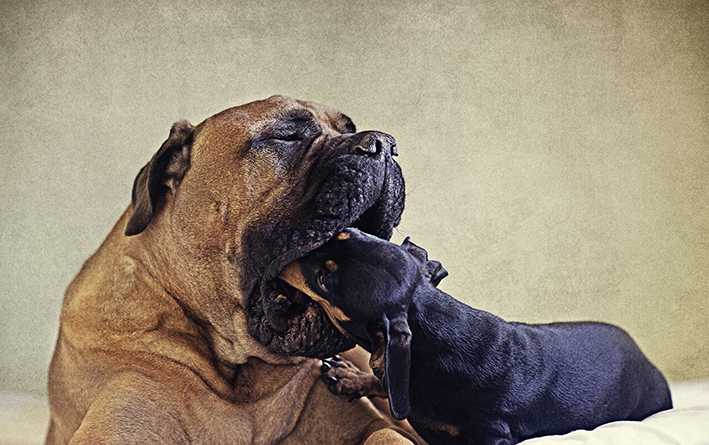
 Luca xvx copy


KATHERINE CARVER: What inspires you to keep going and what keeps you motivated?  

RORY CARNEGIE: If I don’t create, I get unhappy !!


KATHERINE CARVER: What are the most rewarding and satisfying part about being a photographer and creating art?

 RORY CARNEGIE: When you have made a work that you are pleased with, it makes you feel complete/fulfilled.

luke david xvx copy 


KATHERINE CARVER: What kind of patterns, rituals, and routines do you have while making your art?

 RORY CARNEGIE: I don’t have rituals, etc., but feel that I should have more structure.  Now that you have reminded me…


KATHERINE CARVER: What are you working on now?

 RORY CARNEGIE: I am thinking of a large project which will involve photographing the Roma in Central Europe and am travelling to Haiti in New Year.
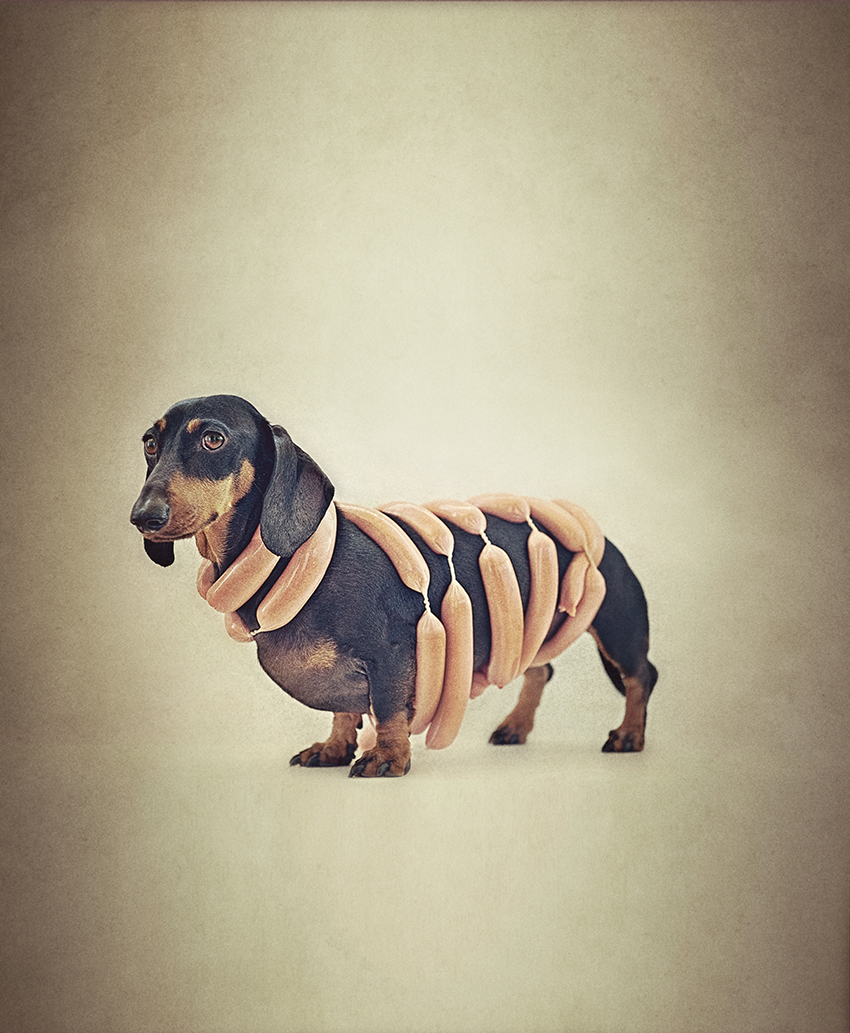
perm xvx1


KATHERINE CARVER: What artists inspire your work?

 RORY CARNEGIE:  I like Sigmar Polke, and the Helsinki School photographers.


KATHERINE CARVER: What advice do you have for aspiring photographers and artists?

RORY CARNEGIE: Keep taking photographs and assess what you are trying to say.

rhino monty xvx


KATHERINE CARVER: How can people view and/or purchase your art works?

RORY CARNEGIE: You can get in touch with me via email, rory@rorycarnegie.com and via my website, www.rorycarnegie.com.  I am currently selling editions of the dog series.

All images are courtesy of Rory Carnegie.

You can read additional interviews here.